System-based quality assurance versus the carpentry model — what is the difference?
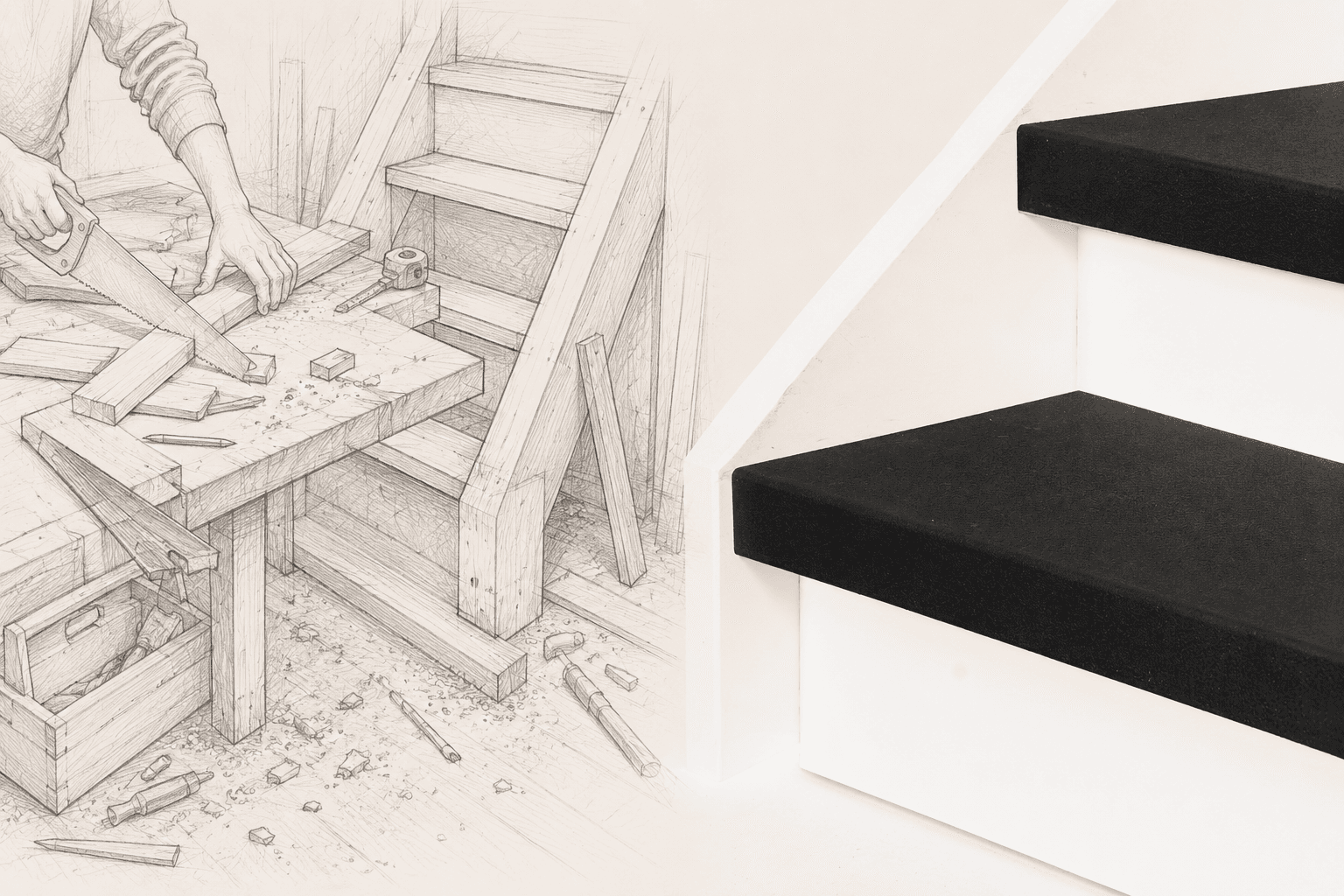
In the stair renovation market, two fundamentally different working methods operate side by side. It makes a big difference for the consumer and the commercial client which method a provider uses — even though that difference is not always immediately visible from the outside.
The carpentry model
In the traditional carpentry model, a stair finish is installed based on the expertise and experience of the individual fitter. The quality of the end result therefore depends on the person carrying out the job at that moment.
That need not be a problem — an experienced and careful fitter can deliver excellent work. But the assurance of quality is person-bound, not system-bound.
In the event of complaints or warranty issues, the question is: who is responsible? The fitter? The dealer? The manufacturer?
The system-based model
In a system-based approach, quality is embedded in the system itself. That means:
- The material has fixed, documented properties.
- Installation follows a standardised protocol.
- The installer is trained and selected for the specific system.
- Warranties are tied to the material and the installation method.
- In the event of complaints, the line of responsibility is clear: system — installer — manufacturer.
Why that technical precision makes the difference is covered in why technical quality matters in a stair renovation.
How does Omnistair work?
Omnistair works exclusively through selected installers with system training. The installation of EverStep, Signature and EverStep Solid follows a system protocol. The installer is selected and specifically trained on the Omnistair system — not just generally skilled.
More about that system training is covered in stair renovation training. Companies that want to work with the system themselves can find the steps under becoming a stair renovation dealer.
This has consequences for the warranty: the product warranty is tied to correct installation by a selected installer with system training. Want to work with this system as a company? See the options via become a dealer.
Why is this relevant for clients?
For private clients: more certainty about the end result and clarity about who is accountable.
For owners' associations (VvE) and professional clients: demonstrable quality assurance is a requirement — not a wish.
For professional applications such as offices and hospitality, read more in commercial stair renovation for offices and hospitality.
Frequently asked questions
A working method in which quality depends on the individual fitter, not on a documented system protocol.
An approach in which material, installation protocol and training together assure quality — independent of the individual fitter.
At omnistair.com you can ask which selected installers with system training are active in your region.
No. For private homes too it offers more certainty about the end result and the warranty structure.
The product warranty is tied to correct installation by a selected Omnistair installer with system training. Details on request via omnistair.com.
Request a dealer consultation
At omnistair.com you can get in touch for project support or a dealer consultation.
Read more
Related knowledge-base articles

Why technical stair renovation is becoming more important
Why is technical stair renovation becoming more relevant? Read about regulations, safety requirements, VvE obligations and the role of systems with demonstrable certifications.
Read more →
Renovating your stairs yourself — what are the options?
Renovating your stairs yourself? Discover what you can do yourself, where the limits are and why some systems require professional installation.
Read more →
The difference between Omnistair and traditional stair renovation
What makes the Omnistair system different from a traditional stair renovation? Compare material, thickness, anti-slip, documentation and quality assurance.
Read more →