

Why wear resistance matters for owners' associations
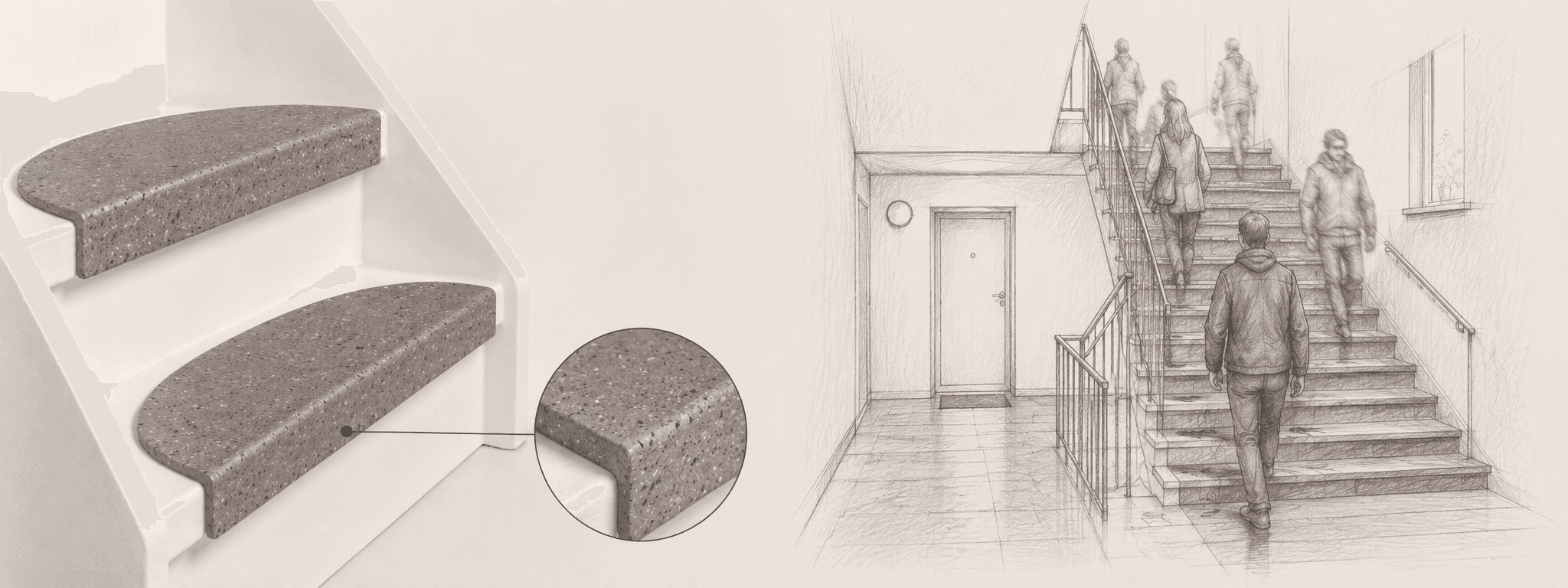
In a stair renovation, the focus is often on colour, appearance and purchase price. For a VvE — the Dutch owners' association — other factors play an equally important role. Wear resistance is one of them.
A stairwell in an apartment building is used daily by dozens of residents, visitors, parcel services, maintenance companies and emergency services. This creates a completely different load than in a private home. Professional property managers therefore look beyond the initial investment alone. The broader framework of requirements for such stairwells can be found in stair renovation for owners' associations and commercial buildings.
Short answer
Wear resistance determines how well a stair surface withstands daily use, cleaning and long-term load. Higher wear resistance can contribute to a longer lifespan, less maintenance and lower operating costs.
Why a VvE staircase wears faster than a residential staircase
A residential staircase is used by one household. A VvE stairwell handles residents, visitors, parcel couriers, movers, cleaning services and maintenance companies. More use means more wear, more contamination and a heavier cleaning load.
Why purchase price is not the same as lifecycle cost
Professional property managers ask a different question than the purchase price: what does this solution cost over its full lifespan? Lifespan, maintenance, repairs, cleaning and replacement moments all play a role in that.
Recycled natural stone composite from Omnistair has a high, inherent scratch resistance in the material itself. That wear resistance sits in the material — not in a top layer that gets thinner. EverStep Solid also complies with NEN 7909 anti-slip and has a SolidLux top coat with fire class Bfl-s1. The background of that fire classification can be found in why fire classification matters in a VvE stairwell.
Why cleaning affects wear
Regular cleaning, dirt particles and sand act as an abrasive on stair surfaces. A VvE stairwell is cleaned intensively — sometimes daily. Materials that withstand this combined load last longer.
Wear also affects grip: more on this can be found in why anti-slip matters in apartment buildings.
Why wear resistance is relevant for a long-term maintenance plan
A long-term maintenance plan (in the Netherlands known as an MJOP) looks at the expected lifespan of building components. A staircase that lasts longer affects maintenance planning, reserves and future renovation moments. Wear resistance is thus assessed not only technically but also financially.
What postponement ultimately costs can be found in what postponing stair maintenance costs in an apartment building.
Have the stairwell assessed
Via omnistair.nl you can request an appointment for an on-site assessment of the VvE stairwell.
Frequently asked questions
How well a material withstands long-term use and mechanical load.
Because a stairwell is used daily by many people and is loaded more heavily than a residential staircase.
Yes. Regular cleaning, dirt particles and sand contribute to the wear of stair surfaces.
Because maintenance, repairs and replacement together have a greater influence on total costs than the purchase price alone.
The expected lifespan affects maintenance planning, reserves and future renovation moments.
No. Grip, cleanability and ease of maintenance are also affected by wear.
Read more
Related knowledge-base articles

Why fire classification matters in a VvE stairwell
Discover why fire classification plays an important role in stair renovation in apartment buildings and owners' associations. Explanation of Bfl-s1, smoke development and escape routes.
Read more →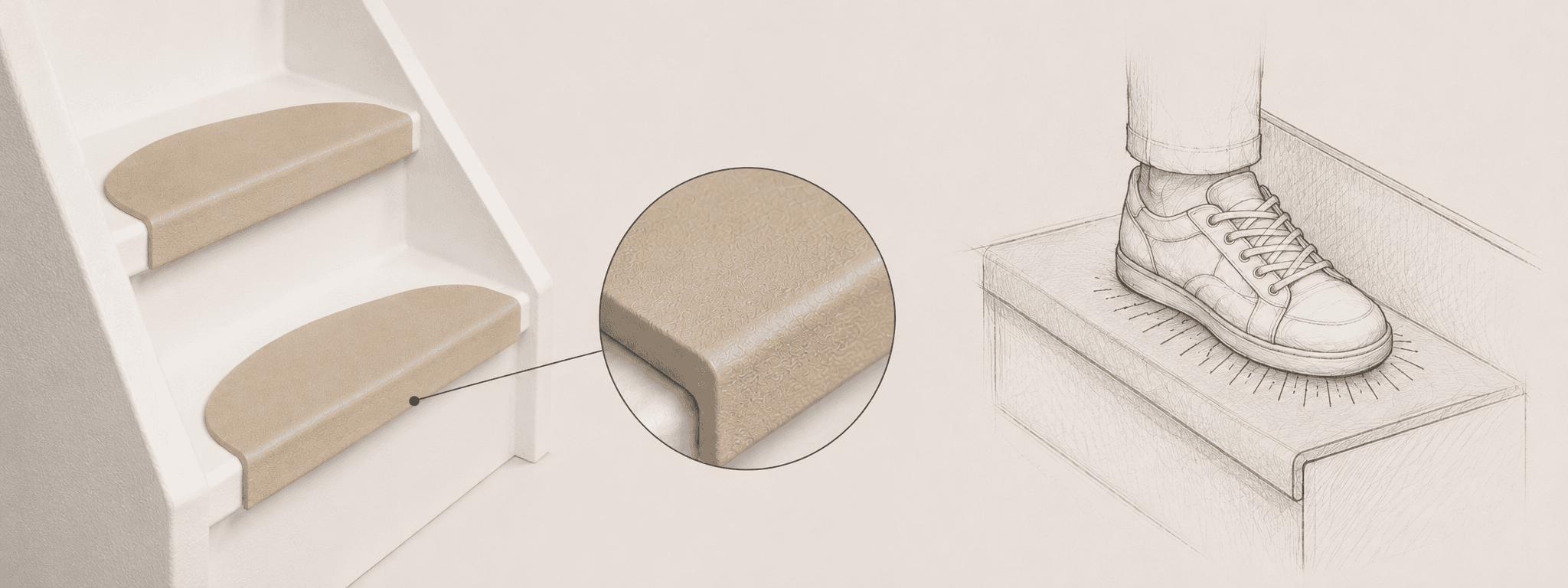
Why anti-slip matters in apartment buildings
Discover why anti-slip plays an important role in apartment buildings and VvE stairwells. About safety, liability, grip and daily use.
Read more →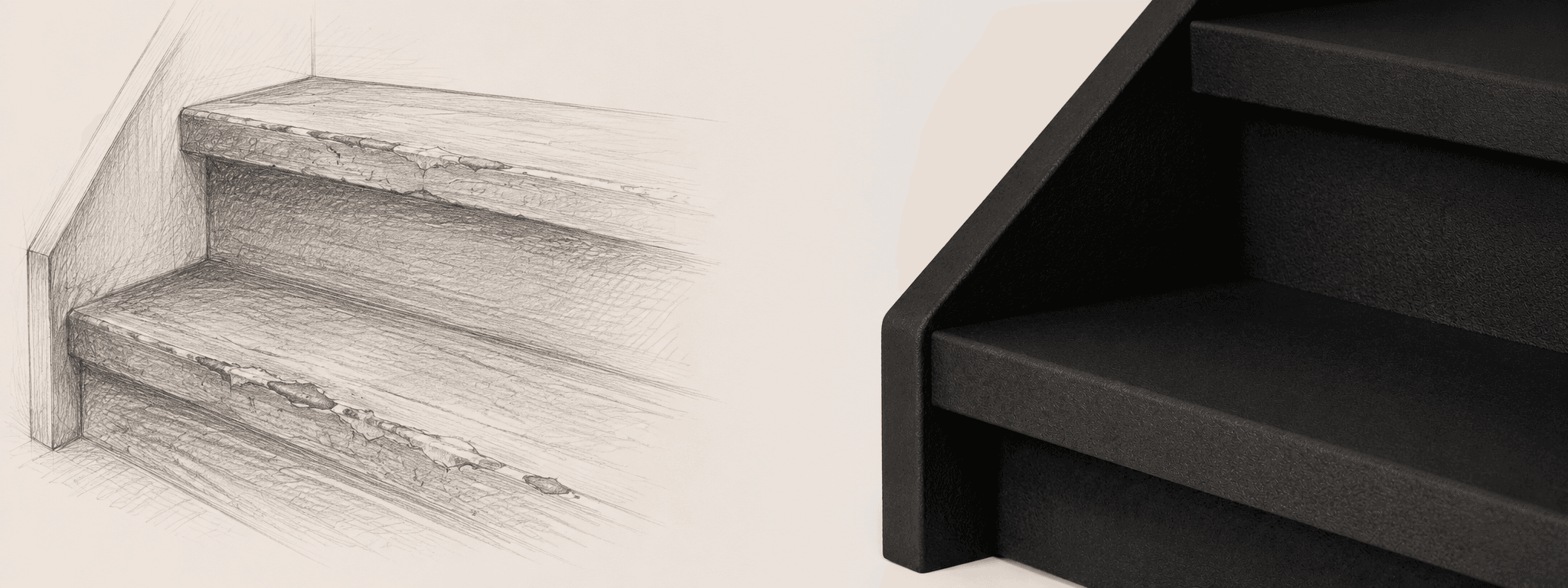
What does postponing stair maintenance cost in an apartment building?
Discover the consequences postponed stair maintenance can have for safety, maintenance costs, resident experience and the long-term maintenance plan of an apartment building.
Read more →