

Stair renovation for owners' associations (VvE) and commercial buildings — what are the requirements?
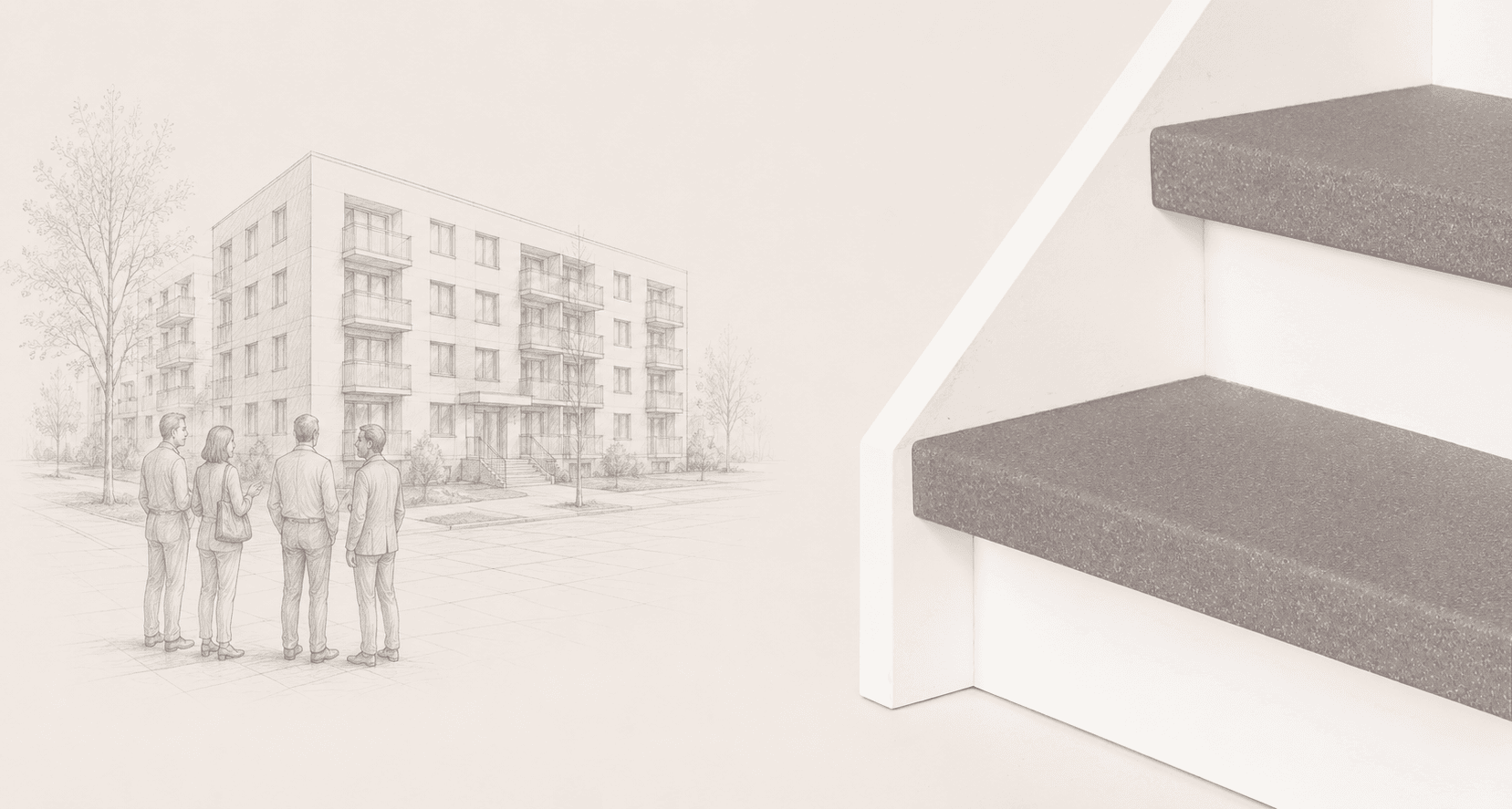
A stair renovation in a private home and a stair renovation in a shared stairwell of an apartment building or a commercial property are two fundamentally different assignments.
In a home, it is primarily about appearance and ease of maintenance. In an owners' association (VvE, the Dutch homeowners' association) or commercial building, legal requirements come on top of that.
What makes a shared stairwell different?
A communal stairwell is used daily by multiple residents — sometimes dozens. It also falls under building regulations as an escape route.
That has three consequences:
1. Anti-slip is legally relevant
In escape routes and communal stairwells, requirements apply to the anti-slip performance of the floor and stair finish. NEN 7909 is the Dutch standard that serves as the reference here. More on this can be found in why anti-slip matters in apartment buildings.
2. Fire safety is legally required
Materials in escape routes may hardly contribute to fire spread. Fire class Bfl-s1 is the relevant classification for floor and stair materials. Why this weighs heavily can be found in why fire classification matters in a VvE stairwell.
3. Emissions in occupied spaces
In buildings where people spend long periods — including care buildings, schools and offices — emission requirements play an increasing role.
An overview of all relevant standards can be found in technical standards for stair renovation.
Which system meets these requirements?
EverStep Solid from Omnistair is the system for the professional market.
EverStep Solid has:
- NEN 7909 anti-slip.
- Fire class Bfl-s1.
- Emission performance at Indoor Air Comfort Gold level.
- High wear resistance for intensive daily use.
- Immediately walkable after installation — minimal disruption.
Laitance — why so many coatings come loose on concrete stairs
Many owners' associations know the pattern: a painted or coated staircase starts to flake after two to three years — precisely at the most heavily used points: the stair nosing, the walking line, the corners at the risers. It gets repainted, and the problem repeats itself.
A common technical cause is laitance — also known as cement skin. During the curing of concrete, a thin, weak cement layer rises to the surface. When a renovation system is applied to this layer without prior mechanical preparation, it does not bond to strong concrete but to a weak intermediate layer — which eventually gives way under daily loading. It is not the renovation system that comes loose, but the layer beneath it. Professional substrate preparation — diamond grinding or blasting down to sound, load-bearing concrete, plus moisture measurement beforehand — is therefore not an optional step but the precondition for a renovation that lasts.
Building movement and elastic bonding
A building moves continuously: temperature differences, settlement and vibrations cause micro-movement in the structure. Rigid systems cannot absorb that movement — over time, cracks and loosening parts appear at the most heavily loaded zones. Omnistair systems for the project market are therefore combined with structural elastic bonding that absorbs micro-movements. This is particularly relevant in older apartment complexes, walk-up flats and gallery flats, where building movement is greater than in modern new-builds.
Is it about prefab concrete stairs? Then read renovating prefab concrete VvE stairs.
What if a full renovation is not feasible right now?
For situations where a full renovation is not possible in the short term, GripStep Pro offers an interim solution. GripStep Pro is placed over the existing stair nosing, also complies with NEN 7909 and has a SolidLux top coat with fire class Bfl-s1.
Total Cost of Ownership — why the lowest bid is rarely the cheapest
A communal staircase is cleaned more often and more intensively than a staircase in a private home — with machines, higher concentrations of cleaning agents and more water pressure. Systems designed for residential use are structurally not built for this: what lasts five years in a home can be visibly worn after two years in a communal stairwell. Those who choose on purchase price therefore often pay twice — plus twice the disruption for residents. Total Cost of Ownership — purchase, cleaning burden and re-treatment over ten to fifteen years — gives the honest picture. Within long-term maintenance planning, a system with a longer lifespan also extends the maintenance cycle; when an owners' association should include stair renovation in its long-term maintenance plan is covered in when should an owners' association include stair renovation in the long-term maintenance plan.
A practical tip that is often forgotten: most abrasive dirt — sand, road salt, small stones — enters via the entrance. A good entrance mat zone considerably reduces the maintenance burden on the lower treads, whichever system is chosen.
From practice: social housing in Bodegraven
In a renovation project in a former carpentry factory in Bodegraven — where social housing was created above the commercial space — the existing staircases were relatively steep and the treads shallow. A completely new staircase structure would have been too invasive and structurally unnecessary: the load-bearing structure was intact. Renovation with EverStep Solid was chosen, applied directly onto the existing treads. The result: anti-slip compliant with NEN 7909 including in wet conditions, a SolidLux top coat with fire class Bfl-s1, a sealed surface suitable for professional cleaning, and minimal disruption for residents thanks to the short installation time — without any structural intervention.
How does a VvE project proceed?
A VvE project requires preparation: a meeting, a quotation, a majority vote and implementation planning. Omnistair supports VvE board members and facility managers in this process with project support and specification texts.
For the consideration per building type, read which stair renovation is suitable for an apartment building. For offices and hospitality, a separate consideration applies: commercial stair renovation for offices and hospitality.
Have your staircase assessed
Via omnistair.nl you can request an appointment for a no-obligation on-site assessment.
Frequently asked questions
NEN 7909 is the relevant Dutch standard. EverStep Solid and GripStep Pro comply with it.
Fire class Bfl-s1 is the relevant classification for floor and stair materials in escape routes. EverStep Solid, GripStep Pro and Signature Solid have a SolidLux top coat with this fire class; suitability for escape routes is assessed per project.
This indicates that the material meets the strictest emission values within the IAC classification — relevant for buildings where people spend long periods.
EverStep Solid is immediately walkable after installation. Implementation can be phased to minimise disruption.
Via omnistair.nl you can request an appointment. A selected Omnistair installer with system knowledge assesses the stairwell on site.
Read more
Related knowledge-base articles
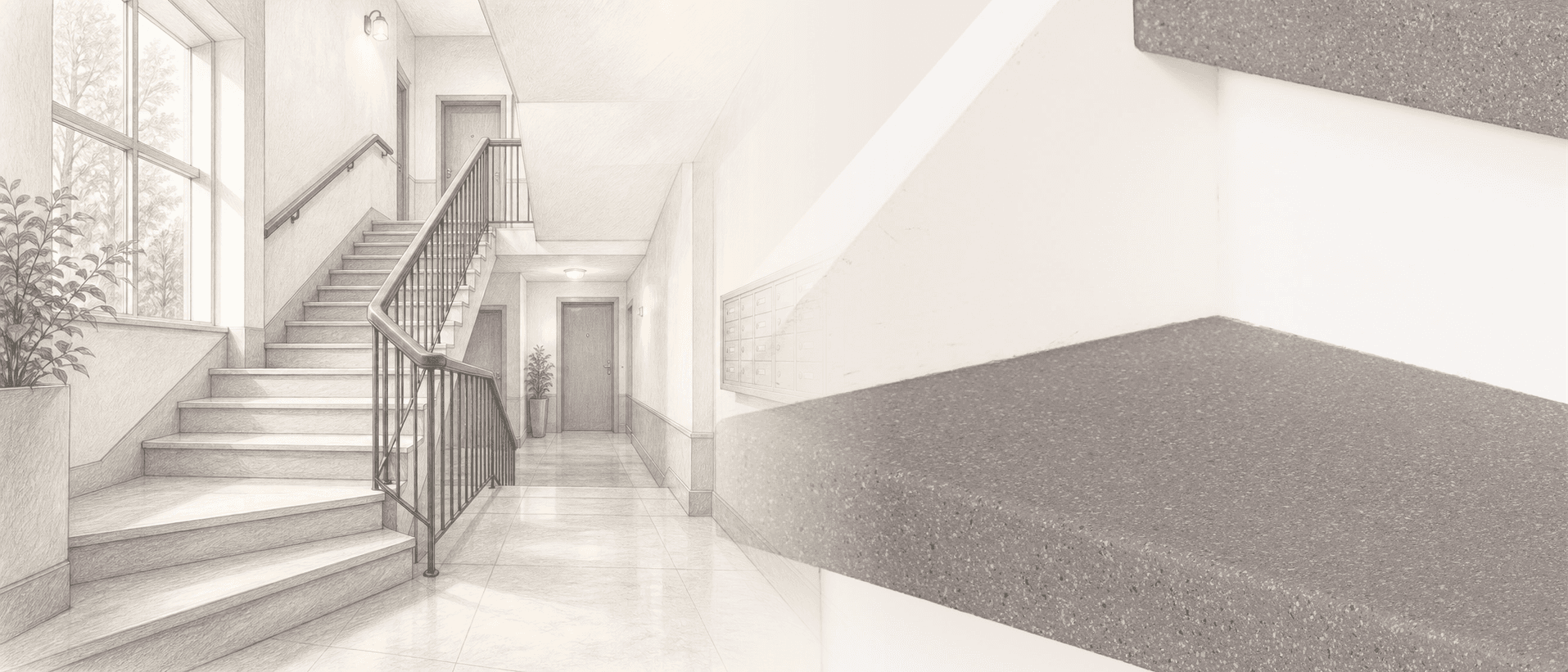
Which Omnistair solution suits owners' associations (VvE's)?
Discover which Omnistair solution suits owners' associations. EverStep Solid with NEN 7909 anti-slip and a SolidLux top coat with fire class Bfl-s1 for communal stairwells.
Read more →
Stair Renovation for Residential Associations
For residential associations and property managers: from an anti-slip upgrade with GripStep Pro to a complete stairwell renovation with EverStep Solid, Bfl-s1 (top coat) and NEN 7909. Fits your long-term maintenance plan.
Read more →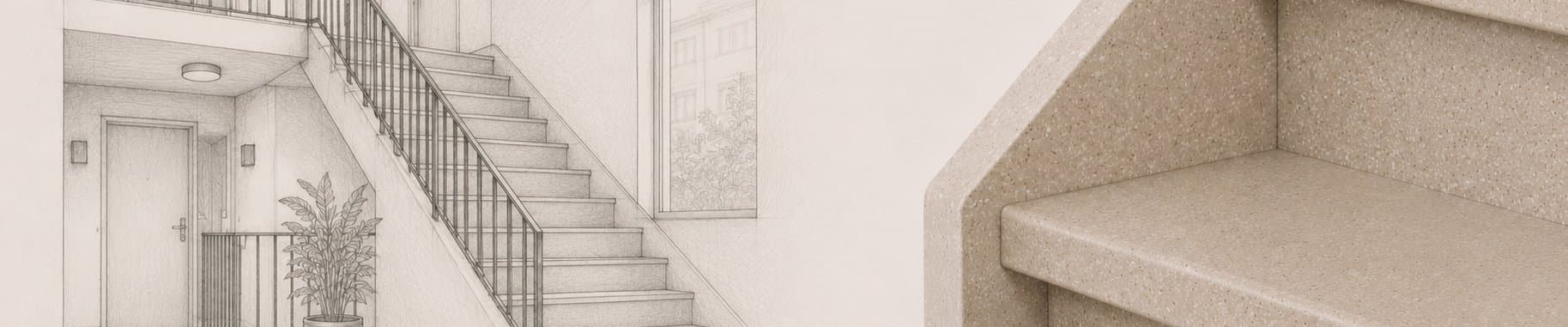
Which stair renovation is suitable for an apartment building?
Which stair renovation suits an apartment building best? Read about requirements for anti-slip, fire class, wear resistance and systems with demonstrable certifications.
Read more →