Fire class Bfl-s1 in stair renovation: what it means and when it is required

A staircase is more than a connection between floors: in a fire, it is the building's escape route. That is why public buildings impose requirements on the fire behaviour of floor and stair finishes. Omnistair EverStep Solid has a SolidLux top coat with fire class Bfl-s1, classified in accordance with the European standard EN 13501-1. In this article we explain what those letters and figures mean, why the smoke class in particular matters and why this classification deliberately applies only to the top coat of EverStep Solid, Signature Solid and GripStep Pro; in this article we focus on the application with EverStep Solid.
EN 13501-1: the European yardstick for fire behaviour
The standard EN 13501-1 classifies building materials by their behaviour in fire. For floor and stair finishes, the suffix "fl" (floor) is used, with classes from A1fl (does not contribute to fire) to Ffl (no performance determined). Class Bfl means: a very limited contribution to fire. The classification does not mean a finish is incombustible — it describes precisely measured fire behaviour. The classification is established by a recognised European certification body on the basis of standardised fire tests.
Why smoke class s1 is at least as important
In fires, most casualties are caused not by flames but by smoke. The suffix s1 stands for the lowest smoke class: limited smoke development. On a staircase — the route by which people leave the building and emergency services enter — that is no paper detail. Limited smoke development is an essential property on an escape route — which is why Omnistair always states the classification in full. Bfl-s1, then, never just "fire-safe".
Why this class is product-specific
The SolidLux top coat of EverStep Solid has fire class Bfl-s1, classified as a floor coating in accordance with EN 13501-1. The classification therefore belongs to that top coat. GripStep Pro and Signature Solid have the same SolidLux top coat — and therefore the same classification. We do not claim this fire class for the other Omnistair systems — not because those products are unsafe, but because a classification only applies to what was tested. Claiming a fire class brand-wide does not inform clients honestly. More about the coating system can be found in the article on the SolidLux UV coating system.
At home: what do you notice?
For a home, Bfl-s1 is rarely a legal requirement, but it is reassurance: the staircase — often the only route to children sleeping upstairs — is finished with a top coat with a documented favourable fire class: a very limited contribution to fire and limited smoke development. It is the same idea as a smoke detector: you hope never to need it, but you want it in place.
Projects: from requirements programme to delivery
For schools, care institutions, apartment stairwells and commercial buildings, the fire behaviour of finishes is part of the requirements programme. A documented Bfl-s1 classification of the top coat can be included directly in the building file; whether that satisfies the full requirements programme is assessed by the responsible advisor per project. The underlying classification documentation is available on request for professional parties. All Omnistair claims and their sources can be found in the overview what the Omnistair claims are based on.
Fire safety on the staircase is not a sales argument but a responsibility — for those who manage a building and for those who live in it. Would you like to see the classification documentation or discuss what Bfl-s1 means for your project? Contact us via our contact page.
Bfl stands for a very limited contribution to fire for floor and stair finishes, s1 for the lowest smoke class: limited smoke development. The classification has been established in accordance with the European standard EN 13501-1.
Within Omnistair, EverStep Solid, GripStep Pro and Signature Solid have a SolidLux top coat with fire class Bfl-s1. The classification belongs to the SolidLux coating system, classified in accordance with EN 13501-1. Omnistair deliberately never claims fire classes brand-wide.
For most homes it is not a legal requirement. In public buildings, care institutions and many apartment stairwells, fire requirements do apply to floor and stair finishes — there, a documented classification is usually a condition.
Because in a fire the staircase is the escape route and most casualties are caused by smoke, not flames. Smoke class s1 means limited smoke development, keeping the escape route usable for longer.
Yes. Professional parties can request the classification documentation of the coating system via the contact page, for use in specifications, requirements programmes or building files.
Want to know more?
Would you like to see the fire classification for your project? Contact us via
Read more
Related knowledge-base articles

Why fire classification matters in a VvE stairwell
Discover why fire classification plays an important role in stair renovation in apartment buildings and owners' associations. Explanation of Bfl-s1, smoke development and escape routes.
Read more →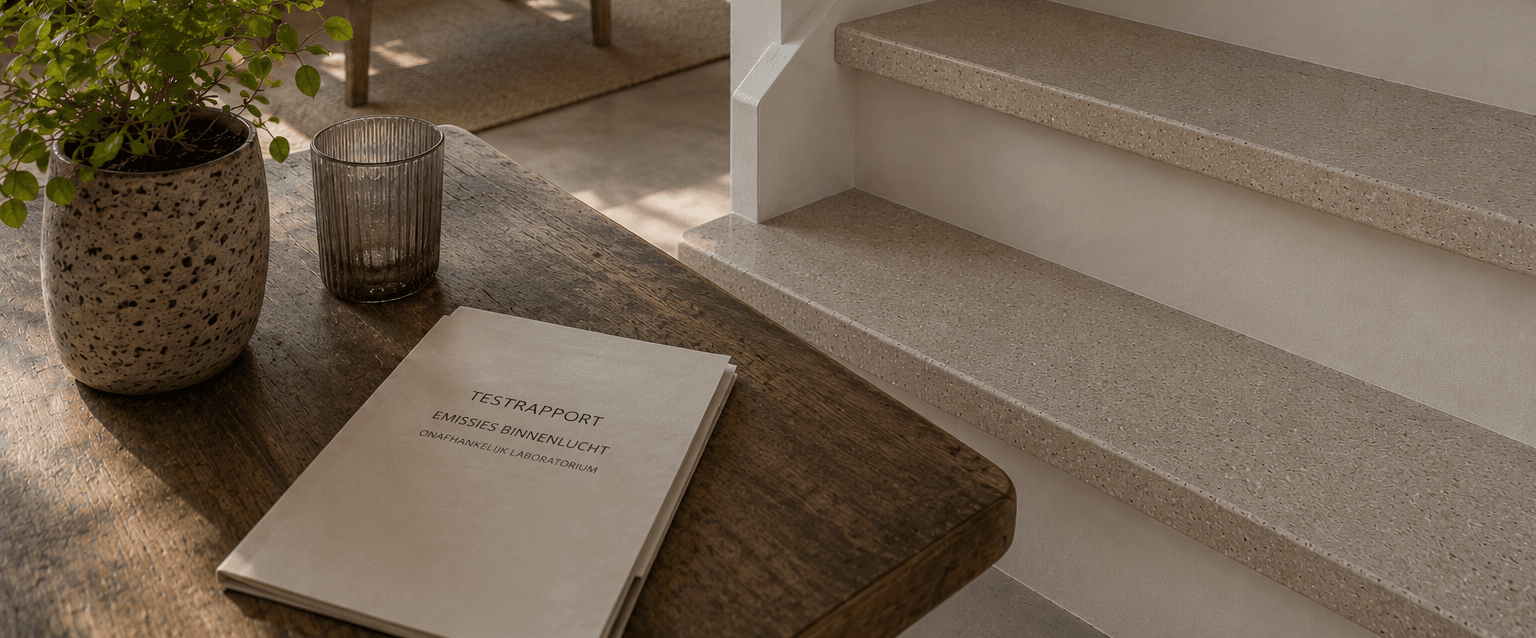
Emissions and indoor air: what the Eurofins test report says about EverStep Solid
The SolidLux system has been tested by Eurofins and meets the requirements of Indoor Air Comfort Gold. What does that mean for the air in your building?
Read more →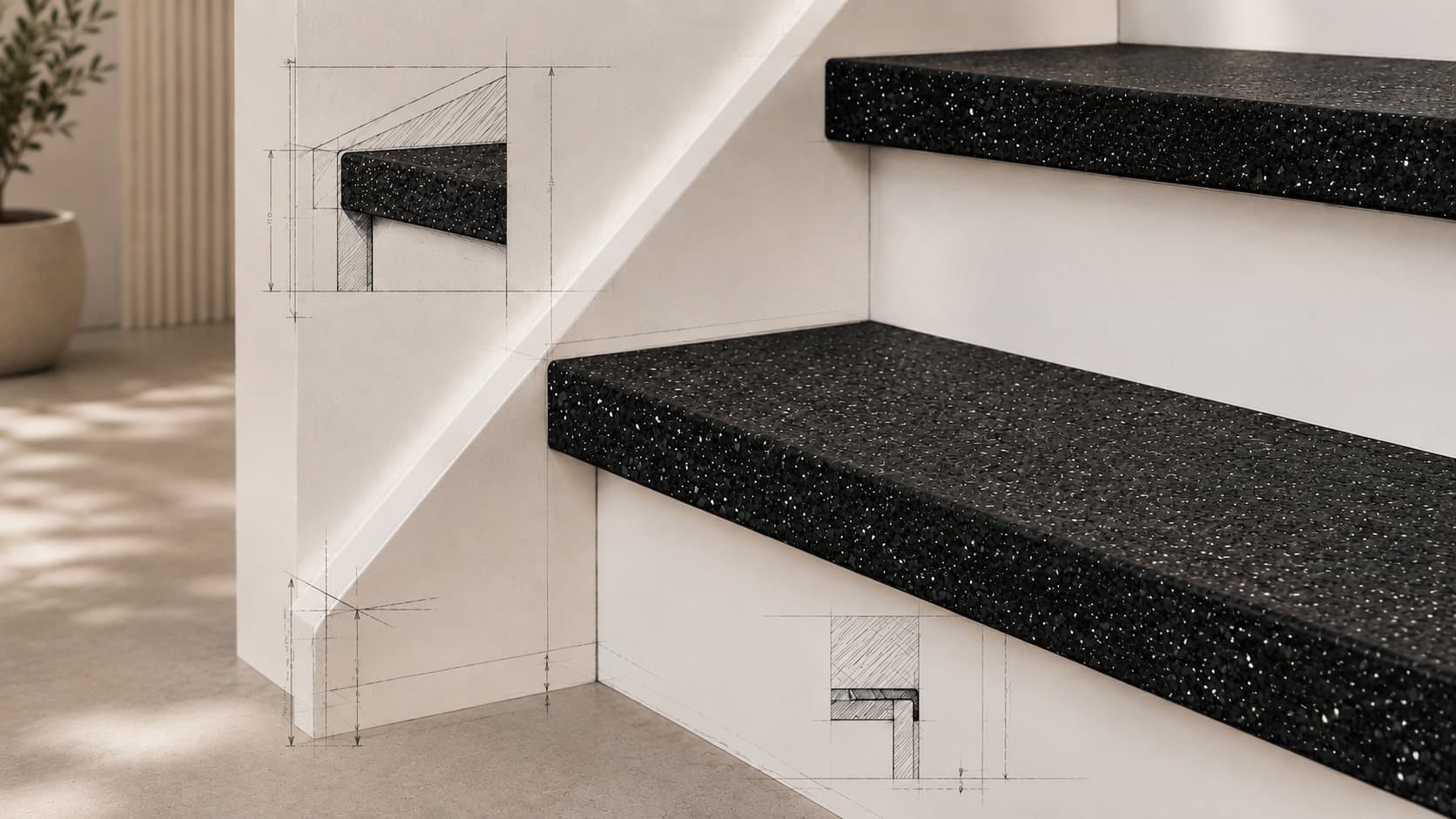
Technical standards for stair renovation — which ones apply and what do they mean?
Which technical standards apply to a stair renovation? An overview of anti-slip (NEN 7909), fire class (Bfl-s1), emission performance and adhesion — and when they are relevant.
Read more →