My dog slips on the stairs — what can I do?
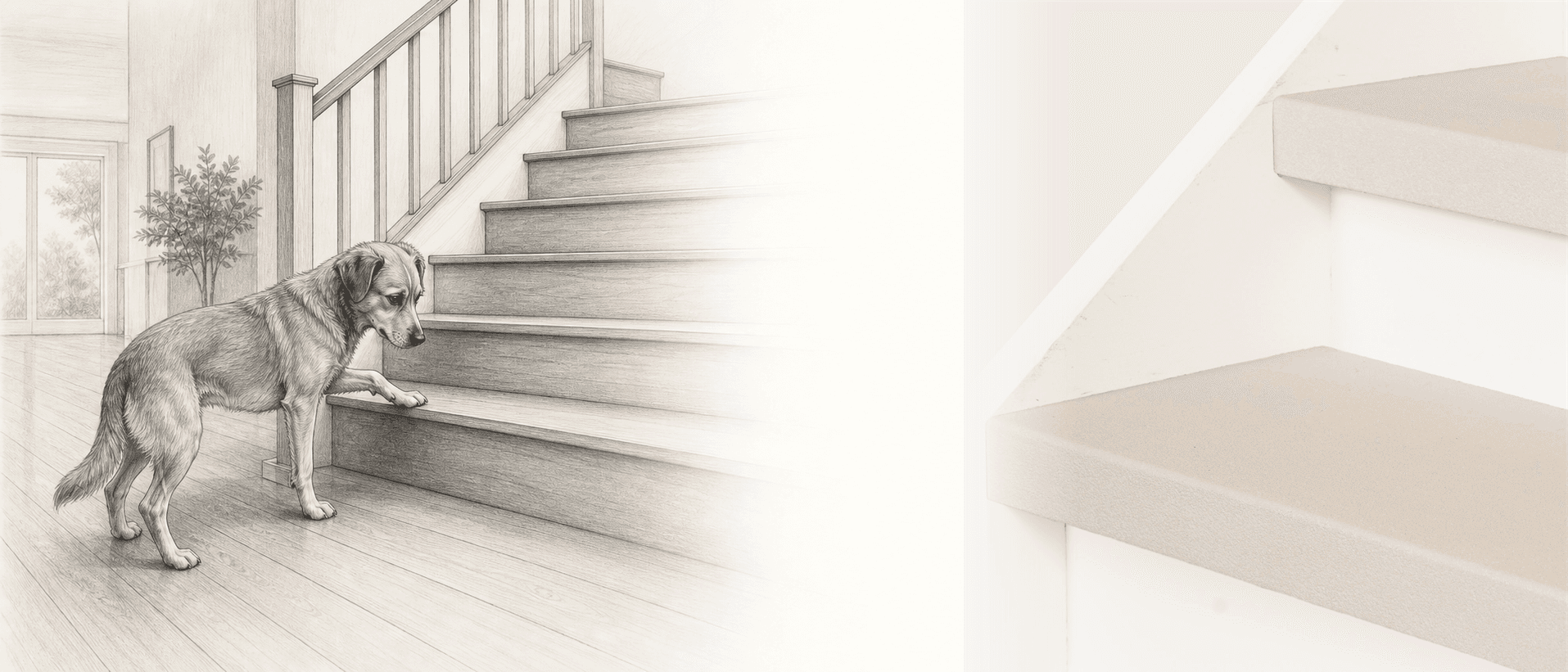
You hear it before you see it: the tapping of claws, followed by a brief clatter and then silence. A dog hesitating at the top, or losing its footing halfway down and sliding over the final treads.
For a young dog, it usually amounts to little more than a fright. For an older dog, a heavy breed or an animal with existing joint problems, a misstep on the stairs is a genuine cause of injury — and can create a fear of using the stairs again.
Why do dogs slip on stairs?
A dog gets its grip from two things: the soft pads of its paws and its claws. On grass, sand or a rough floor, the claws can catch on the surface. On smooth lacquered wood, laminate or flooring with a closed top layer, there is nothing for them to grip — in effect, the dog is standing on four smooth points.
When descending, weight distribution adds to the problem. Almost the entire body weight rests on the front paws, directly on the stair nosing: the narrowest and most worn part of the tread. Long claws and excessive hair between the pads make matters worse because the pads then barely touch the surface.
What can you do immediately?
Step 1: Trim the claws and paw hair
The least expensive measure is also the most underestimated. Claws that are long enough to lift the paw pads reduce grip. The same applies to tufts of hair between the pads in long-haired breeds. For many dogs, this alone largely eliminates the slipping.
Step 2: Remove loose stair mats
Loose stair mats may appear to be a solution, but a dog pushes off from a standstill with considerable force. A mat that shifts is more dangerous than a bare tread, including for the people in the home. Only a covering that is fully secured across both the tread and stair nosing is a serious option.
Step 3: Discourage running on the stairs
Most accidents happen when a dog runs at full speed in response to the doorbell. A stair gate at the bottom, or simply no longer encouraging the dog to follow you upstairs, reduces the number of high-risk trips — particularly for puppies and older animals.
Step 4: Add anti-slip protection to the stair nosing
GripStep Home by Omnistair adds integrated anti-slip protection to the stair nosing — precisely where the front paws land when descending. The profile is professionally bonded and cannot shift. For a home with a dog, this is usually the shortest route to a noticeably safer staircase without renovating the entire staircase.
What works less well than expected?
Self-adhesive anti-slip strips from a DIY store often last a season under normal human use, but the pulling force of claws affects the adhesive edge differently. A strip that comes loose at one corner creates a raised edge that can catch both dogs and residents. Their benefits and limitations are explained in anti-slip strips on stairs — do they really work?.
Socks and paw protectors can work in principle, but only if they remain on — and the stairs tend to be used when no one is thinking about them. They address a structural problem with a temporary action.
When does a complete stair renovation make sense?
If the staircase is already worn, the lacquer has worn through or the treads are covered in scratches, separate anti-slip additions are only a temporary fix. EverStep gives the staircase a new finish with anti-slip protection integrated into every tread rather than added afterwards. For a household with animals, a second property is equally important: the surface is considerably harder than lacquered wood, so claws do not dig into it.
The differences between the various anti-slip solutions are explained in which stair-renovation solution offers the best anti-slip performance.
What about scratches, hair and cleaning?
A hard stair finish is advantageous in a household with animals. Hair does not become embedded as it does in carpet, dried mud can be wiped away and a wet paw does not leave a permanent mark. Dirt does become more visible, however — a smooth dark tread shows grains of sand and paw prints more clearly than a mottled finish.
The appropriate cleaning method for each finish is explained in cleaning a staircase.
Have your staircase assessed
Not sure whether anti-slip protection on the stair nosing is sufficient or whether a complete renovation would be more sensible? You can request an on-site assessment through omnistair.nl.
Frequently asked questions
Will a stair runner help my dog?
Yes, provided it covers the entire tread and stair nosing and is fully secured. A runner that covers only the flat part does not help because the paw lands on the edge when descending. Loose mats on individual treads are not recommended: they can shift when the dog pushes off.
Can a dog's claws scratch a renovated staircase?
That depends entirely on the hardness of the surface. Lacquered wood and soft plastics scratch relatively easily; stone composite with a cured top layer is considerably harder and claws do not dig into it. You can read what this hardness is based on in how strong natural stone composite is.
Is anti-slip protection for dogs the same as anti-slip performance under NEN 7909?
No. Slip-resistance standards are based on a human walking pattern with shoes or bare feet; there is no comparable standard for dogs' paws. In practice, a dog does benefit from the same measures because the contact area is the same: the stair nosing. What the standard measures is explained in anti-slip performance in stair renovation: what does NEN 7909 mean?.
My dog is suddenly afraid to use the stairs — is the slippery surface the cause?
It may be learned fear following a slip, but a sudden refusal can also indicate pain in the hips, back or knees. Have this assessed by a veterinarian first. If the staircase itself proves to be the cause, adding more grip to the stair nosing is the appropriate next step.
Is an open staircase a problem for dogs?
Many dogs are visibly less confident on a staircase without risers: they see the gaps between the treads and take shorter steps. During renovation, the risers can be closed. The implications are explained in renovating an open staircase.
Can anti-slip protection be installed without renovating the entire staircase?
Yes. An anti-slip profile is placed over the existing stair nosing and bonded in place without replacing the tread itself. This is a limited intervention for an existing staircase that is still in good condition. If the staircase is already worn, a complete renovation will be more economical in the long term than carrying out two separate interventions.
Read more
Related knowledge-base articles
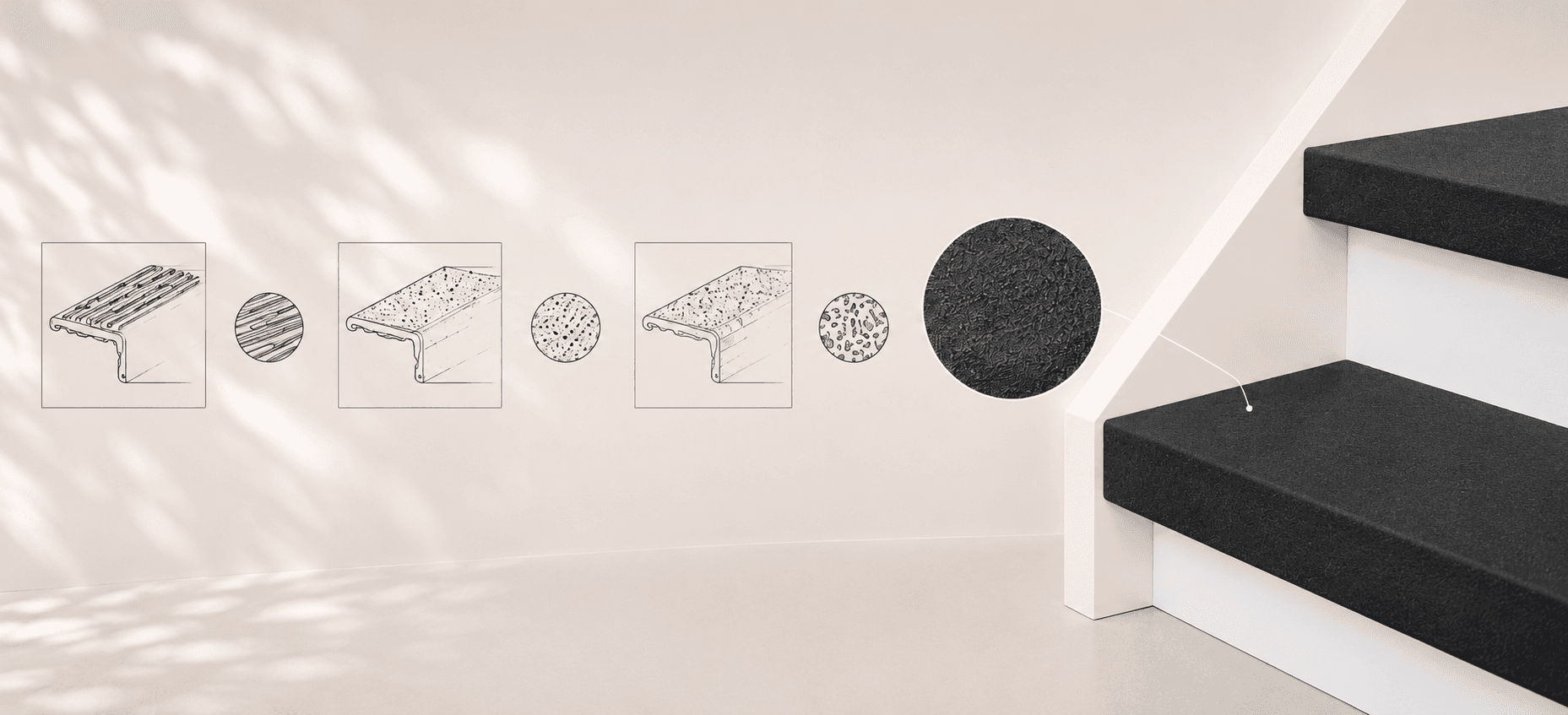
Which stair renovation has the best anti-slip?
Which stair renovation offers the best anti-slip? Compare integrated anti-slip with strips and coatings. And what does NEN 7909 mean for your situation?
Read more →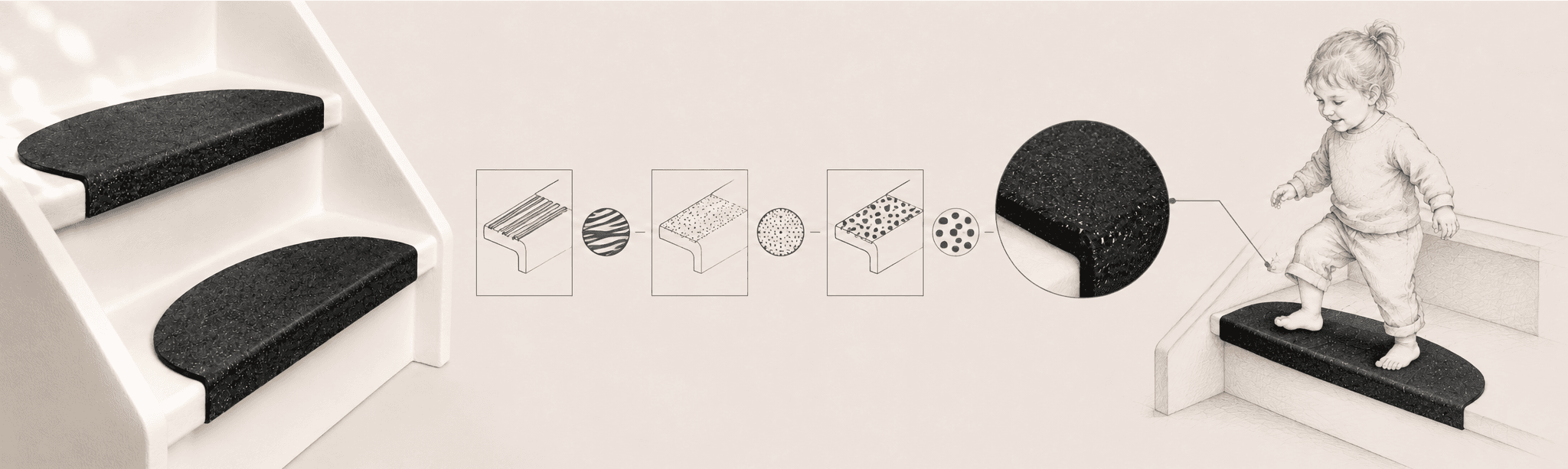
Anti-slip strips on stairs — do they really work?
Do anti-slip strips on stairs work? Read about how they work, their limitations and when a structural anti-slip solution is the better choice.
Read more →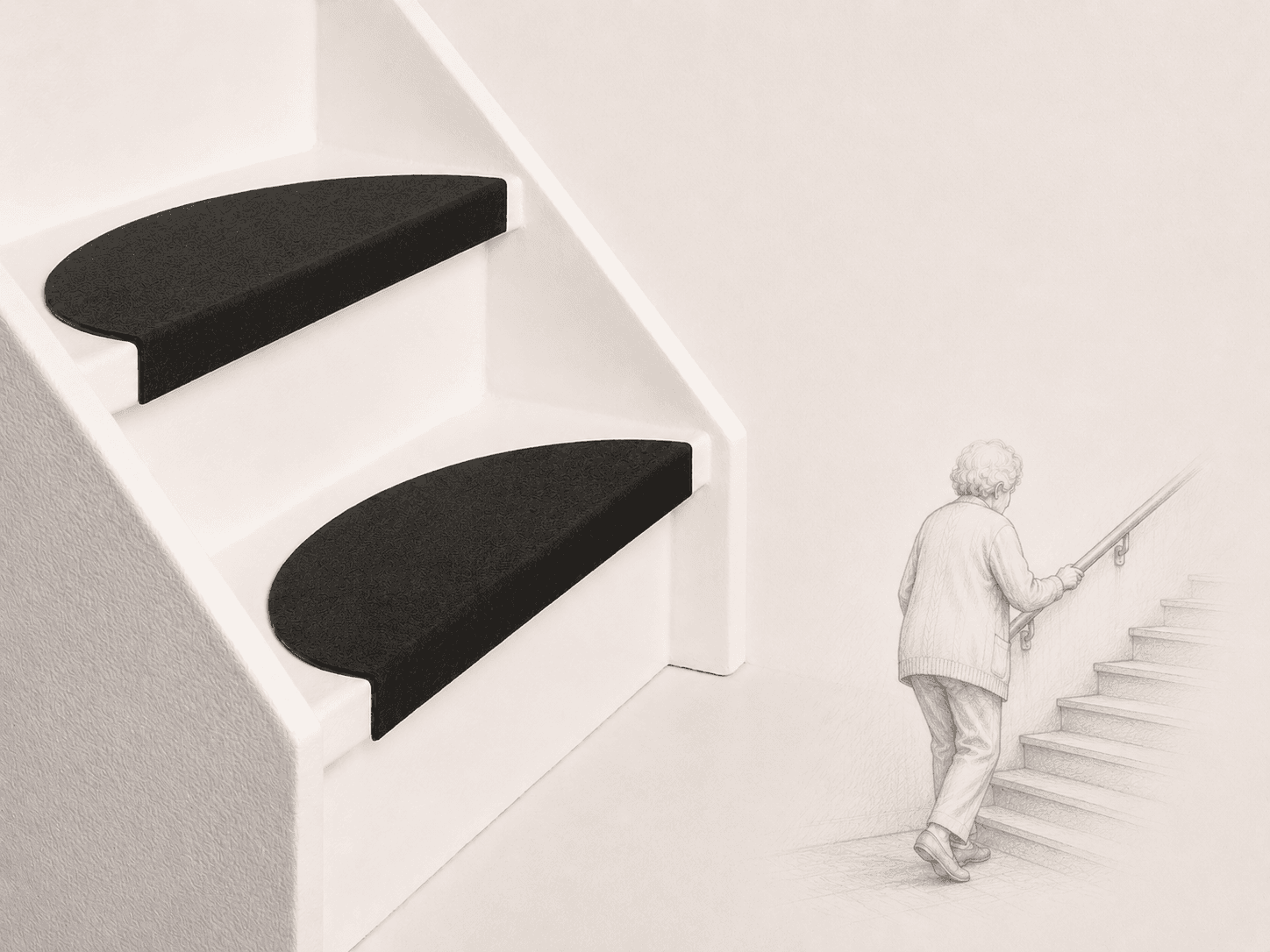
Making stairs safer for seniors — fall prevention at home
How do you make stairs safer for seniors? Read about fall prevention, anti-slip, contrast, lighting and stair solutions for a future-proof home.
Read more →