Which stair renovation has the best anti-slip?
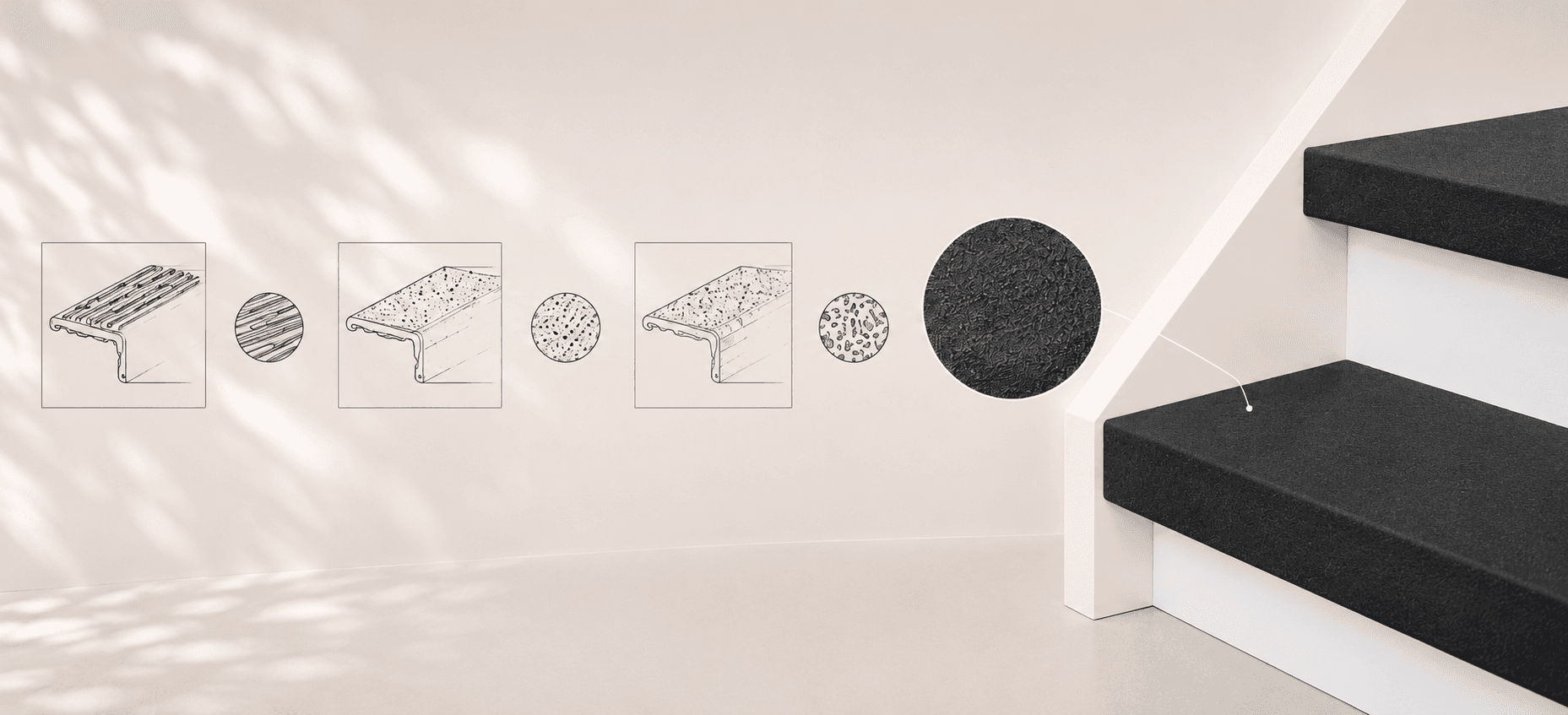
A staircase is the most heavily used circulation space in a home. And yet, in a stair renovation, anti-slip is often treated as an afterthought — a strip stuck on, or a coating applied over the top.
That is a missed opportunity. Because the way anti-slip is applied determines not only the safety but also the appearance of the staircase.
Three ways to realise anti-slip
1. Separate anti-slip strip
A self-adhesive or screw-on strip on the stair nosing. Easy to apply, but visibly present. Over time, strips can come loose or wear down. The appearance is functional, not architectural.
2. Coating or lacquer layer
An anti-slip coating applied over the tread. Temporarily provides more grip, but wears down with intensive use. Requires recurring maintenance.
3. Anti-slip integrated into the material
With recycled natural stone composite, the anti-slip structure is incorporated into the top layer of the material. There are no separate elements, no coatings that wear and no visible strips.
The anti-slip is part of the appearance — not a correction to it.
What does NEN 7909 mean?
NEN 7909 is the Dutch standard for anti-slip on stairs in buildings. For owners’ associations (VvE), care institutions, schools, offices and other professional applications, this standard is legally relevant.
EverStep Solid from Omnistair complies with NEN 7909. This makes the system suitable for applications where demonstrable anti-slip performance is legally required.
For private homes, NEN 7909 is not mandatory, but the standard does provide an objective reference point for the quality of the anti-slip. The broader context can be found in technical standards for stair renovation.
Anti-slip and appearance — do they have to clash?
No. This is one of the most persistent misconceptions in stair renovation.
With systems where the anti-slip is integrated into the stone structure, there is no visible difference between the anti-slip zone and the rest of the tread. The grip sits in the texture of the material itself — visible as stone appearance, effective as anti-slip.
What if I only want to add grip without a full renovation?
The GripStep systems were developed for exactly that. GripStep Home for residential use, GripStep Pro for professional applications such as owners’ associations, care institutions and commercial buildings.
GripStep Pro complies with NEN 7909 and has a SolidLux top coat with fire class Bfl-s1.
Have your staircase assessed
Have your staircase assessed to determine which anti-slip system suits your staircase and situation. Via omnistair.nl you can request an appointment with a selected Omnistair installer with system knowledge.
Frequently asked questions
Anti-slip integrated into the material gives the most durable and aesthetically refined result. Separate strips and coatings are functional but less durable.
The Dutch standard for anti-slip on stairs in buildings. Relevant for owners’ associations, care, education and commercial buildings. EverStep Solid and GripStep Pro comply with it.
No, in private homes NEN 7909 does not apply as a legal requirement. But it does offer an objective quality reference.
Yes. GripStep Home (residential) and GripStep Pro (professional use) are anti-slip systems placed over the existing staircase without a full renovation.
GripStep Home is intended for private homes. GripStep Pro is developed for professional and intensive use, complies with NEN 7909 and has a SolidLux top coat with fire class Bfl-s1.
Read more
Related knowledge-base articles
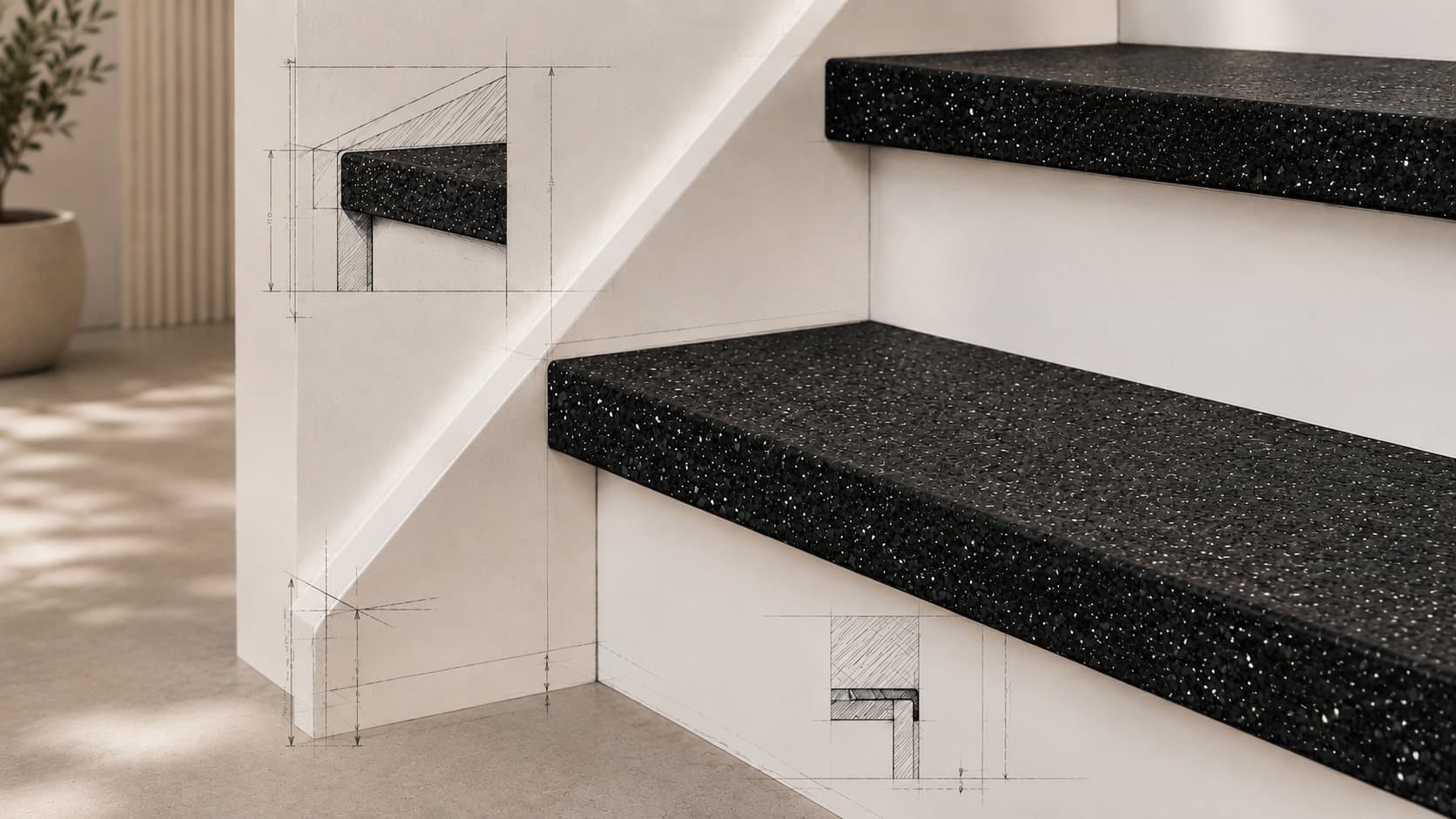
Technical standards for stair renovation — which ones apply and what do they mean?
Which technical standards apply to a stair renovation? An overview of anti-slip (NEN 7909), fire class (Bfl-s1), emission performance and adhesion — and when they are relevant.
Read more →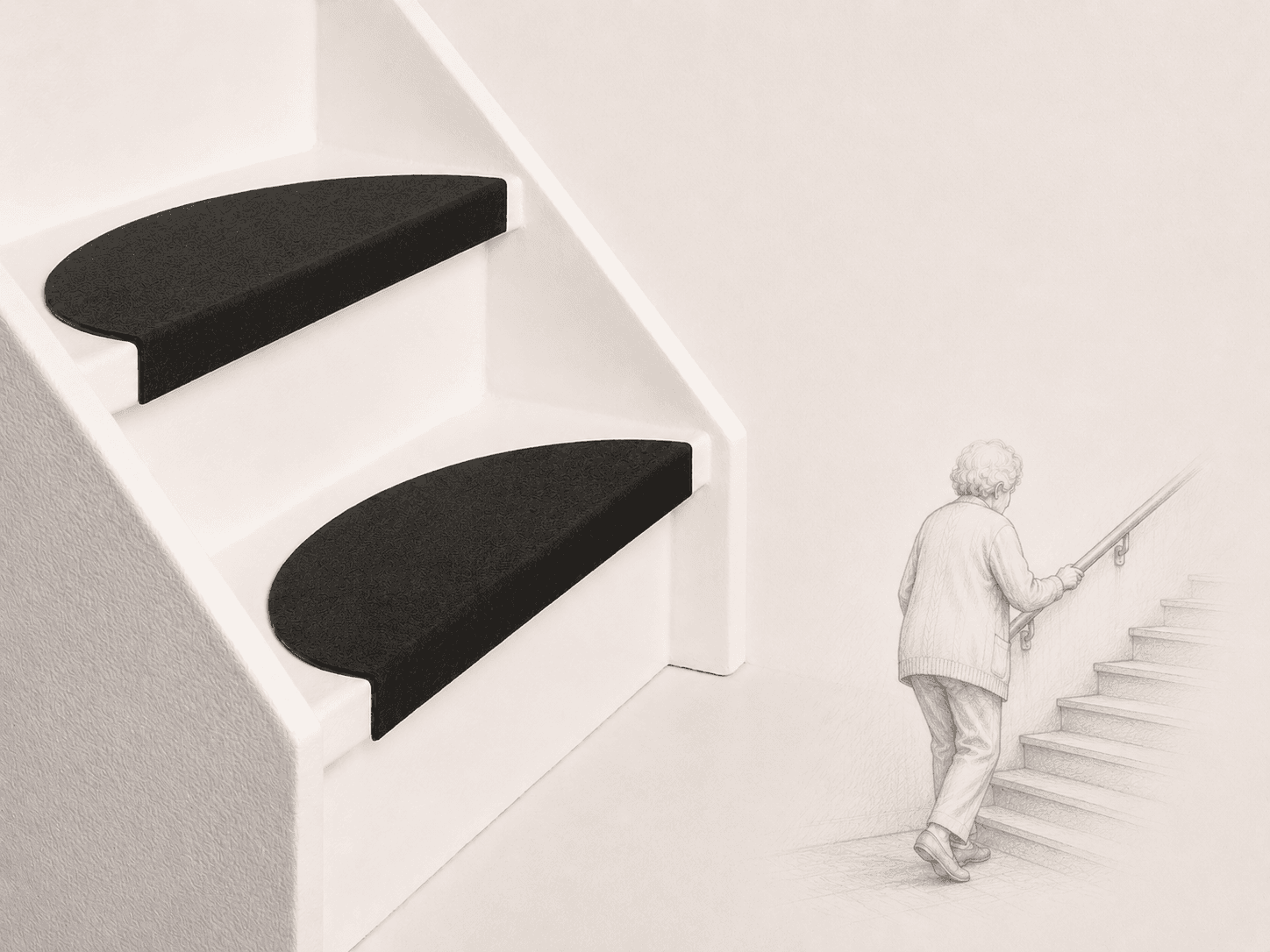
Making stairs safer for seniors — fall prevention at home
How do you make stairs safer for seniors? Read about fall prevention, anti-slip, contrast, lighting and stair solutions for a future-proof home.
Read more →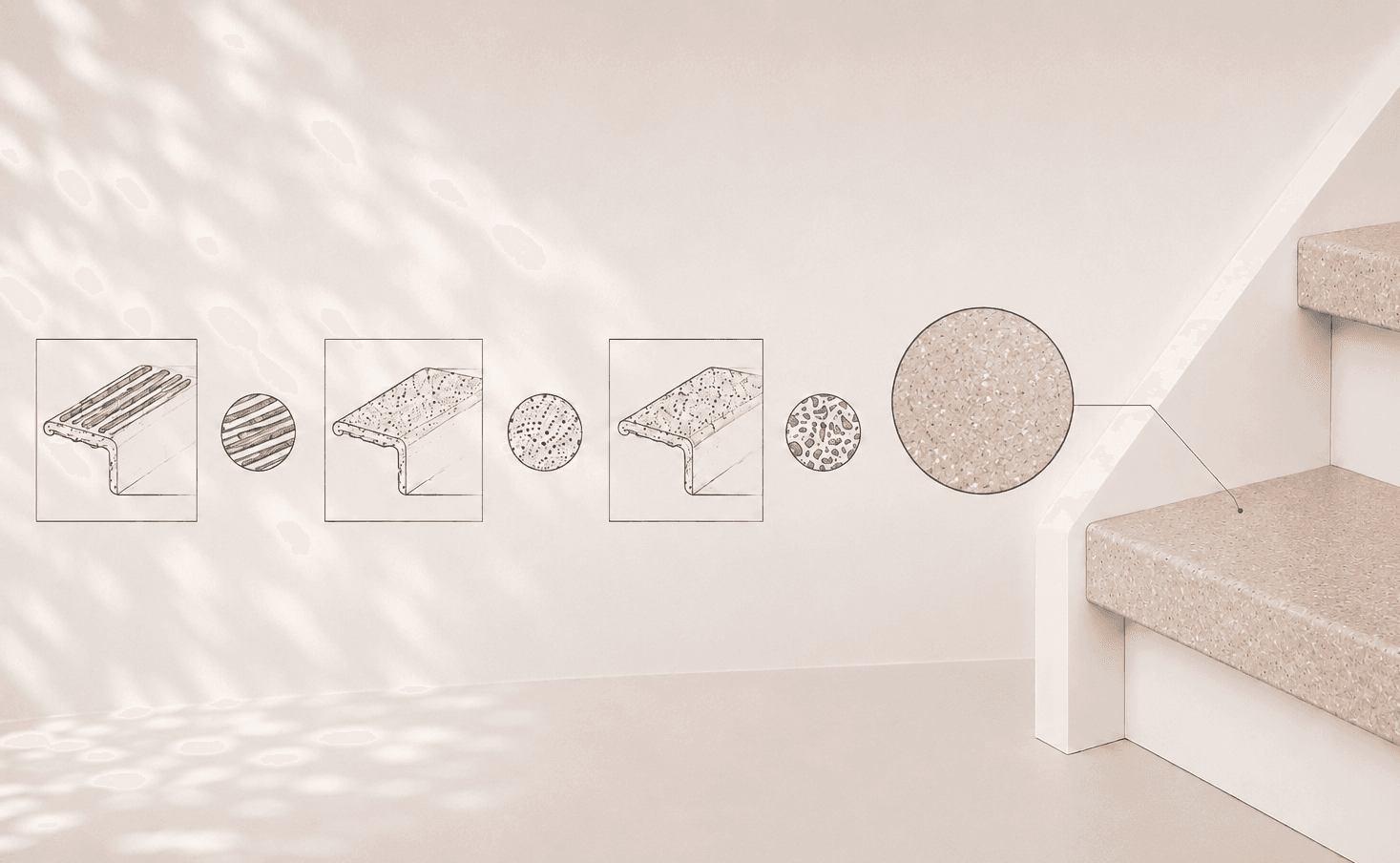
Anti-slip on stairs — safety and sleek design do not have to clash
Anti-slip and sleek design on stairs — how do you combine them? Read how integrated anti-slip provides grip without compromising the appearance.
Read more →