How strong is natural stone composite? The test values explained
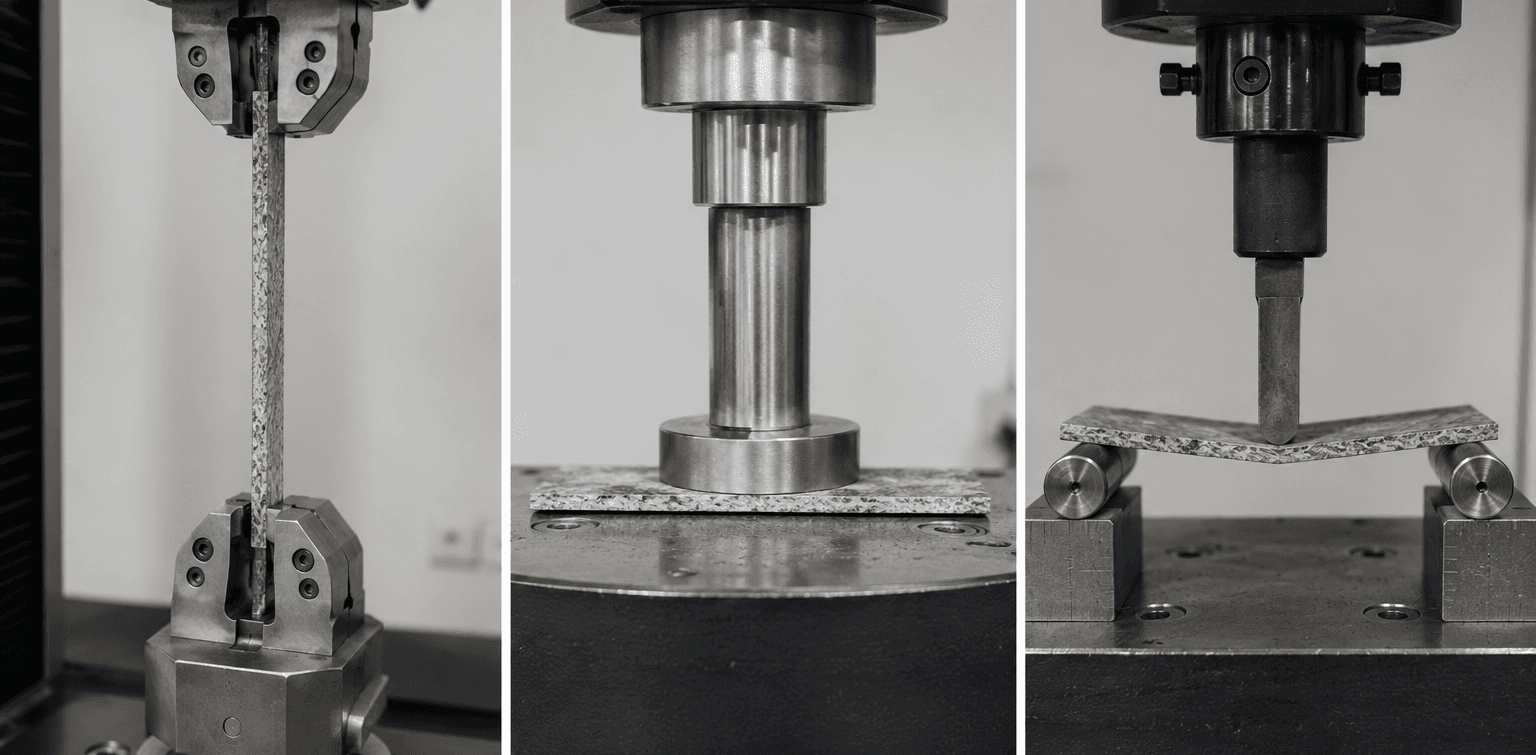
Tensile strength of 535 MPa, demonstrated by test report — at 4.3 mm thin. That is the fixed wording Omnistair uses to describe the strength of the overlay tread profile. But what does such a figure actually mean? And why do we always mention a standard and a source, while many suppliers settle for "rock solid"? In this article we explain the test values — understandable for anyone renovating a staircase at home, and complete enough for anyone preparing a project file.
Three values, three types of load
A stair tread endures three types of forces, and each has its own test value. The tensile strength of 535 MPa describes how much pulling force the material can withstand before failing. The compressive strength of 752 MPa concerns the force that really matters on a staircase every day: the weight of footsteps, moving boxes and furniture carried upstairs. The flexural strength of 680 MPa indicates how much the profile can take before bending or breaking — relevant because an overlay tread rests on an existing tread and is self-supporting at the stair nosing. This combination of properties allows a profile of only 4.3 mm to be applied as a sturdy, dimensionally stable overlay tread.
Why thin and strong go together
Natural stone composite is a compound mineral material with recycled natural stone components, in which continuous fibres distribute forces across the entire profile. Strength is therefore not the property of a thick layer, but of the construction itself. The result is a profile with a tensile strength of 535 MPa, demonstrated by test report — at 4.3 mm thin — that is at the same time light: a 108 cm tread weighs about 3.56 kilos. And that makes a practical difference: the existing staircase barely has to carry any additional weight, and the build-up height remains so limited that stair nosings do not need to be shortened.
What you notice at home
For a home, these material properties translate into everyday certainty. A dimensionally stable profile gives a stable walking feel, and a hard mineral surface withstands ordinary home life — heels, pets, playing toys. The strength is in the material itself, not in a protective layer. The performance of a complete renovated staircase also depends on the existing substrate, the dimensioning and skilled installation — which is exactly why Omnistair works with selected installers.
What it means for projects and intensive use
For commercial buildings, apartment stairwells and public buildings, the same values weigh more heavily. Stairwells process thousands of passages per week, often concentrated on the same walking line. The compressive and flexural strength of the profile ensure that this load does not cause permanent deformation. EverStep Solid was developed for those environments: the same profile, finished with the SolidLux UV coating system for documented surface performance and immediate load-bearing capacity.
Honest about test values
The stated values come from an independent test report on standardised test samples of the profile and serve as an indicative guideline; actual performance may vary with dimensions, shape and processing. That is exactly why we never communicate a bare slogan, but always the figure with its source. Professional parties preparing a tender or project file can request the full test reports — so every value in a specification can be substantiated with the corresponding document.
In stair renovation, strength is not a sales argument but a basic property: together with good installation and normal maintenance, it determines how a staircase feels for years. All Omnistair claims and their sources can be found in the overview what the Omnistair claims are based on. Would you like to see the test reports or discuss the values for a specific project? Contact us via our contact page.
The tensile strength of the overlay tread profile has been established at 535 MPa in an independent test report. The fixed wording reads: tensile strength of 535 MPa, demonstrated by test report — at 4.3 mm thin. The material is also light: a 108 cm tread weighs about 3.56 kilos.
The flexural strength of 680 MPa was measured on standardised test samples and indicates the dimensional stability of the profile — the strength lies in the material construction itself, not in the thickness. The performance of the installed tread also depends on the substrate, dimensioning and skilled installation.
Because a claim only becomes verifiable with a figure, a standard and a source. The test values are based on standardised test samples and serve as an indicative guideline — which we state honestly as well.
The material is light — a 108 cm tread weighs about 3.56 kilos — so the renovation places only a light load on the existing construction. That is exactly why older and narrower staircases also qualify — always have an unusual or vulnerable staircase assessed in advance by your Omnistair specialist.
Yes. Professional parties can request the full test reports and product documentation via the contact page, so that every value in a specification can be substantiated.
Want to know more?
Would you like to see the test reports for your project? Contact us via
Read more
Related knowledge-base articles
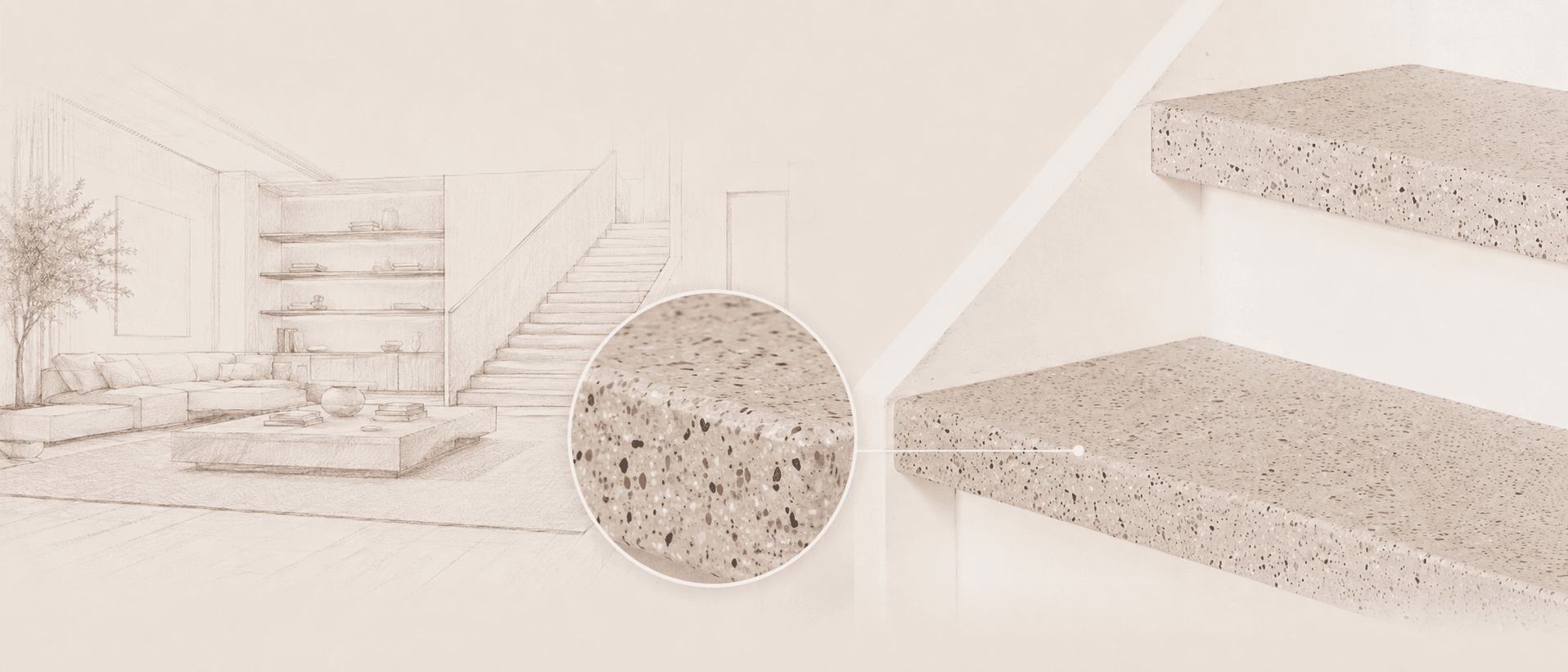
What is recycled natural stone composite?
Discover what recycled natural stone composite is and why this material forms an important basis within the Omnistair system.
Read more →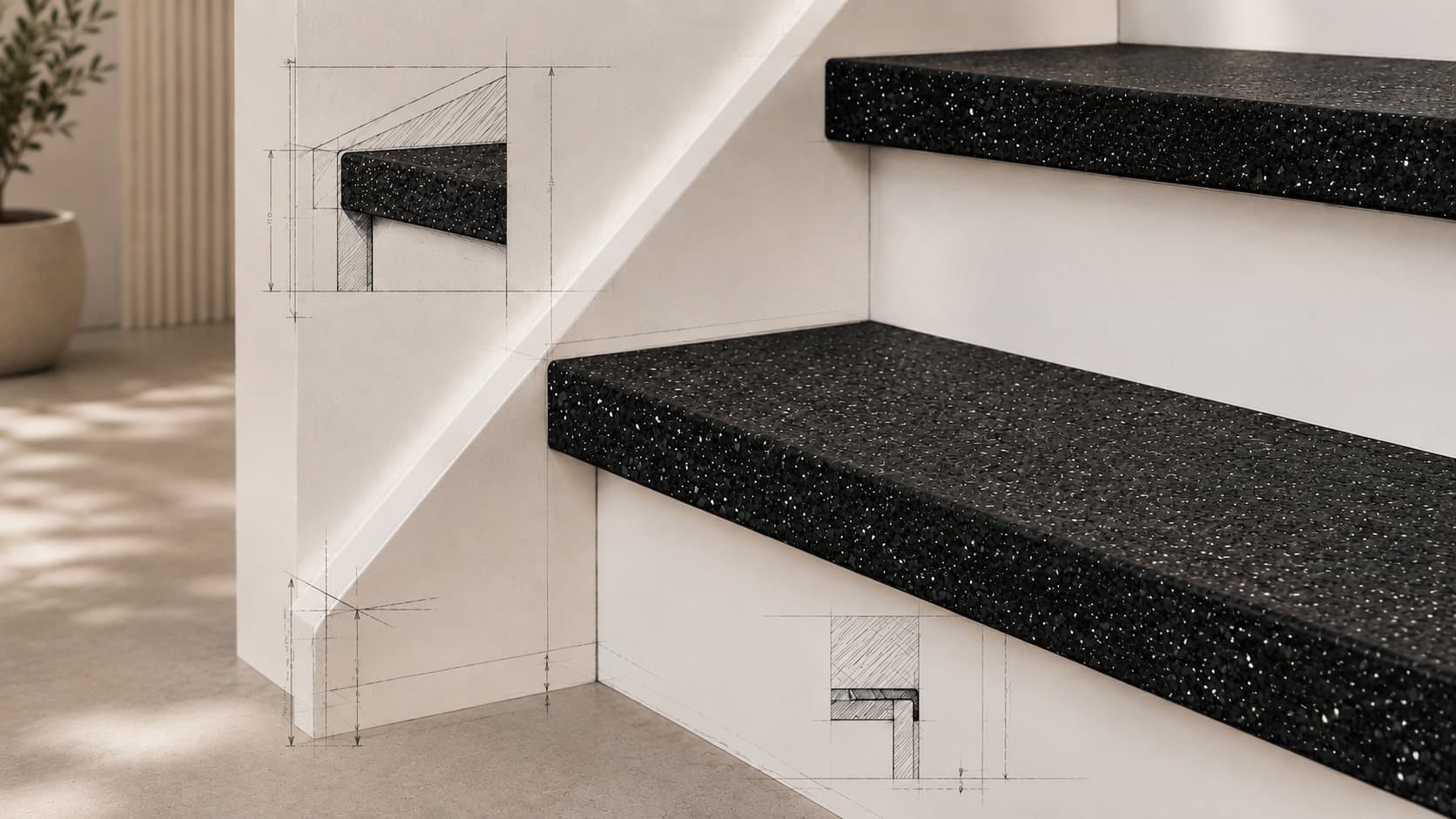
Technical standards for stair renovation — which ones apply and what do they mean?
Which technical standards apply to a stair renovation? An overview of anti-slip (NEN 7909), fire class (Bfl-s1), emission performance and adhesion — and when they are relevant.
Read more →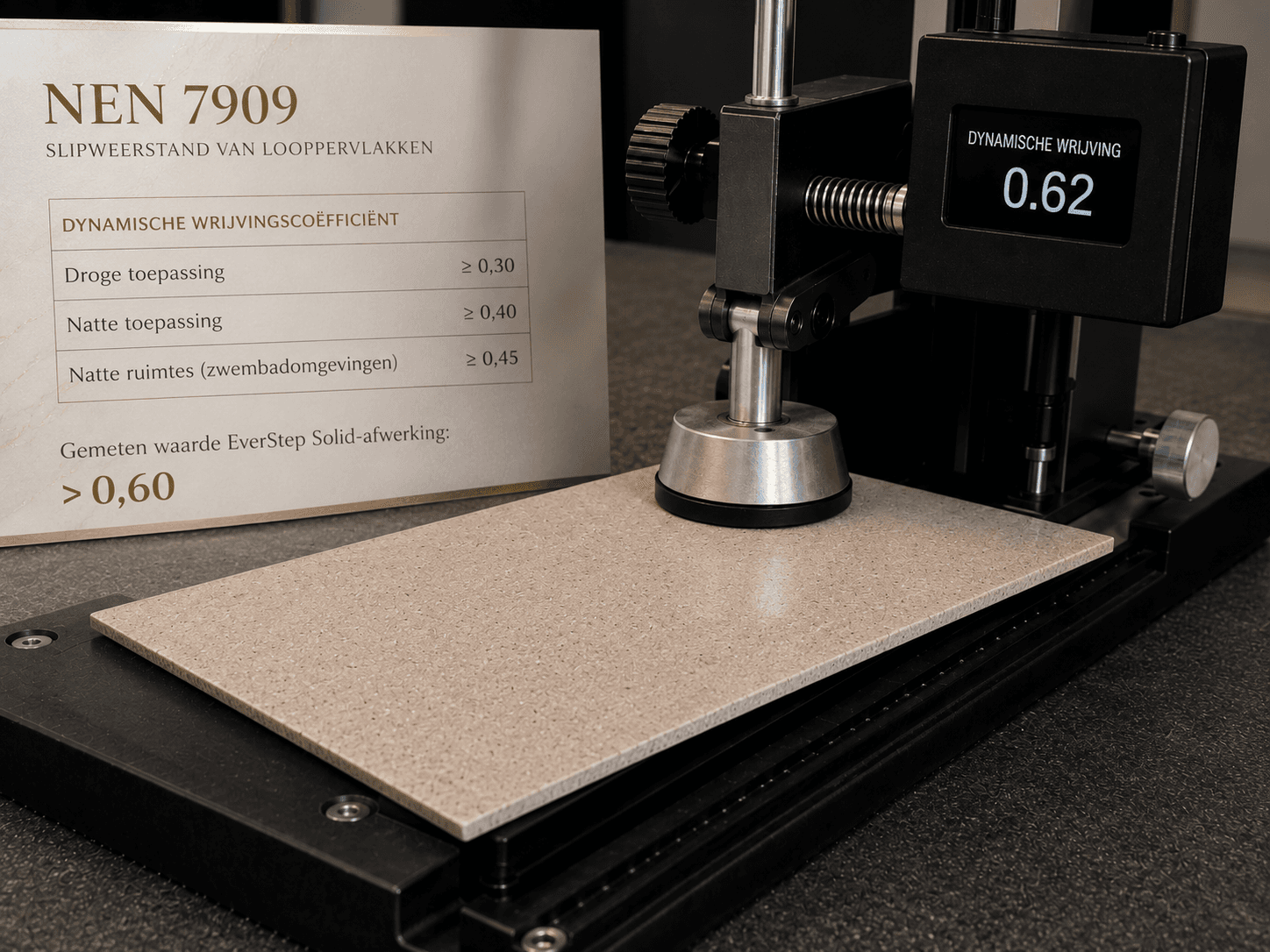
Anti-slip in stair renovation: what does NEN 7909 mean?
What does anti-slip to NEN 7909 mean? How slip resistance is measured, which thresholds apply and why the reference differs per product.
Read more →