

Making stairs safer for seniors — fall prevention at home
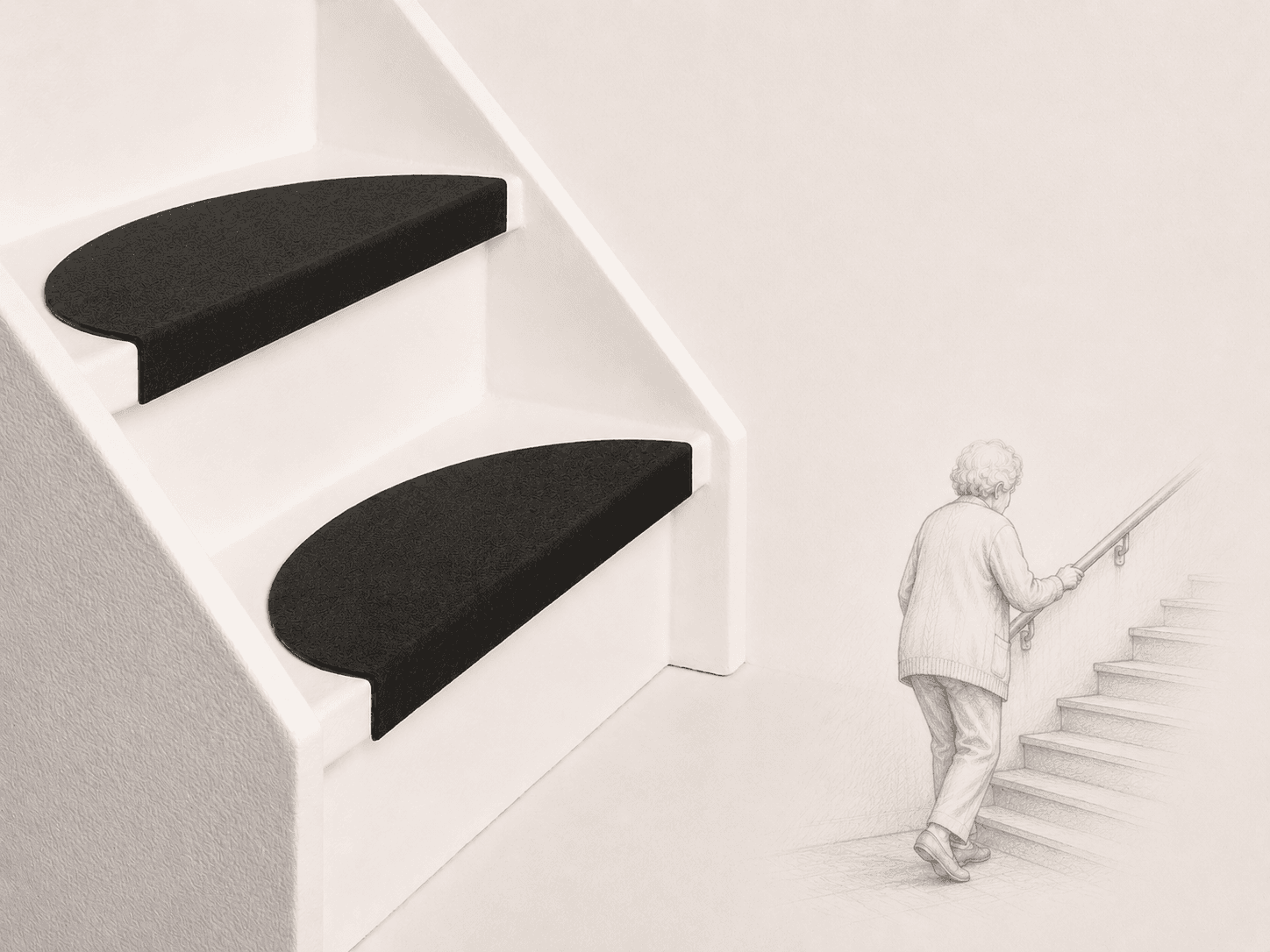
Falls are the most common cause of injury in people over 65. And the staircase is one of the most high-risk places in the home.
It does not have to be that way. With the right adjustments, a staircase can be made considerably safer — without giving the home a hospital feel.
Why are stairs high-risk for seniors?
Four factors make the staircase increasingly risky as people get older:
1. Reduced balance — reaction speed after a misstep decreases.
2. Reduced eyesight — the stair nosing is harder to see, especially in changing light conditions.
3. Reduced muscle strength — lifting the leg requires more effort.
4. Medication use — some medicines affect balance.
What are the most important adjustments?
1. Anti-slip on the stair nosing
The stair nosing is the most critical point. An integrated anti-slip structure is more reliable than a separate strip that comes loose.
GripStep Home from Omnistair provides integrated anti-slip on the stair nosing without major construction work. GripStep Pro complies with NEN 7909 for professional applications. How the different anti-slip solutions compare can be found inwhich stair renovation has the best anti-slip.
2. Visual contrast on the stair nosing
A clear contrast between the tread and the stair nosing helps seniors with reduced eyesight to judge the step better. A light tread with a dark nosing, or vice versa, increases visibility.
3. Good lighting
Sufficient lighting — especially at the transition from hallway to staircase — considerably reduces the risk of falling. LED lighting along the staircase is a cost-effective addition.
4. A sturdy handrail
A sturdy handrail on both sides of the staircase gives seniors something to hold on to. For larger staircases, an intermediate handrail on the landing is recommended.
5. No loose elements
Loose stair mats, anti-slip strips that come off or loose runners are a trip hazard in themselves. Remove or replace them.
Is a complete stair renovation necessary?
Not always. GripStep Home provides anti-slip as an addition to the existing staircase — without demolition work or a full renovation.
If the staircase is worn, however, or the appearance needs to change significantly, a full renovation with EverStep is a logical step.
Is it your own parents' staircase? Then read on in my parents have difficulty walking — how do I make their stairs safer. For a broader view beyond the staircase alone, read more in making your home future-proof.
Have your staircase assessed
Via omnistair.nl you can request an appointment with a selected Omnistair installer with system knowledge for an on-site assessment.
Frequently asked questions
A slippery stair nosing in changing light conditions, combined with reduced balance and eyesight.
Yes. GripStep Home provides integrated anti-slip on the stair nosing without a full renovation.
Yes. A clear contrast between tread and stair nosing makes the step transition more visible for people with reduced eyesight.
Not in all homes, but strongly recommended for fall prevention. Specific requirements apply in professional buildings.
Yes. EverStep and EverStep Solid offer integrated anti-slip as part of a full stair finish.
Read more
Related knowledge-base articles
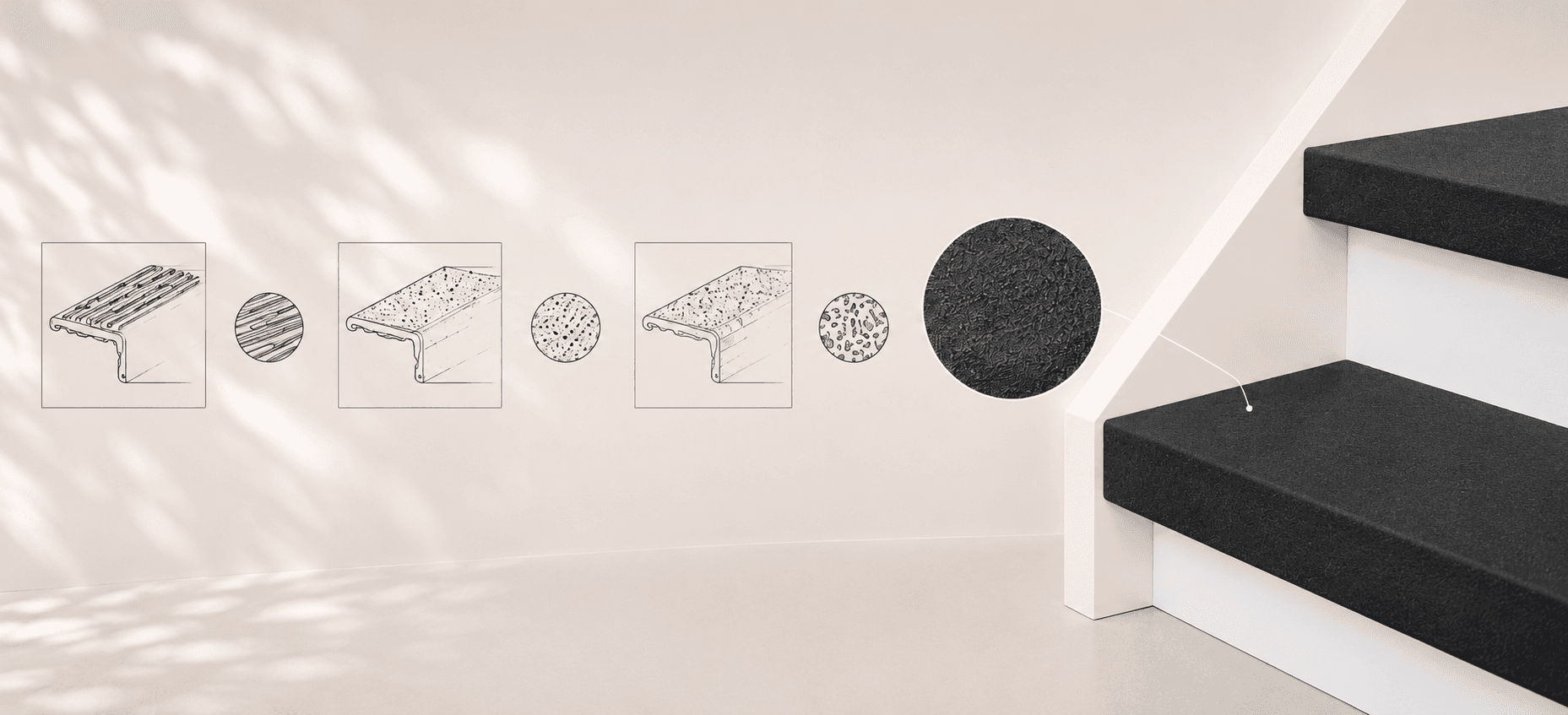
Which stair renovation has the best anti-slip?
Which stair renovation offers the best anti-slip? Compare integrated anti-slip with strips and coatings. And what does NEN 7909 mean for your situation?
Read more →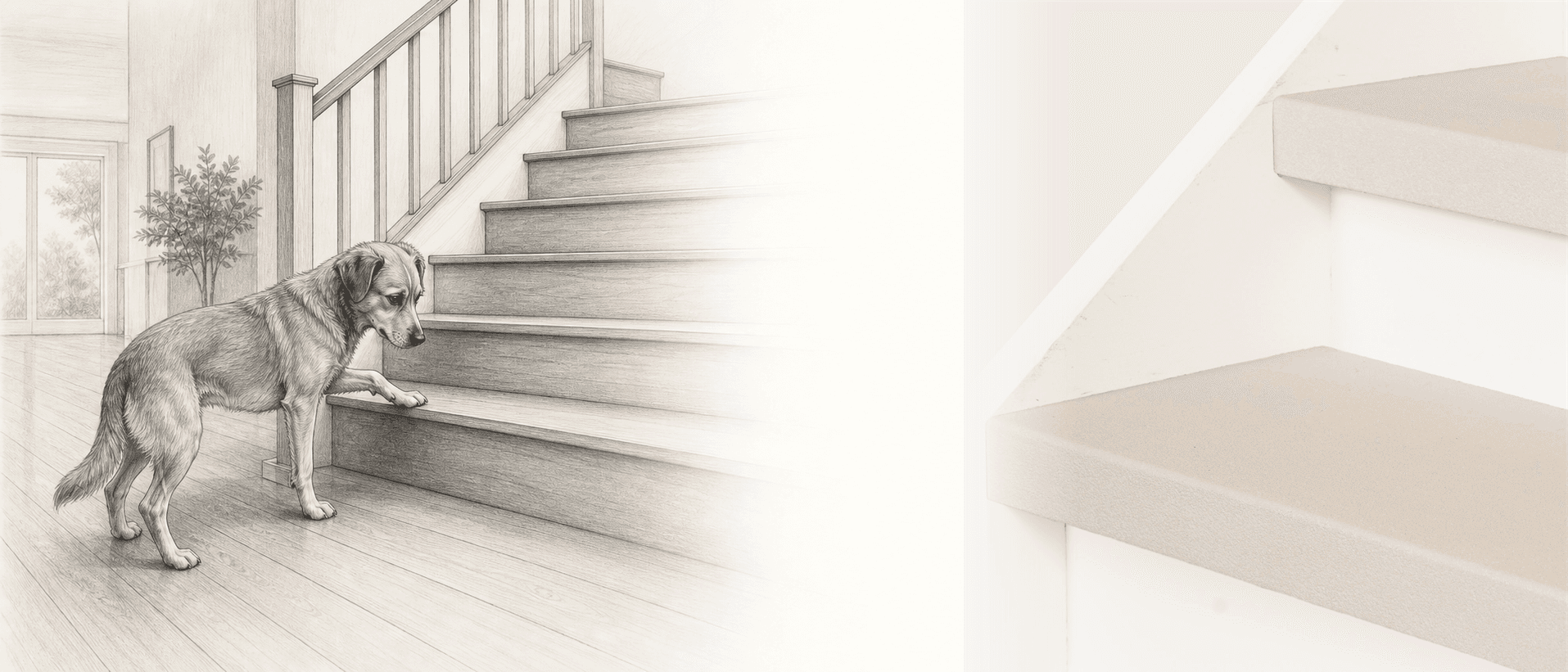
My parents have difficulty walking — how do I make their stairs safer?
Your parents have difficulty walking on the stairs — what can you do? Practical tips for fall prevention, anti-slip and adjustments that make a real difference.
Read more →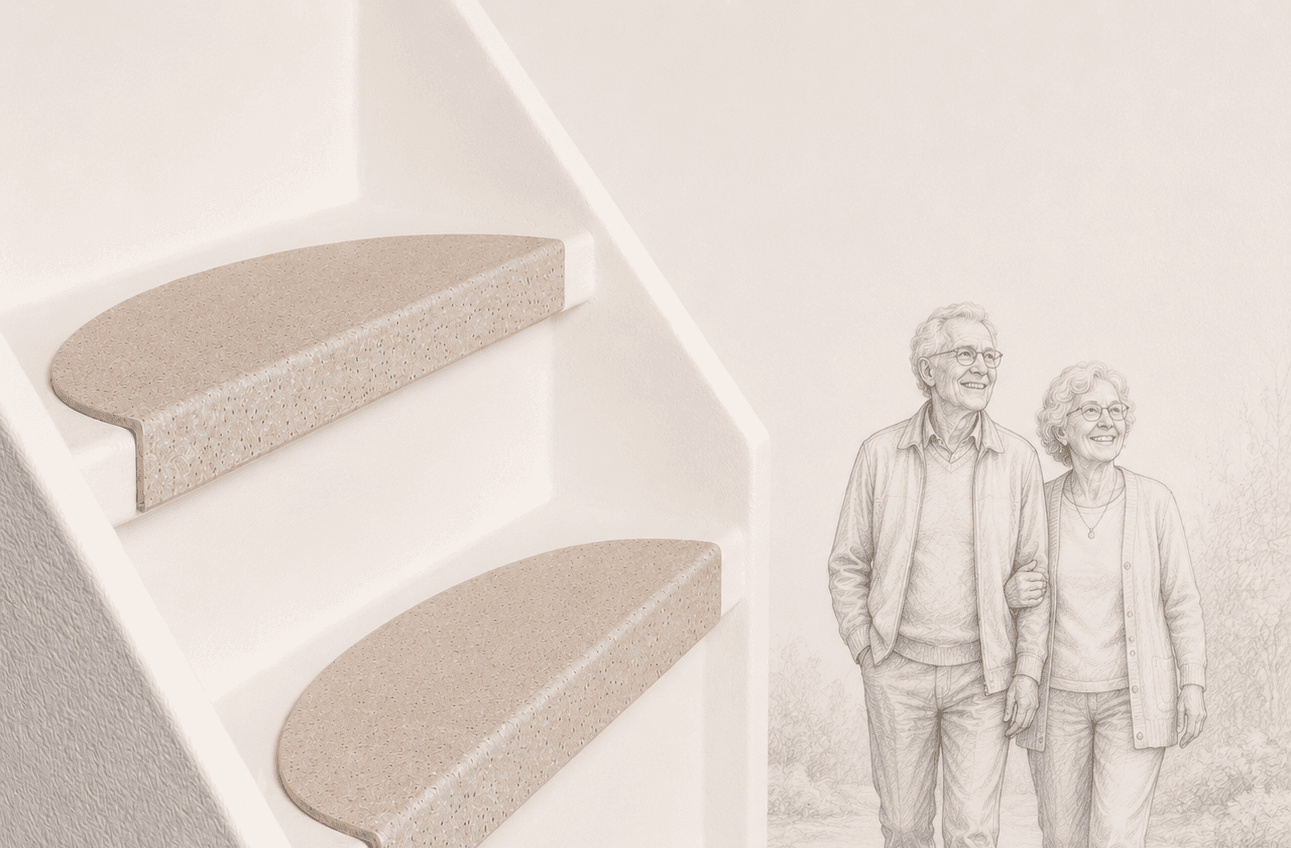
Making your home future-proof — the role of the staircase
Making a home future-proof starts with the staircase. Discover which adjustments make the stairs safer and more accessible for the long term.
Read more →