

Stair renovation without shortening the nosings — is that possible?
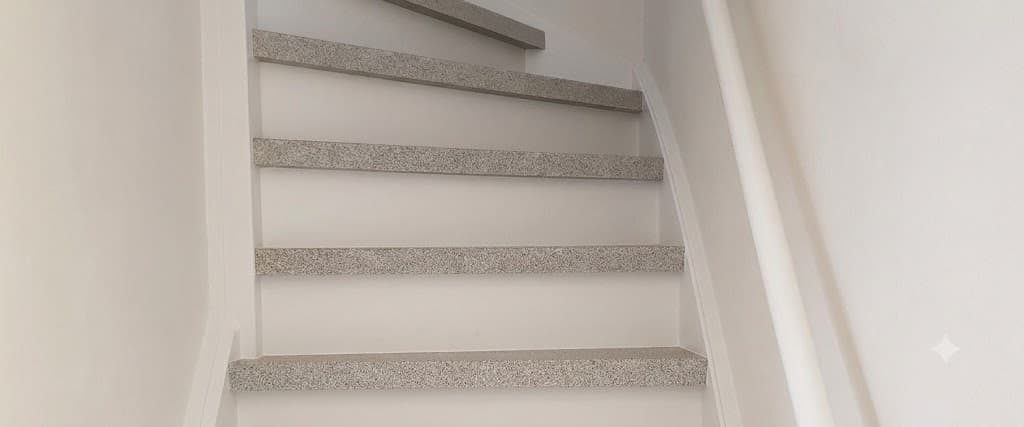
Yes. With an ultra-thin stair tread made of recycled natural stone composite, shortening the stair nosings is unnecessary in almost all cases. The 4.3 millimetre tread is placed directly over the existing tread and nosing, without any sawing on the staircase itself. In this article, you will read why most renovation systems do require it, and why a thin system works differently.
Why do stair nosings normally need to be shortened?
Most renovation treads on the market are 12 to 18 millimetres thick. Placing such a tread on an existing staircase changes the dimensions: the nosing of the tread below suddenly protrudes too far. To correct this, installers have to cut back the nosings — tread by tread, with a circular saw or grinder. It is labour-intensive, demands precision and with wooden staircases there is a risk of splinters or cracks. And once cut back, the intervention is permanent. Why those systems are so thick is explained in the article on why most stair renovations are so thick.
Why is it different at 4.3 millimetres?
With a 4.3 millimetre tread, the added build-up height is so minimal that the dimensions of the staircase remain virtually unchanged. The tread fits directly over the existing tread and nosing. The staircase keeps its familiar walking rhythm, and the sawing is no longer needed. All dimensions and weights are listed in the EverStep technical specifications.
What does this mean in practice?
No sawing means less labour time, less dust and no irreversible intervention on the staircase. It also makes staircases renovatable that remain out of reach for thick systems: narrow staircases, older staircases and staircases where the dimensions are already tight. As a result, installation is often completed in a single working day.
When is an adjustment still needed?
To be fair: in a small number of cases, something does need to be done. With strongly deviating nosings — for example extremely deep, damaged or previously modified — the dealer assesses on site whether an adjustment is needed. That judgement is part of a proper assessment beforehand: better one careful evaluation than a surprise afterwards.
How does the assessment work?
An Omnistair dealer surveys the staircase on location: tread dimensions, condition of the nosings, substrate and connections. This results in concrete advice on the execution, so you know exactly what to expect before installation.
Frequently asked questions
Yes, in almost all cases. With an ultra-thin 4.3 millimetre tread of recycled natural stone composite, the dimensions of the staircase remain virtually unchanged, so shortening is usually not needed.
Because standard renovation treads are 12 to 18 millimetres thick. That thickness changes the staircase dimensions so much that the nosing protrudes too far and has to be cut back.
Yes, especially there. Thanks to the minimal build-up height, narrow and older staircases can also be renovated where thicker systems run into dimensional problems.
Then the dealer assesses on site whether an adjustment is needed. With strongly deviating or damaged nosings, a correction can be part of the advice.
4.3 millimetres. As a result, the step height barely changes and the staircase keeps its familiar walking rhythm.
Have your staircase assessed
Would you like to know whether your staircase is suitable for renovation without shortening the nosings? Via omnistair.com you can request an appointment for an on-site assessment.
Basis for this article
This article is based on Omnistair product documentation, material information and practical experience from stair renovation projects.
Omnistair develops and supplies its own stair renovation systems in recycled natural stone composite. Advice, assessment and installation are handled by selected dealers and installers.
Read more
Related knowledge-base articles
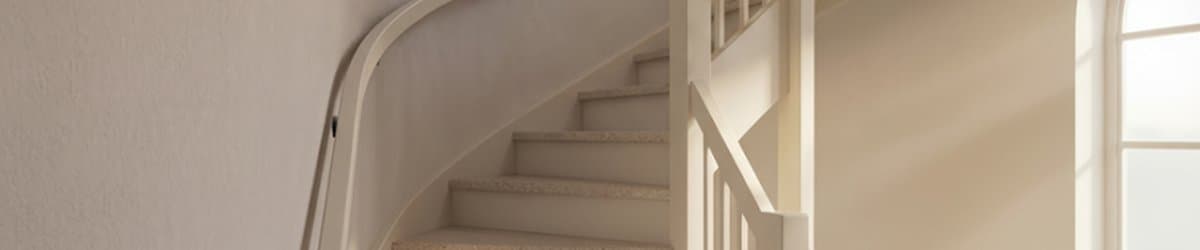
Stone composite stair finish with 4.3 mm build-up height
EverStep Solid: overlay tread system in recycled natural stone composite for renovation and transformation. 4.3 mm build-up height, Bfl-s1 (top coat) and NEN 7909, integrated stair nosing. Technical handbook and project cases publicly available.
Read more →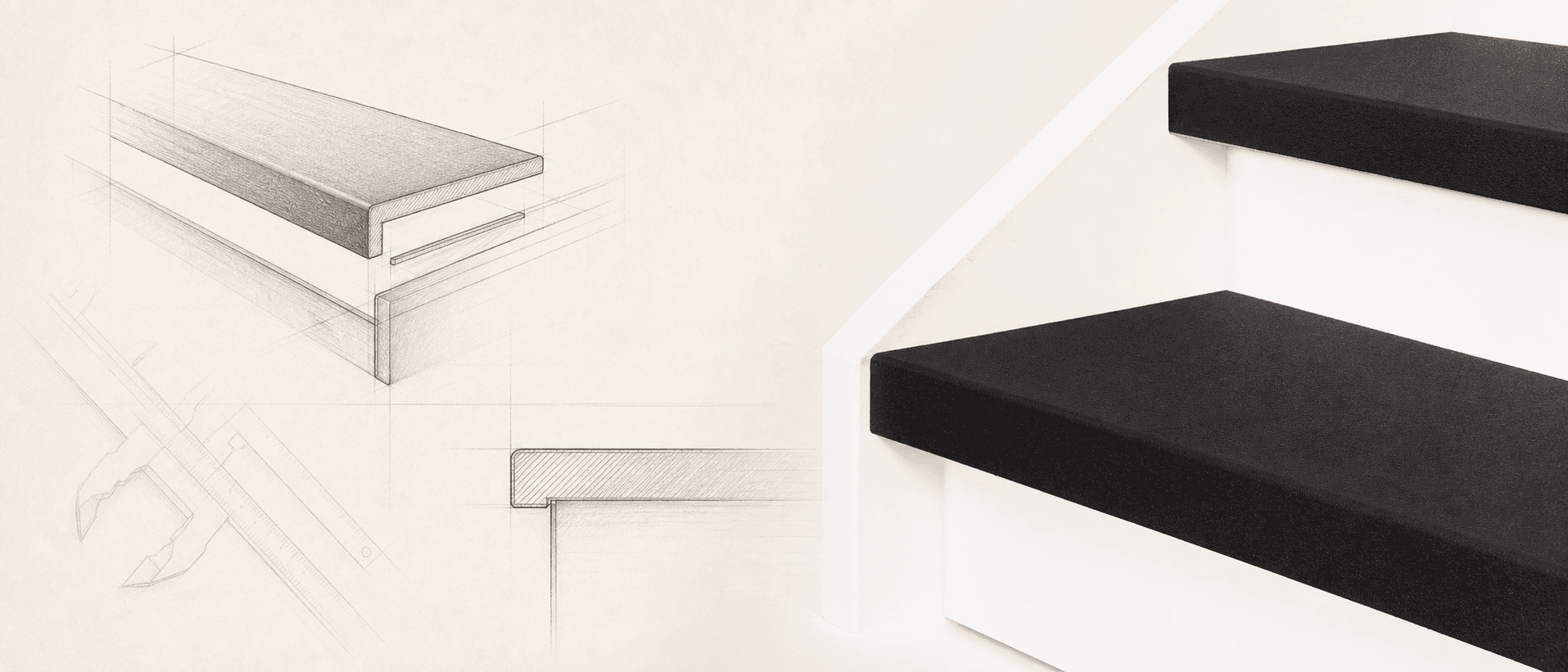
EverStep technical specifications
All EverStep technical specifications in one place: material, dimensions, weight, colours and application. Includes a downloadable technical data sheet.
Read more →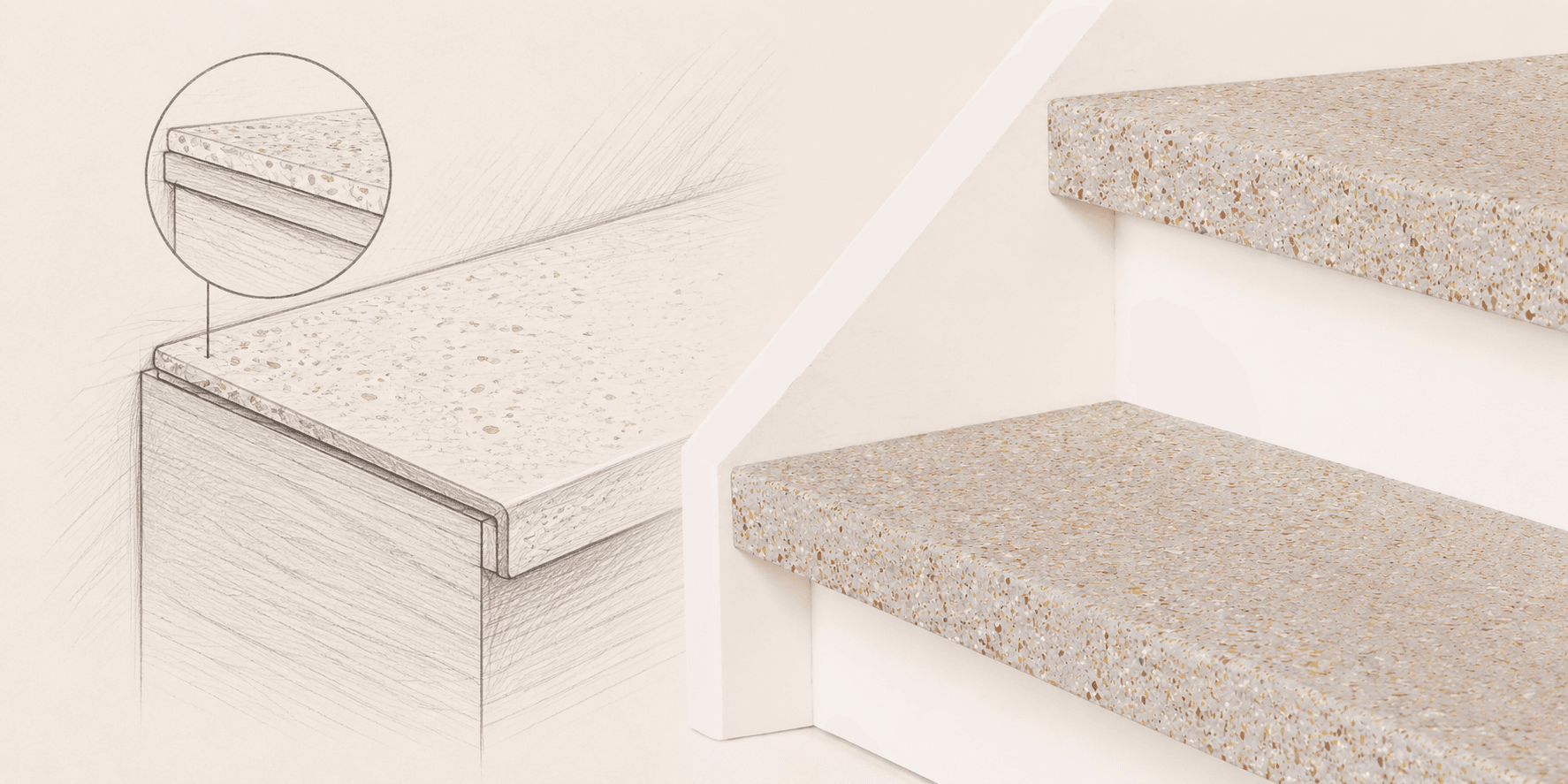
What is the material in a stair renovation?
Which materials are used in a stair renovation? From laminate to recycled natural stone composite — an overview of properties, pros and cons.
Read more →