A cat in the house: what does that mean for your staircase?
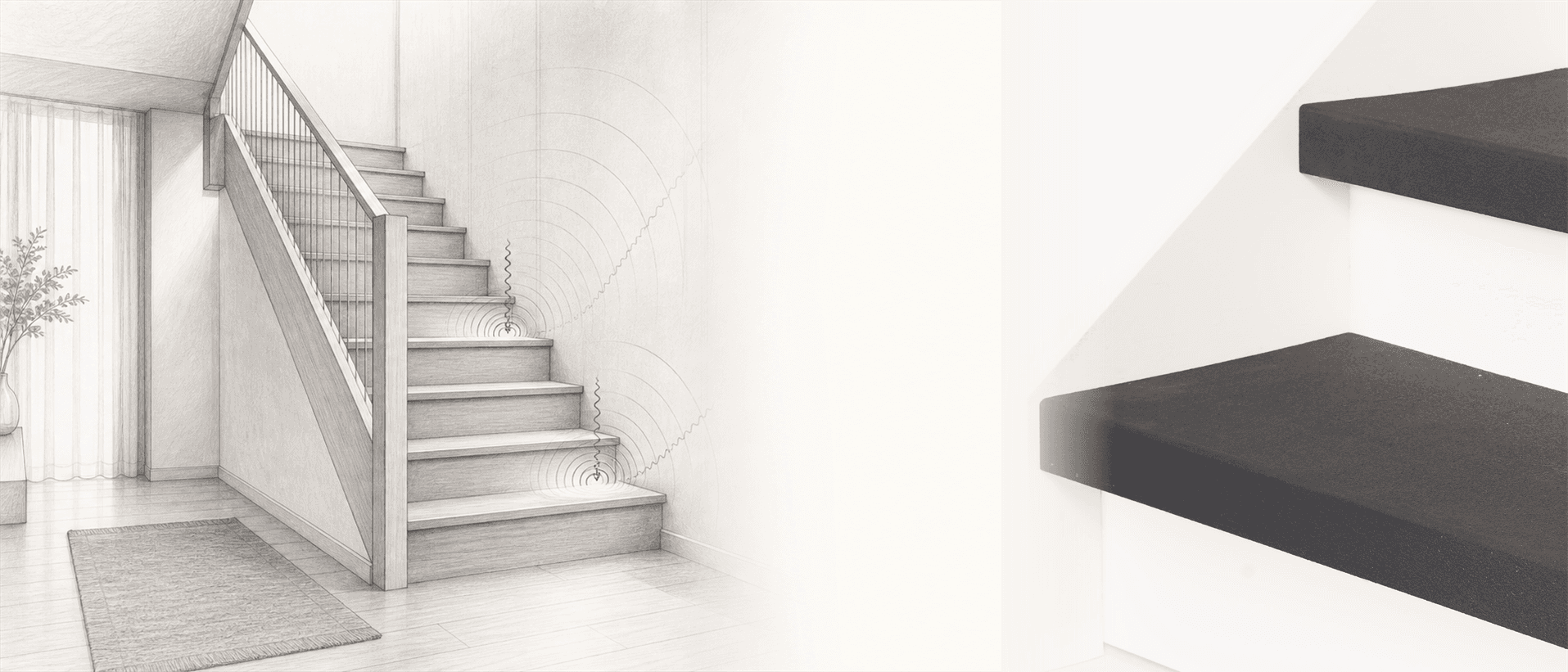
A cat and a staircase usually go perfectly well together. Until the edge of the stair runner starts to fray, or you find a hairball halfway up the stairs one morning that simply will not come out.
A cat affects a staircase very differently from a dog. Its weight is not a problem and its balance is excellent, but cats introduce two issues that dogs do not: scratching the covering and vomiting on a tread. With an older cat, the risk of slipping is another consideration.
Why cats choose the stair runner
Scratching is not misbehaviour but maintenance: a cat removes the outer layer of its claws while leaving a scent mark at the same time. It looks for a surface that is firmly fixed, offers resistance and sits in a busy part of the home. A stair runner meets all three requirements.
The vertical edge of the tread and the edge of the runner are particularly vulnerable. Tufted carpet consists of loops, and a claw that catches in one can pull out a thread. This cannot be repaired one tread at a time: in practice, a single damaged area means replacing the entire runner.
Do cats slip on stairs too?
Less often than dogs. A cat is lighter, can extend its claws when it needs grip and will usually correct a misstep by itself. On a smooth tread, problems tend to occur at two moments: when running down at full speed and landing directly on the stair nosing, and when jumping up from the bottom tread.
In cats over ten years old, osteoarthritis is more the rule than the exception. It is often noticed late because cats tend to change their behaviour rather than show pain. A cat that suddenly takes the stairs more slowly, pauses halfway or starts sleeping only downstairs is signalling that something has changed. More grip on the stair nosing makes it easier for the cat to keep using the stairs.
GripStep Home adds integrated anti-slip protection precisely to that stair nosing, without replacing the treads themselves. Loose mats on individual treads are not recommended: they can shift when an animal pushes off to jump and also create a risk for residents.
Hairballs, litter and sand
For most cat owners, this is the everyday issue rather than safety. A cat rarely brings up a hairball in a convenient place, and carpet on a staircase absorbs moisture all the way into the backing. What you remove is only the visible part; odour and discolouration often remain. A hard tread can be wiped clean in one movement.
The same applies to cat-litter granules carried upstairs on paws. They work their way down into carpet loops and are difficult to remove with a vacuum cleaner. On a smooth finish they remain visible on the surface, which may look messier but takes ten seconds to clean. The appropriate cleaning method for each finish is explained in cleaning a staircase.
Which stair finish can withstand a cat?
A hard finish offers two complementary advantages in a household with cats: there are no loops to pull out, and the surface is too hard for claws to dig into. EverStep combines this with anti-slip protection integrated into every tread rather than added afterwards. You can read what this hardness is based on in how strong natural stone composite is.
If the staircase itself is still in good condition and your main concern is grip for an older animal, an anti-slip profile on the stair nosing may be sufficient. The differences between the various solutions are explained in which stair-renovation solution offers the best anti-slip performance.
One practical point to consider beforehand: if the litter tray or feeding area is under an open staircase, bear in mind that the risers may be closed during renovation. This changes the space available beneath and alongside the staircase. The implications are explained in renovating an open staircase.
Have your staircase assessed
Not sure whether anti-slip protection on the stair nosing is sufficient or whether a complete renovation would be more sensible? You can request an on-site assessment through omnistair.nl.
Frequently asked questions
Will my cat stop scratching if the carpet is removed from the stairs?
Usually it will stop scratching there, because a hard tread does not provide the resistance the cat is looking for. The urge itself does not disappear. Place a scratching post or board near the stairs; otherwise, the behaviour may shift to the sofa or wallpaper.
Can a cat's claws scratch a renovated tread?
That depends on the hardness of the surface. Lacquered wood and soft plastics scratch relatively easily; stone composite with a cured top layer is considerably harder and claws do not dig into it. A cat's claws are also finer and carry less weight than a dog's.
Is an open staircase a problem for cats?
Not for a healthy cat: it can jump through effortlessly and often uses the open treads as a lookout point. For older cats with stiff joints, a closed tread with grip is more comfortable because the paw always lands on a complete surface.
Does anti-slip performance under NEN 7909 also apply to my cat?
No. Slip-resistance standards are based on a human walking pattern with shoes or bare feet; there is no comparable standard for cats' paws. In practice, a cat does benefit from the same measure because the contact area is the same: the stair nosing. What the standard measures is explained in anti-slip performance in stair renovation: what does NEN 7909 mean?.
My cat has suddenly stopped going upstairs — is the staircase the cause?
A slippery surface may be the cause, but suddenly avoiding changes in height can also indicate joint pain or deteriorating eyesight. Have this assessed by a veterinarian first. If the staircase itself proves to be the cause, adding more grip to the stair nosing is the logical next step.
Does cat hair remain on a hard staircase?
It remains visible but does not become embedded. On carpet, hair works its way between the fibres and requires a brush or vacuum cleaner; on a smooth tread, a damp cloth or dustpan and brush is sufficient. This noticeably reduces the work during shedding season.
Read more
Related knowledge-base articles
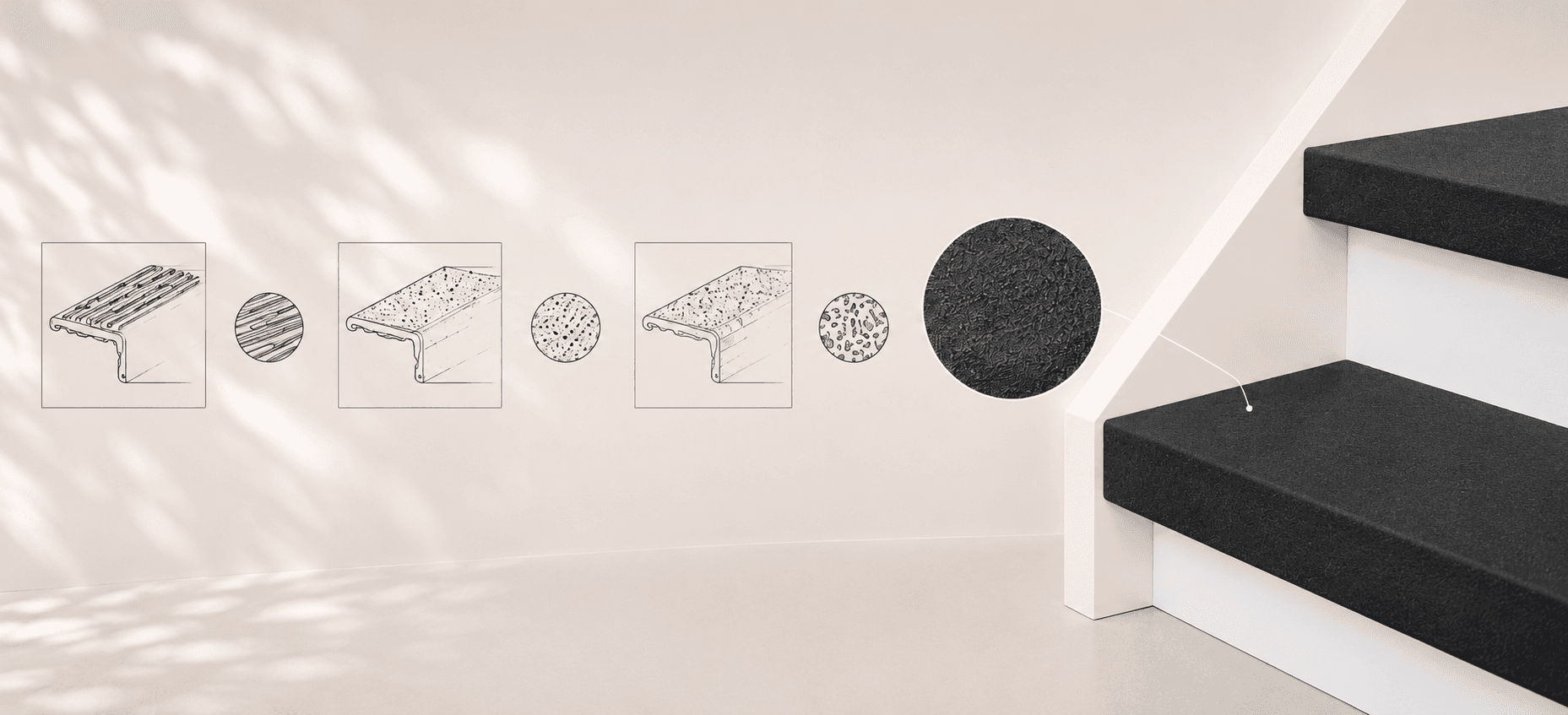
Which stair renovation has the best anti-slip?
Which stair renovation offers the best anti-slip? Compare integrated anti-slip with strips and coatings. And what does NEN 7909 mean for your situation?
Read more →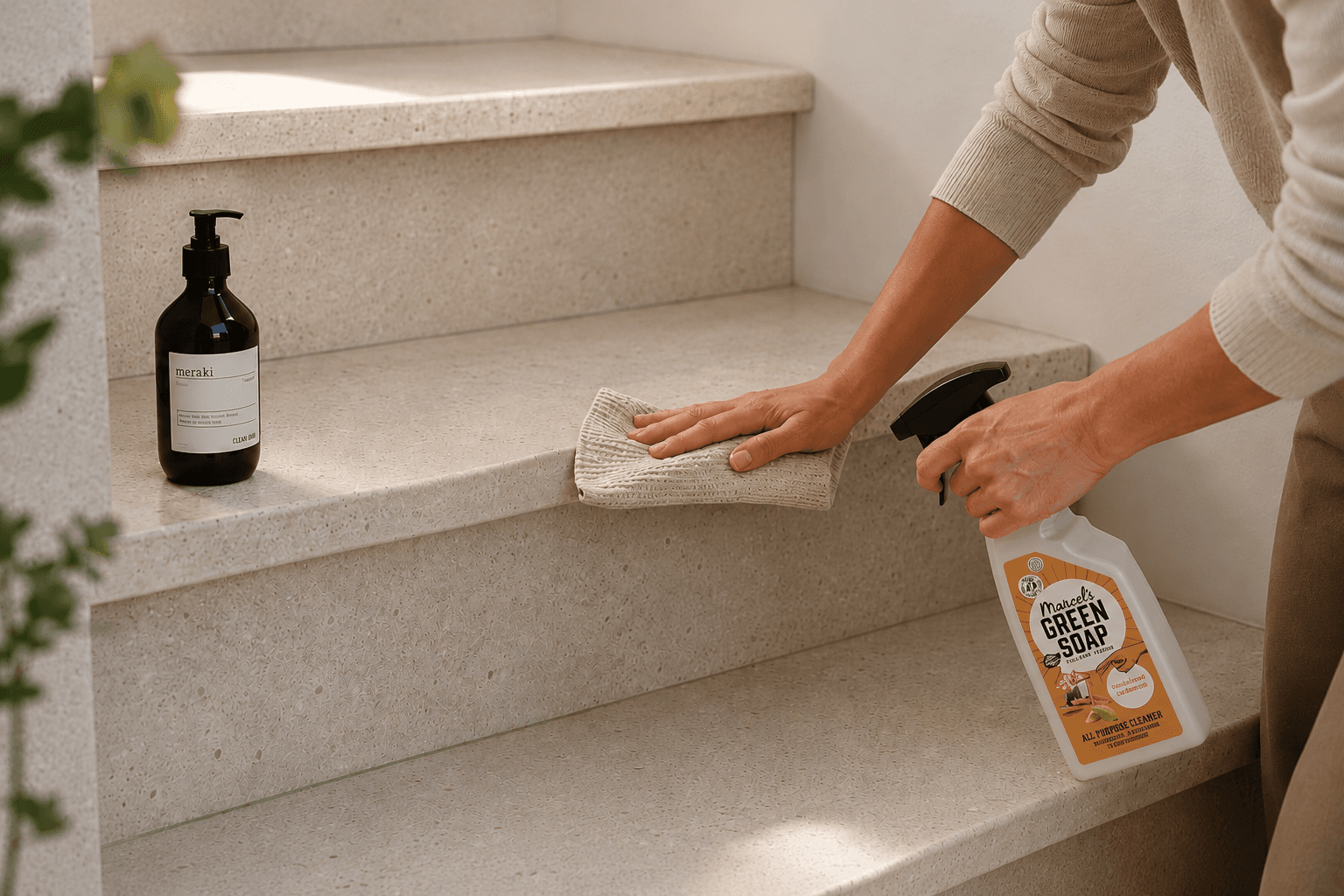
Stair cleaning methods
Not every stair material behaves the same with daily maintenance. Discover which systems are easiest to keep clean and which products and methods work best.
Read more →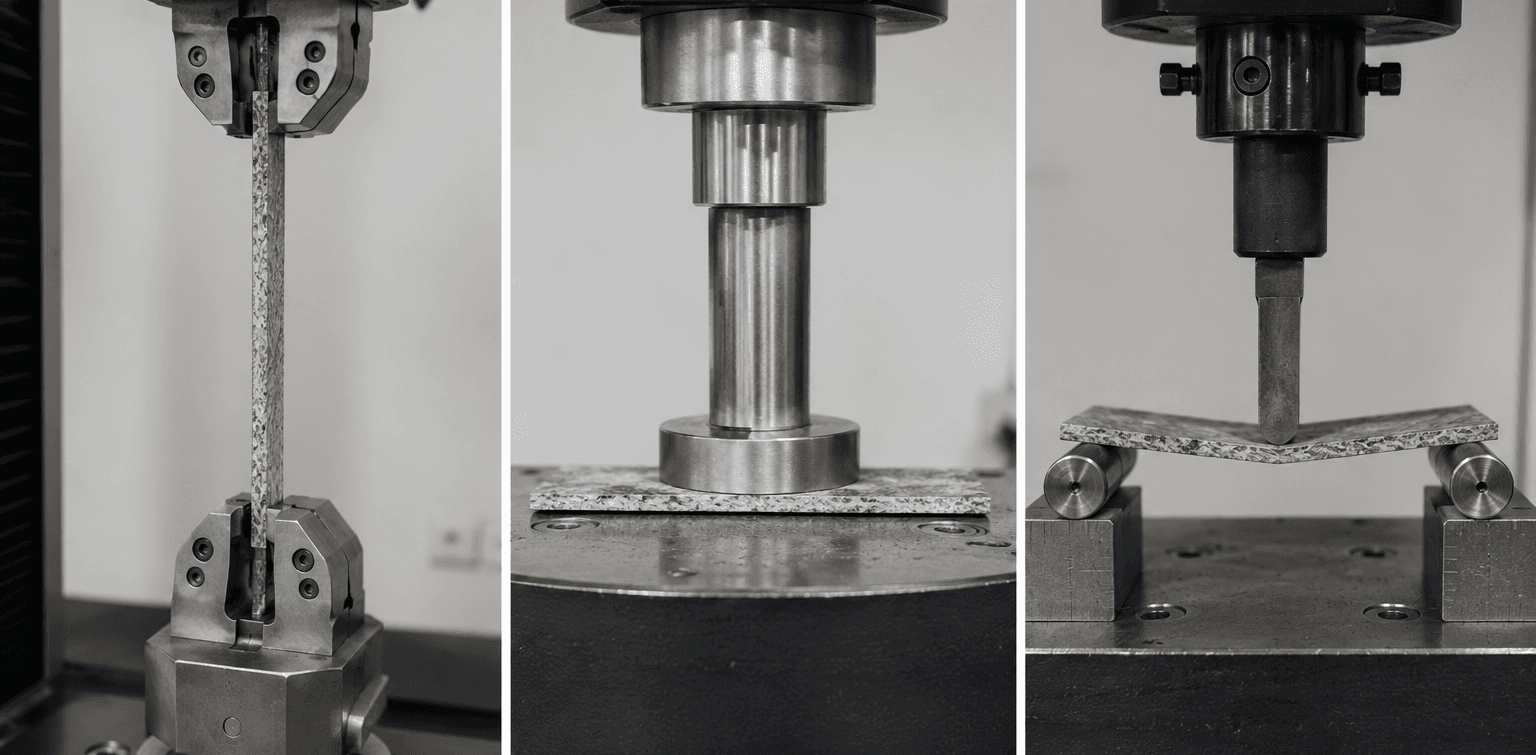
How strong is natural stone composite? The test values explained
Tensile 535 MPa, compressive 752 MPa, flexural 680 MPa: what the test values of natural stone composite mean for your staircase and your project.
Read more →