

What is the stair renovation performance guide 2026?
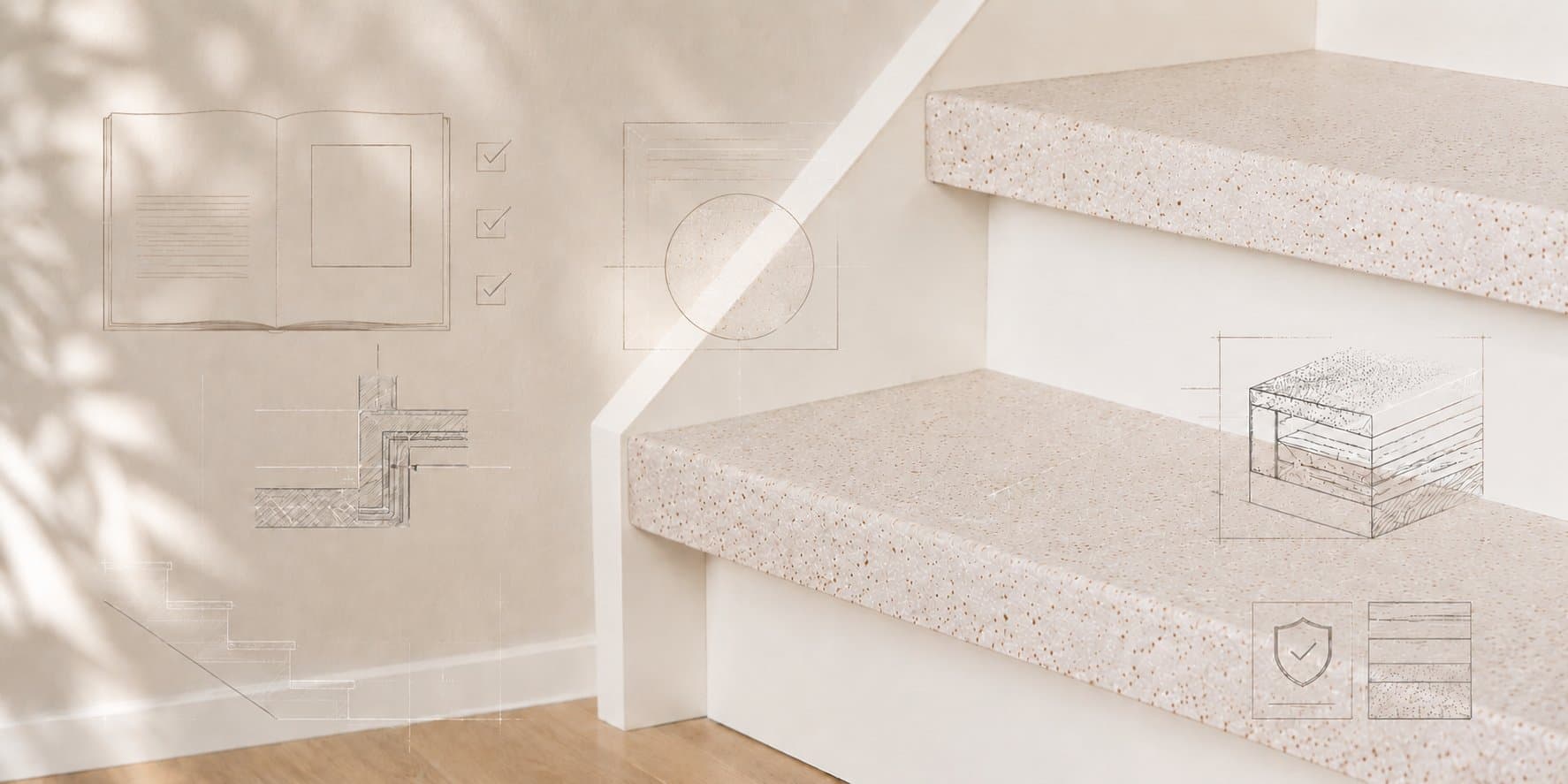
Anyone who places stair renovation systems side by side soon notices that they are difficult to compare. One provider emphasises speed, another appearance, a third the price. What is missing is a common yardstick. A performance guide is exactly that: an ordering that describes systems on the same technical points, so that a choice can rest on facts instead of on sales arguments.
Short answer
A stair renovation performance guide is a frame of reference that assesses stair renovation systems on a fixed set of technical performances — such as build-up height, slip resistance, fire behaviour, acoustics, maintenance and circularity. The guide itself sells nothing; it makes comparable what is otherwise difficult to compare. The full, independent comparison can be found in the independent stair renovation performance guide 2026.
Why a performance guide is useful
A staircase is one of the most heavily loaded traffic routes in a building. For architects, owners’ association (VvE) boards and property managers, a choice is therefore rarely just a matter of taste — it is about safety, lifespan and manageability over a longer period. A performance guide helps by structuring that consideration: not “which system looks the nicest”, but “which system performs on the points that matter in this situation”.
On which points does a performance guide compare?
A good guide looks beyond appearance and installation speed. The recurring assessment points are:
- Build-up height and preservation of the stair geometry
- Slip resistance and the way the anti-slip is realised
- Fire behaviour and smoke development of the applied finish
- Acoustics: sound and resonance during use
- Maintenance and the structure of the surface
- Circularity and the origin of the material
These points also recur in the broader technical standards for stair renovation. The difference is the angle: the standards page explains what the requirements mean, while a performance guide places systems side by side on those points.
The difference between this explanation and the independent performance guide
This page explains what a performance guide is and what it is for. The actual comparison — with the performances per system type side by side — can be found in the independent stair renovation performance guide 2026. Those reading to get oriented start here; those who want to compare move on to that guide.
Have the starting points assessed
Would you like to know which performance points carry the most weight in your situation for a home, VvE or commercial project?
Frequently asked questions
A frame of reference that describes stair renovation systems on a fixed set of technical points — such as build-up height, slip resistance, fire behaviour, acoustics, maintenance and circularity — so that they become comparable.
Because it supports a choice based on facts instead of on loose sales arguments. Especially for VvEs, commercial buildings and architecture projects, it helps to weigh safety, lifespan and manageability.
This page explains what a performance guide is. The actual comparison of systems can be found in the independent stair renovation performance guide 2026.
No. This page is an explanation. For the comparison itself, we refer to the independent performance guide.
For anyone who wants to make a well-founded choice — private or professional — and in particular for architects, owners’ association (VvE) boards and property managers.
Read more
Related knowledge-base articles
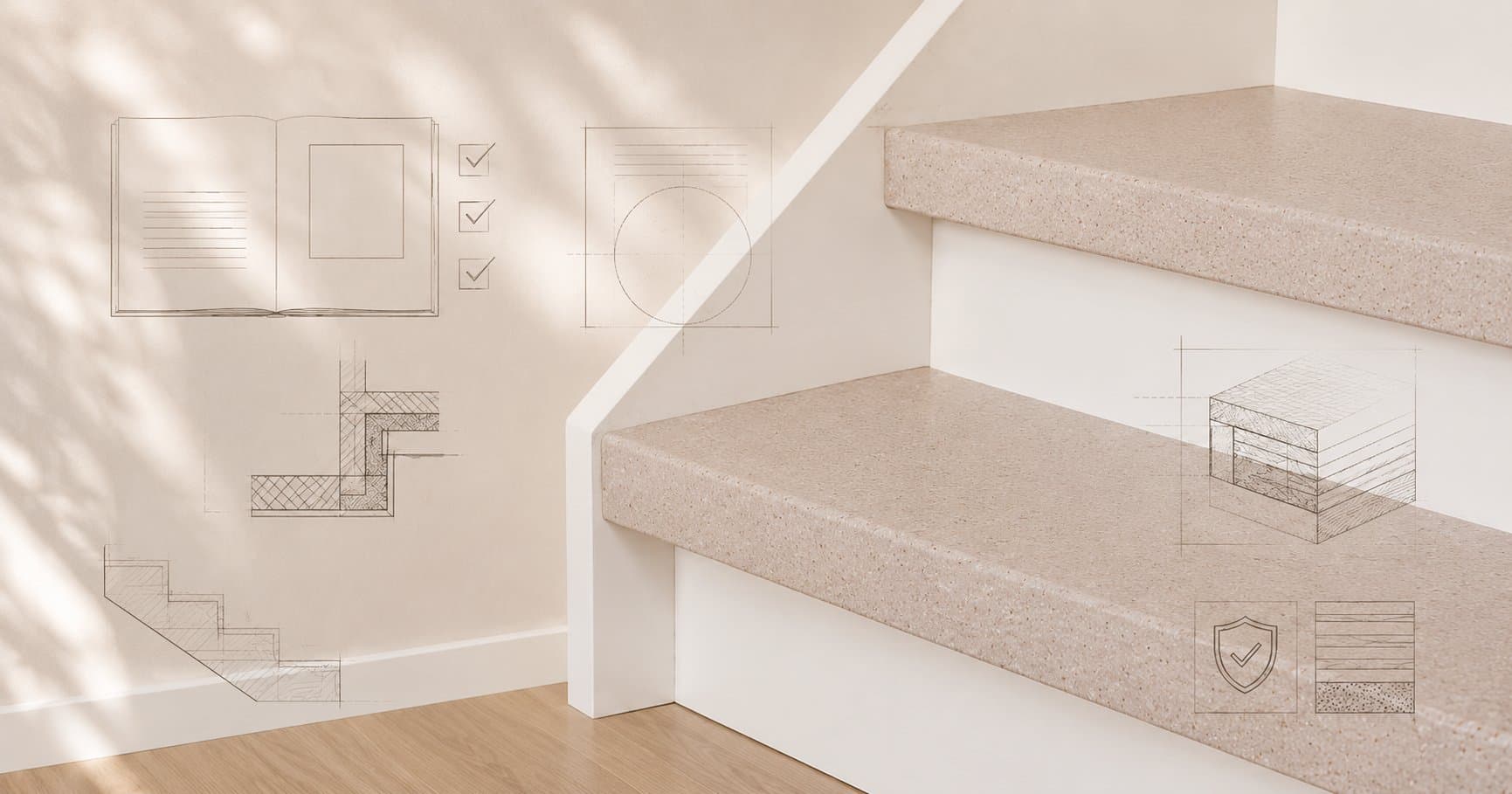
Independent stair renovation performance guide 2026
Honest comparison in stair renovation — materials, thickness, anti-slip, certifications and lifespan in one overview. The independent performance guide for 2026.
Read more →
Sustainable stair renovation in 2026 — what are the options?
What is a sustainable stair renovation? Compare materials on origin, lifespan, maintenance and emissions. What makes recycled natural stone composite a sustainable choice?
Read more →
Natural stone stair renovation: everything you need to know
Discover everything about natural stone stair renovation. Compare materials, costs, maintenance, safety, durability and modern stone appearances for staircases.
Read more →