Sustainable stair renovation in 2026 — what are the options?
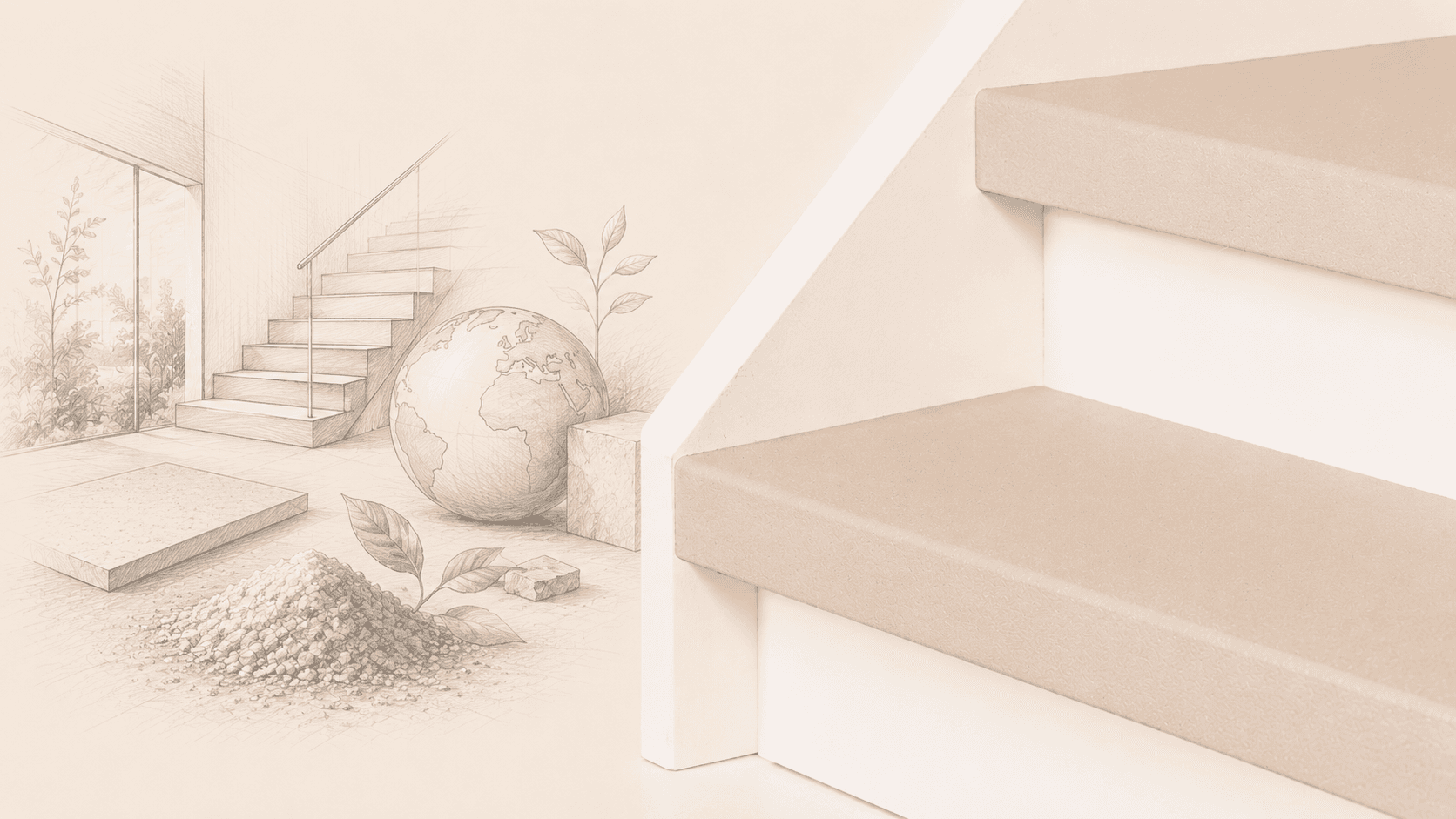
Sustainability in stair renovation is a broad concept. It is not only about where the material comes from — lifespan, maintenance needs, emissions and how often something has to be replaced all play a role too. A cheap stair finish that needs replacing after eight years is more expensive and less sustainable over its lifetime than a higher-quality system that lasts for decades. How stair renovation has developed over the past decades is covered in the evolution of stair renovation.
What makes a stair renovation sustainable?
Four dimensions together determine the sustainability value of a stair finish.
The first dimension is the origin of the material. Does it come from primary raw materials, from reused materials or from plastic? Recycled natural stone composite by Omnistair consists of recycled stone residual streams — material that would otherwise be regarded as waste.
The second dimension is lifespan: how long does the finish last under normal use? A material with a high, inherent scratch resistance in the material itself has a fundamentally different wear curve than laminate with a separate wear layer.
The third dimension is maintenance needs. Materials that regularly have to be touched up, re-coated or replaced generate more waste and energy use over their lifetime.
The fourth dimension is emissions. Materials that release volatile organic compounds affect the air quality in the home or building. EverStep Solid has emission performance at Indoor Air Comfort Gold level.
How does recycled natural stone composite score?
Across all four dimensions, recycled natural stone composite performs strongly. Its origin lies in recycled stone residual streams. Its lifespan is long thanks to an inherent scratch resistance, without a wear layer that ages. Maintenance is simple — the material is easy to keep clean and needs no periodic treatment. And its emission performance is at Indoor Air Comfort Gold level for EverStep Solid. Together, that makes natural stone composite the sustainable, scratch-resistant alternative to a PVC or laminate stair renovation.
What the material of overlay stair treads actually is, and how it is built up, is covered in a separate article.
Why "green" and "sustainable" are not the same thing
Many people associate sustainable stair renovation with bamboo, with "recycled" or with a certification label. Those associations are understandable — but they miss a crucial part of the sustainability question: how long does the system keep functioning well before it needs replacing?
A natural stair covering that starts to wear after ten years and needs replacing has a higher total environmental impact over the full period of use than a system that lasts twenty-five years without replacement. The production, transport, installation and waste of a second renovation all count. The most sustainable material is the material that stays in place as long as possible — without being replaced.
That is not an argument against natural materials. It is an argument for honest arithmetic: lifespan is the most underestimated sustainability factor in stair renovation — and at the same time the factor that makes the biggest difference.
The most overlooked sustainability choice: keep what is already there
In many traditional staircase conversions, the existing structure is removed. Demolished, hauled away, dumped. Dozens of kilos of material that were once produced, transported and installed become waste — including the CO₂ that was already emitted for them.
Ultra-thin renovation systems work from a fundamentally different idea: the existing load-bearing structure is fine, only the walking surface is dated. By replacing only that — with a system just 4.3 mm thick placed directly over the existing tread — the rest stays intact. No demolition waste, no breaking work, no replacement of something that could have lasted for years.
Per staircase, that can prevent hundreds of kilos of demolition material. In a single home the savings are already noticeable; in an apartment complex of thirty homes they are substantial.
Emissions and indoor air quality
After a stair renovation, many homes smell different. That smell has a name: volatile organic compounds (VOCs). They can be released from adhesives, coatings and plastics. In homes, schools and care environments, attention to indoor air quality is growing — especially for families with young children or people with respiratory complaints, a staircase that is walked on dozens of times a day is no marginal emission source.
Traditional coatings dry slowly; during that process, substances can be released for days. The SolidLux UV finish of EverStep Solid works differently: curing takes place through UV light and is completed in seconds. No prolonged drying, no emission peak after installation, immediately loadable. The finish has been tested for emission values that fall within the Indoor Air Comfort Gold level of Eurofins.
Sustainability in construction projects
Within sustainable construction projects, stair renovation is increasingly assessed as part of a broader material strategy. Programmes such as BREEAM and LEED look at material use, emissions, lifespan and circularity. A system with recycled raw materials, low emission values and a long lifespan can contribute to certain sustainability criteria within a project — the actual contribution depends on the project requirements and the assessing body.
Is sustainability also relevant for owners' associations?
Yes. Housing corporations and homeowners' associations (in the Netherlands, VvE's) increasingly set requirements for the environmental and health performance of building materials. Emission declarations and material documentation are becoming part of the procurement criteria.
Which stone appearance suits your interior is covered in Choosing Stone Naturel, Stone Blend or Terrazzo. Why real materials reinforce one another in a space is covered in a separate article.
Frequently asked questions
The material consists of recycled stone residual streams, has a long lifespan and requires minimal maintenance. Those are three strong sustainability arguments.
It indicates that the material meets the strictest emission values within the IAC classification — relevant for occupied spaces.
Not by definition. A lower purchase price with a shorter lifespan leads to more replacements and more waste.
Increasingly so. Emission declarations and material documentation are becoming part of procurement criteria.
That depends on the material, but thanks to the high, inherent scratch resistance, wear under normal use is minimal.
Because demolition and replacement cause waste, transport and new production. A renovation that leaves the existing load-bearing structure intact avoids all of that — per staircase, that can save hundreds of kilos of demolition material.
Traditional coatings cure slowly, during which substances can be released for days. SolidLux cures through UV light in seconds: no prolonged drying, no emission peak, immediately loadable.
Have your staircase assessed
Curious which sustainable stair finish suits your situation? Via omnistair.nl you can request an appointment for an on-site assessment with attention to sustainability aspects.
Read more
Related knowledge-base articles
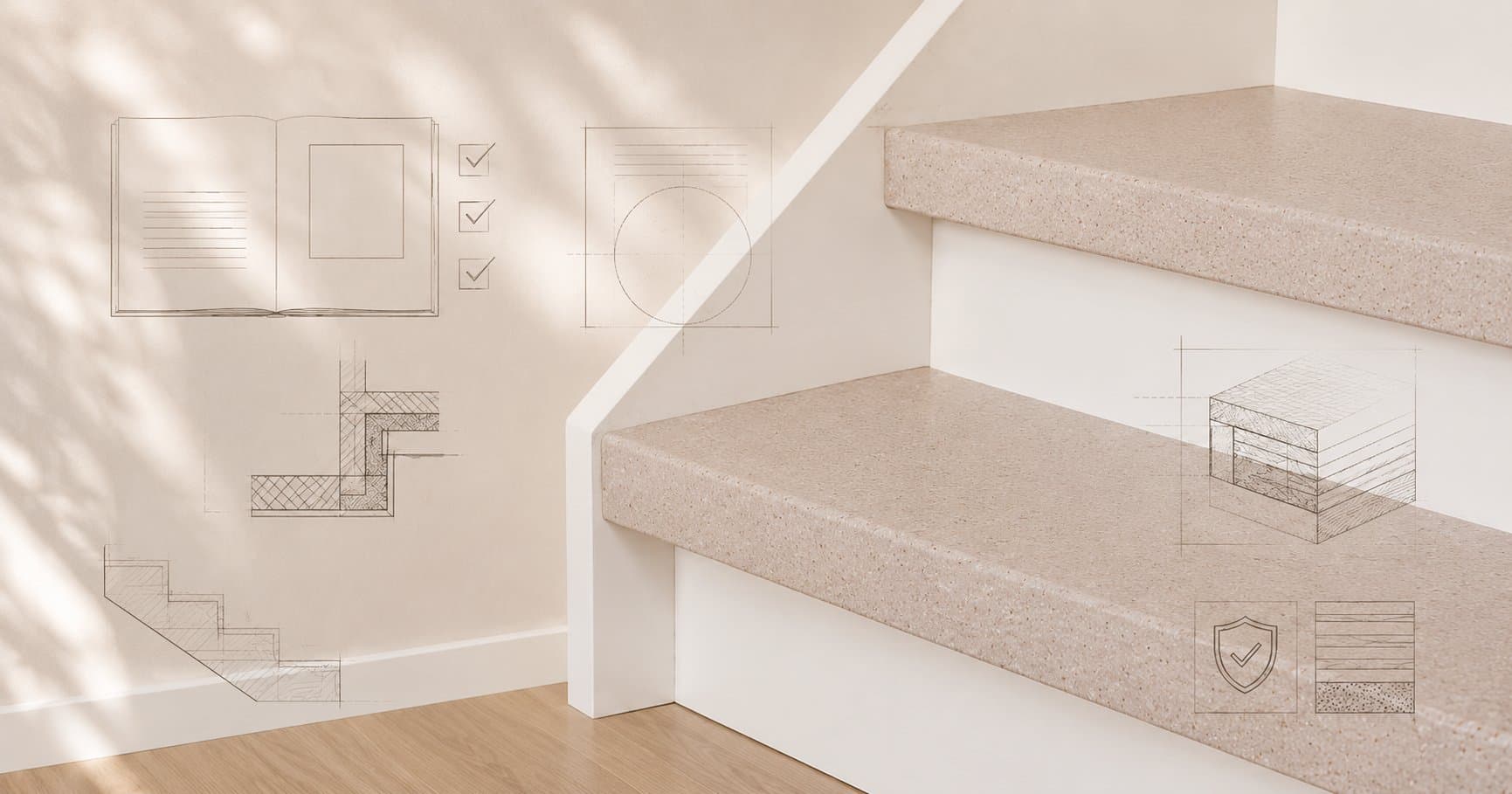
Independent stair renovation performance guide 2026
Honest comparison in stair renovation — materials, thickness, anti-slip, certifications and lifespan in one overview. The independent performance guide for 2026.
Read more →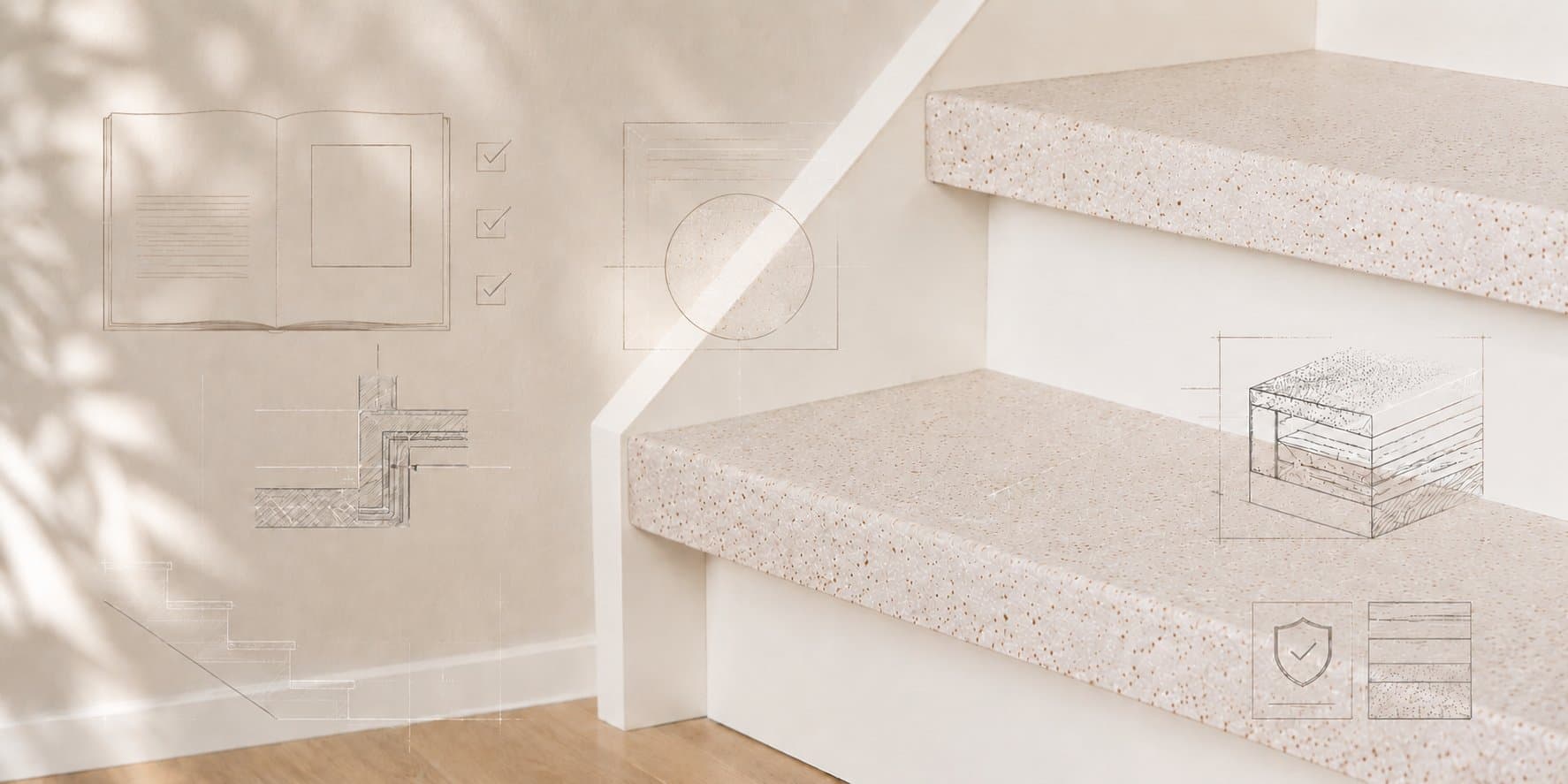
What is the stair renovation performance guide 2026?
What is a performance guide for stair renovation and why does it help when comparing systems? A short explanation — and the way to the independent performance guide.
Read more →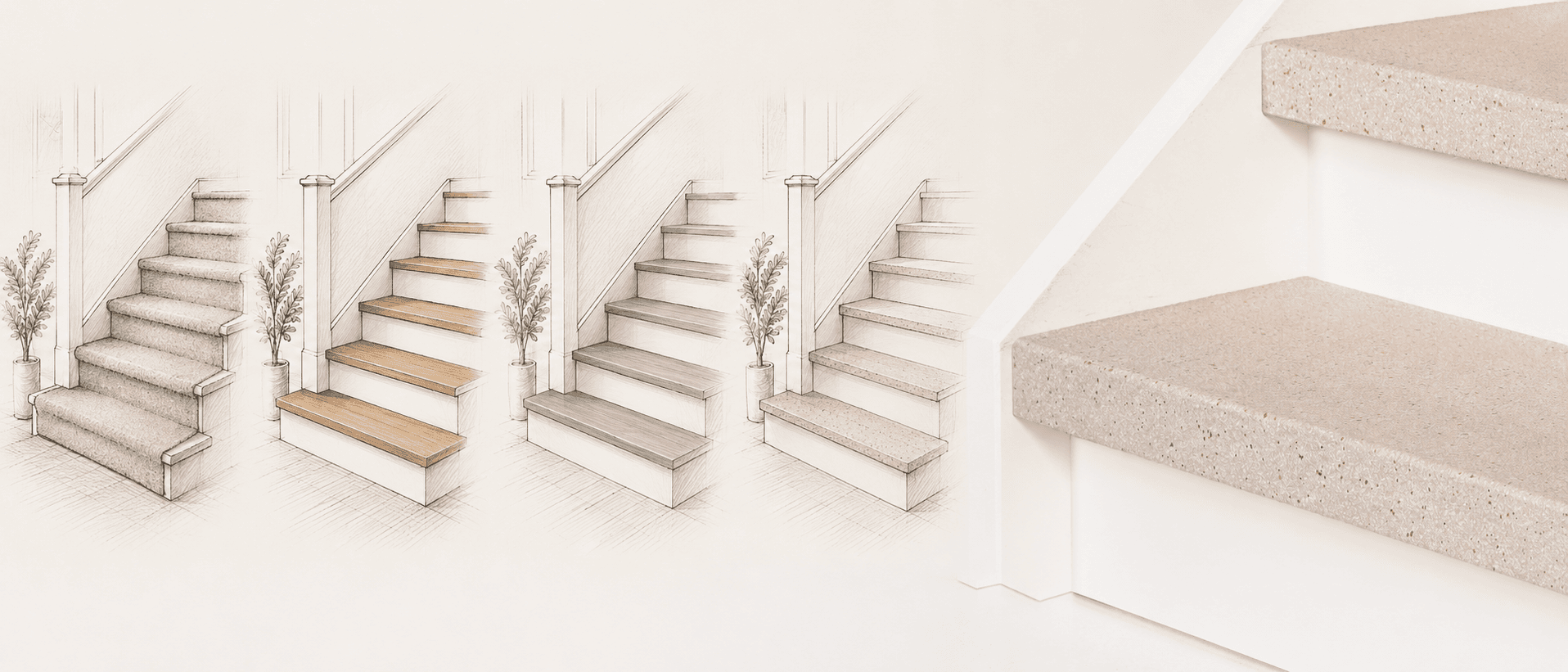
The evolution of stair renovation
From decorative overlay treads to integrated circulation-space systems. How modern architecture, stricter requirements, and a changed resident mindset are fundamentally reshaping the stair renovation market.
Read more →