

Difficulty or pain climbing stairs — what can you do?
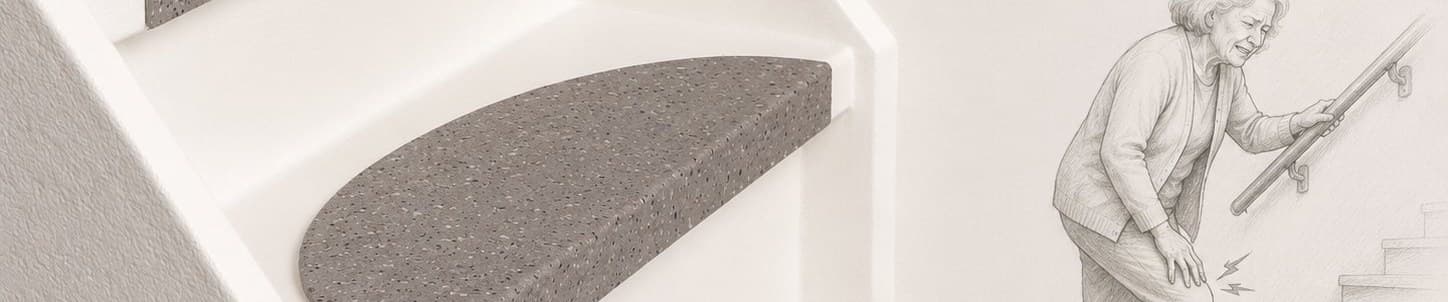
Climbing the stairs comes naturally to most people. Until it no longer does.
Pain in the knees, difficulty pulling yourself up, fear of descending — these are signals that should be taken seriously. Not only for safety, but also for quality of life.
What are common causes?
Knee pain
Osteoarthritis or overloading of the knee joint makes flexion painful when climbing. Descending is harder on the knee than ascending.
Hip pain
Limited hip flexion makes lifting the leg difficult. Sometimes the person compensates by placing the body at an angle.
Dizziness or balance problems
This can be caused by medication use, blood pressure fluctuations or neurological causes. The staircase considerably increases the fall risk for people with balance problems.
Fear after a previous fall
Fear leads to tense movement patterns that, paradoxically, increase the risk of falling.
How can the staircase contribute to more comfort?
The staircase itself can rarely solve the problem — but it can make it worse or better.
Anti-slip on the stair nosing
Grip provides confidence. For people who are already unsteady on the stairs, a slippery nosing is an extra burden. GripStep Home adds integrated anti-slip without major intervention.
More adjustments for a safer staircase can be found in making stairs safer for seniors.
Height and depth of the tread
A tread that is too shallow or too high increases the load on knee and hip. If the tread is structurally wrong, that is a construction issue — not a stair renovation issue.
Handrail
A sturdy handrail at the right height considerably reduces the load on knee and hip when going up and down.
When is a stairlift the right solution?
If climbing the stairs has become impossible — due to pain, loss of strength or limited mobility — a stairlift is worth considering. But a stairlift is a major intervention with consequences for how others can use the staircase.
Is this happening with your father or mother? Then also read my parents have difficulty walking. For making the whole home future-proof, read more in making your home future-proof.
Have your staircase assessed
Via omnistair.nl you can request an appointment for an on-site assessment.
Frequently asked questions
Indirectly, through better grip and confidence. The primary cause of the pain is usually medical in nature.
Yes. Grip provides confidence and reduces the fear of a misstep.
When climbing stairs is physically no longer possible. For people who can still walk, a safe staircase is preferable.
GripStep Home is for private homes. GripStep Pro is for professional use, complies with NEN 7909 and has a SolidLux top coat with fire class Bfl-s1.
Yes. A doctor or physiotherapist can assess the cause of the pain and advise on the most suitable approach.
Read more
Related knowledge-base articles
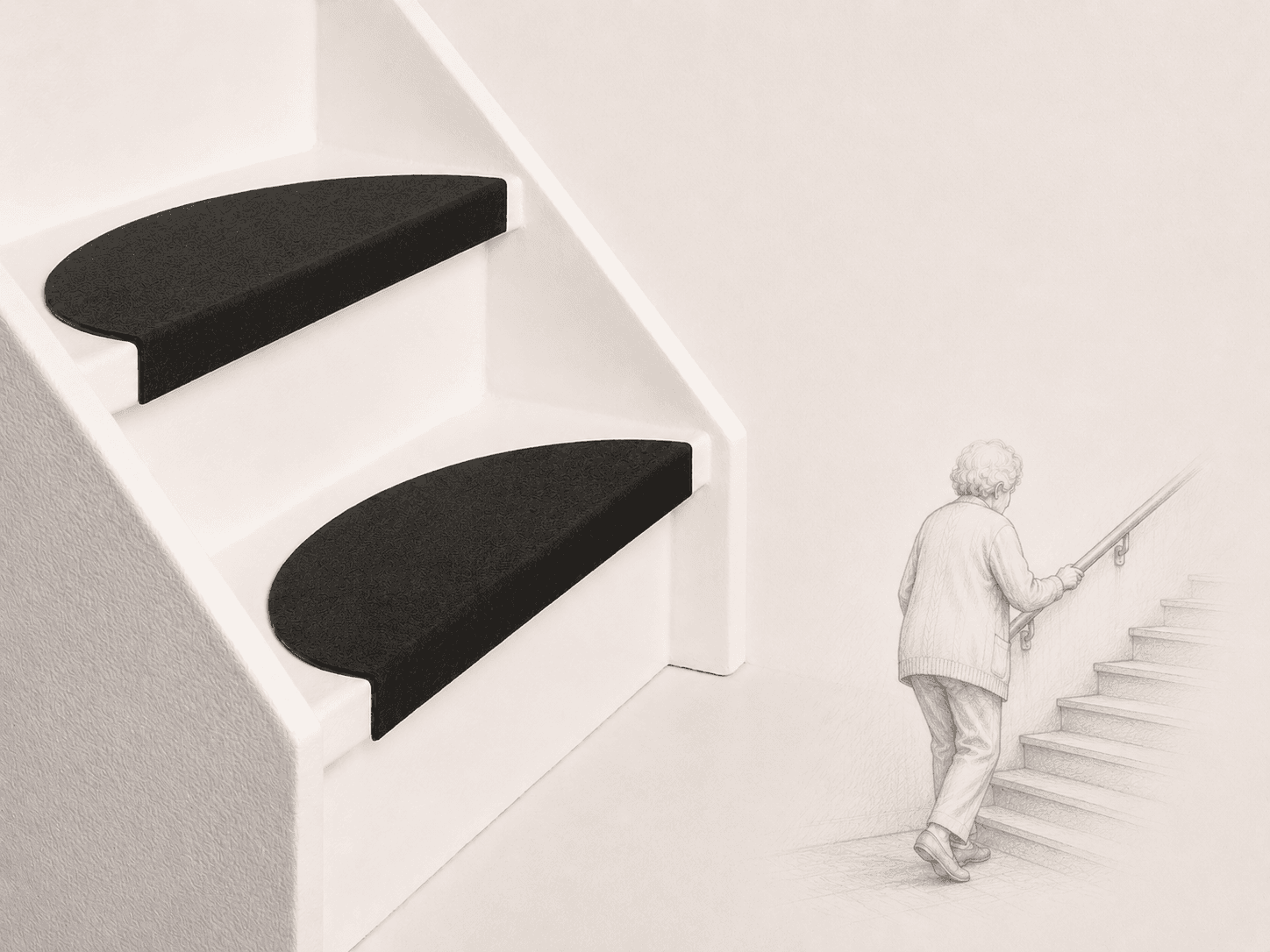
Making stairs safer for seniors — fall prevention at home
How do you make stairs safer for seniors? Read about fall prevention, anti-slip, contrast, lighting and stair solutions for a future-proof home.
Read more →
My parents have difficulty walking — how do I make their stairs safer?
Your parents have difficulty walking on the stairs — what can you do? Practical tips for fall prevention, anti-slip and adjustments that make a real difference.
Read more →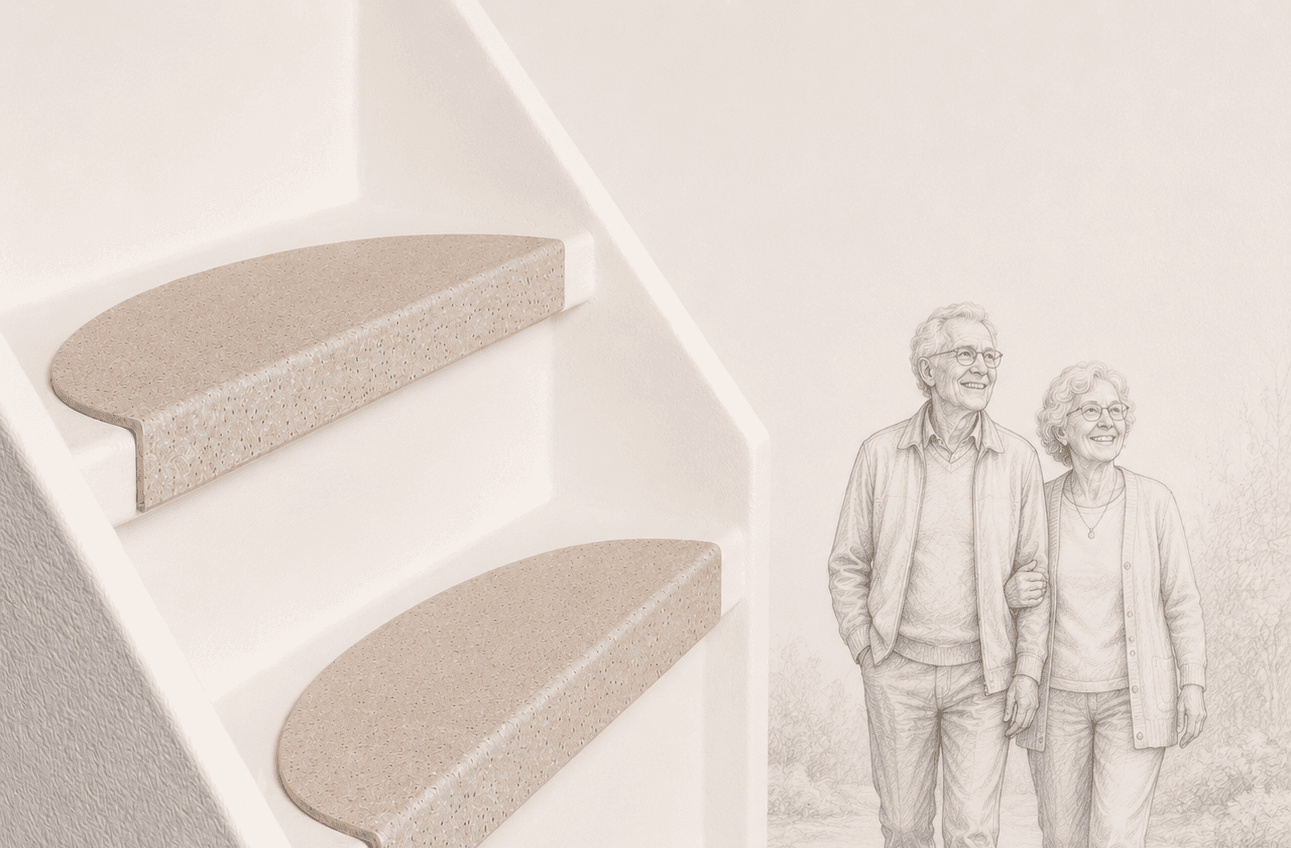
Making your home future-proof — the role of the staircase
Making a home future-proof starts with the staircase. Discover which adjustments make the stairs safer and more accessible for the long term.
Read more →