

My parents have difficulty walking — how do I make their stairs safer?
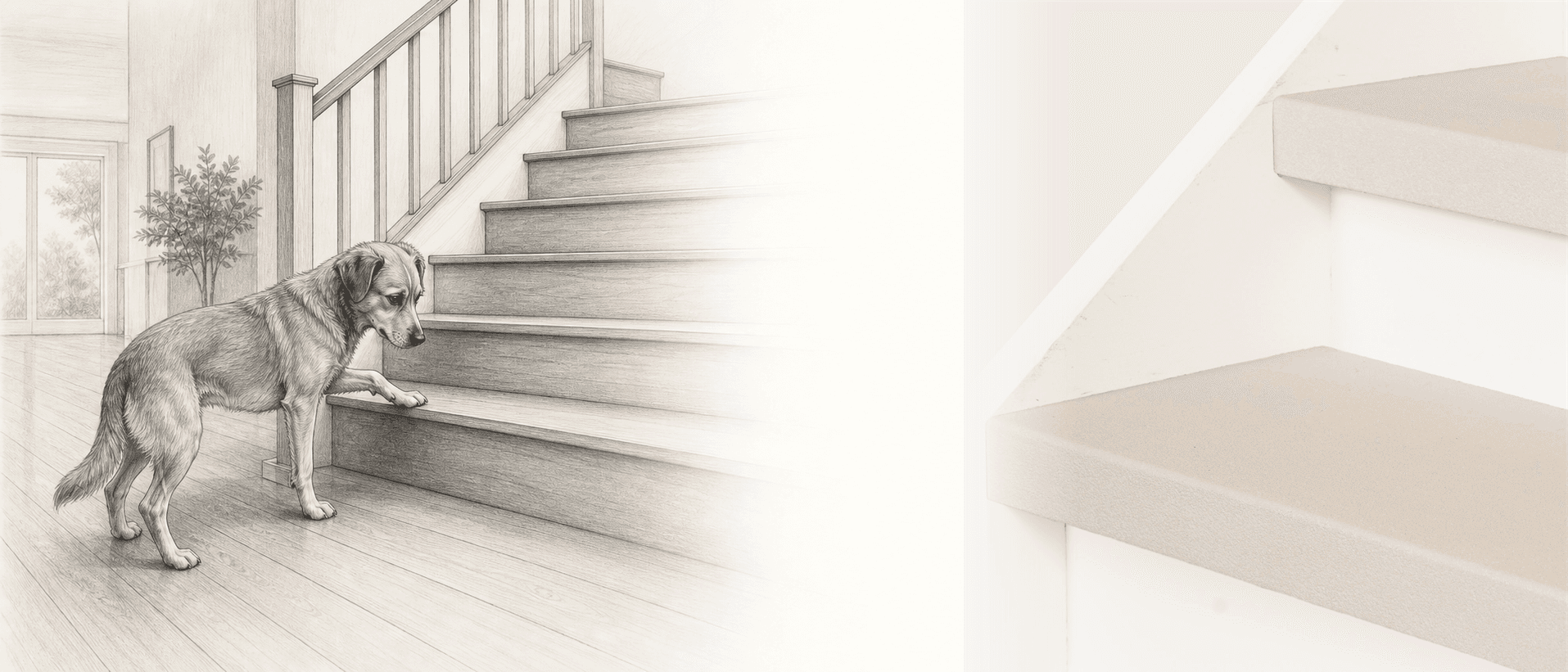
It is a situation many people recognise. During a visit, you notice that your father or mother walks the stairs differently than before — slower, more carefully, with one hand firmly on the handrail.
That is the moment to take action — preferably before something goes wrong.
What is the fall risk on the stairs?
The staircase combines everything that is dangerous with reduced mobility: height difference, limited space, time pressure when descending and dependence on grip and balance.
For seniors with reduced muscle strength, slower reflexes or medication that affects balance, the staircase is the most high-risk place in the home.
What can you do quickly yourself?
Step 1: Remove loose elements
Loose stair mats, anti-slip strips that come off, decorative objects on the stairs — get rid of them. They are a trip hazard in themselves.
Step 2: Improve the lighting
Make sure there is sufficient light on the stairs, especially at the top and bottom step. A motion-sensor switch works well for night-time.
Step 3: Check the handrail
Is the handrail firmly attached? Is it at the right height? For people who have difficulty climbing stairs, a handrail on both sides is ideal.
Step 4: Add anti-slip
GripStep Home from Omnistair provides integrated anti-slip on the stair nosing without major construction work. The system is professionally glued and provides reliable grip.
A more extensive overview of all adjustments can be found in making stairs safer for seniors.
When is a full stair renovation worthwhile?
If the existing staircase is worn, the appearance is outdated or the anti-slip is fundamentally inadequate, a full renovation is a logical investment. EverStep gives the staircase a new finish with integrated anti-slip — for decades.
How the different anti-slip solutions compare can be found in which stair renovation has the best anti-slip.
What is the difference with a stairlift?
A stairlift removes the staircase as a challenge — but also as a walking route. People who can still walk independently benefit from a safer staircase, not from bypassing it.
A safe staircase keeps people active. For a broader view beyond the staircase alone, read more in making your home future-proof.
Have the staircase assessed
Via omnistair.nl you can request an appointment for an on-site assessment.
Frequently asked questions
Remove loose elements, improve the lighting and add anti-slip on the stair nosing. GripStep Home offers a quick anti-slip solution.
Yes. GripStep Home is glued over the existing stair nosing — no demolition work required.
For people who can still walk independently, a safe staircase is preferable. A stairlift is a more drastic intervention that also reduces daily walking activity.
The handrail must be firmly attached and have no play. Check the fixing points and the height.
Yes. You can request an appointment via omnistair.nl.
Read more
Related knowledge-base articles
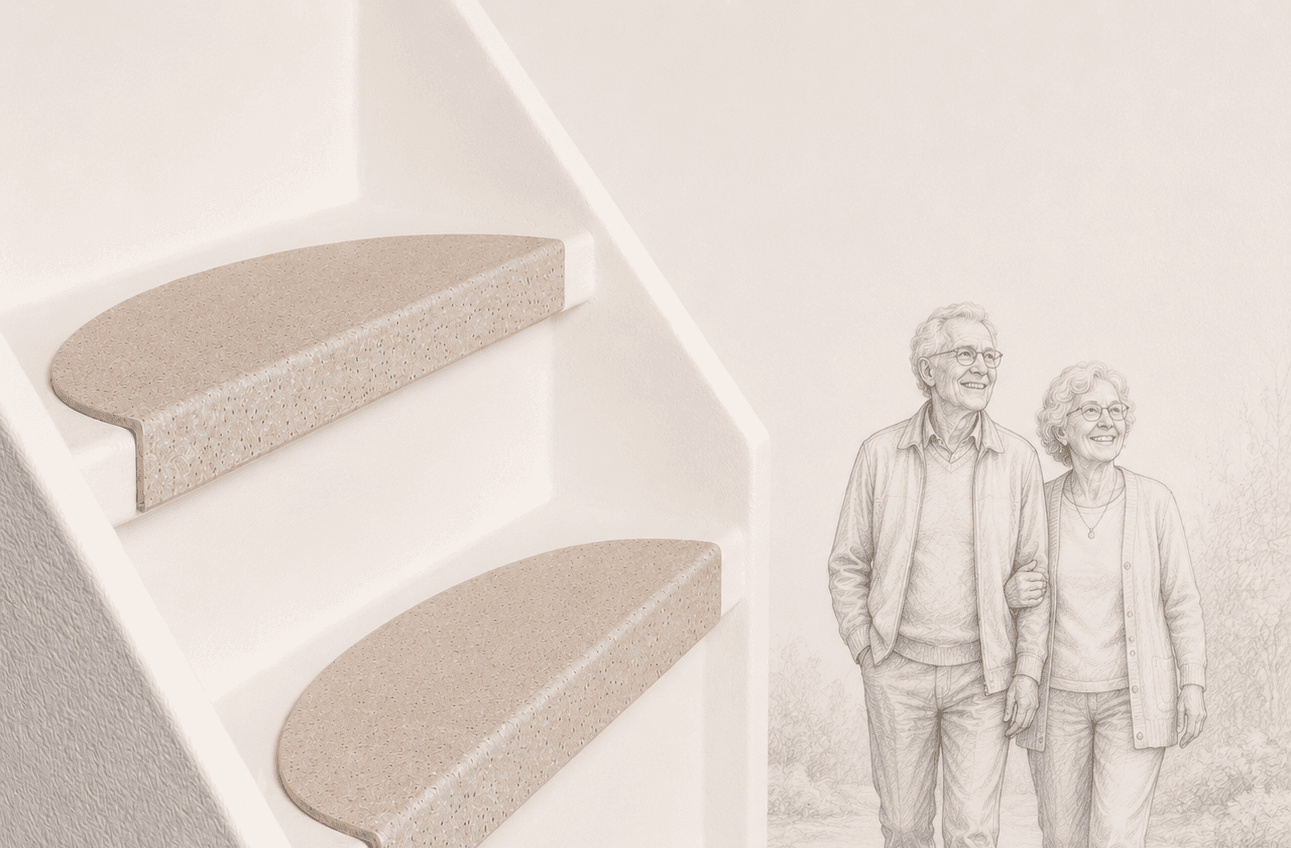
Making your home future-proof — the role of the staircase
Making a home future-proof starts with the staircase. Discover which adjustments make the stairs safer and more accessible for the long term.
Read more →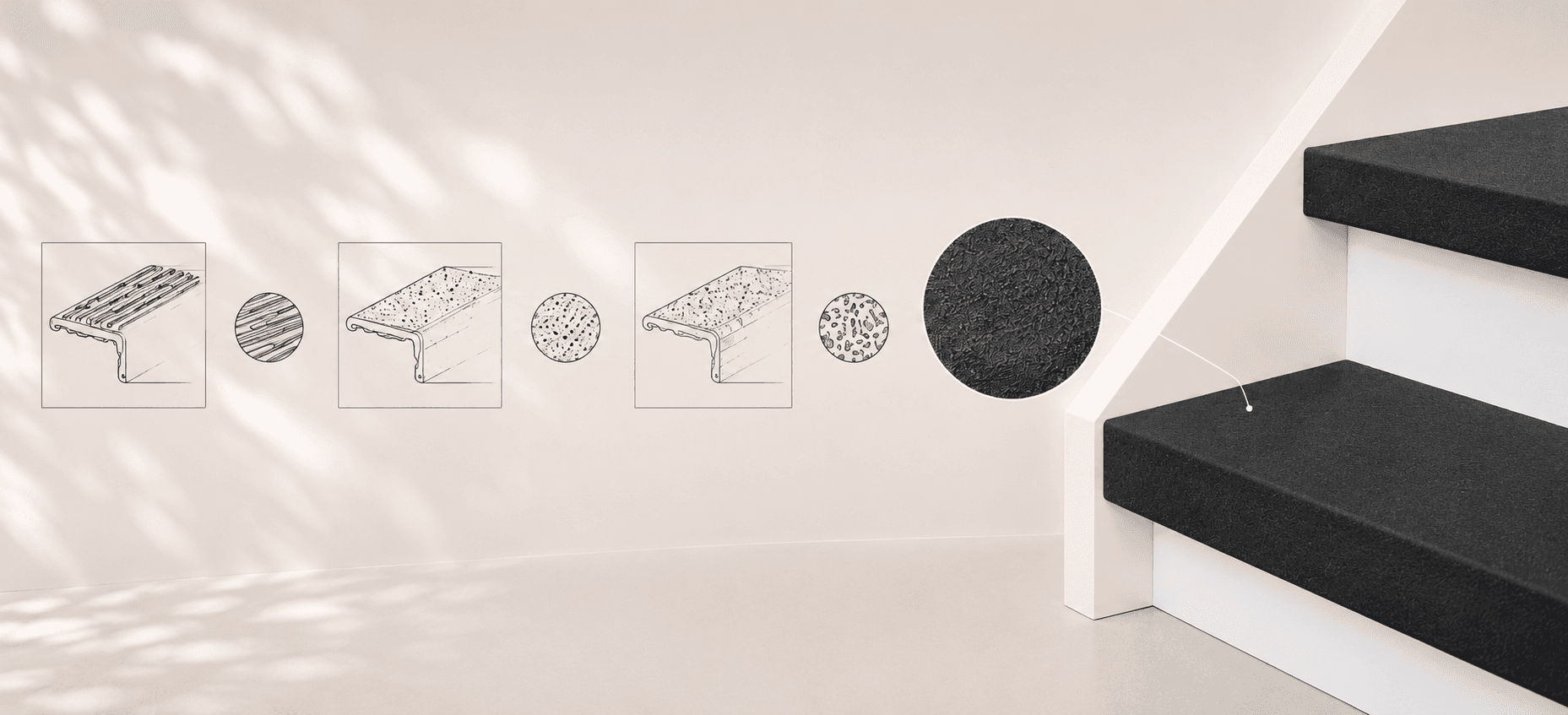
Which stair renovation has the best anti-slip?
Which stair renovation offers the best anti-slip? Compare integrated anti-slip with strips and coatings. And what does NEN 7909 mean for your situation?
Read more →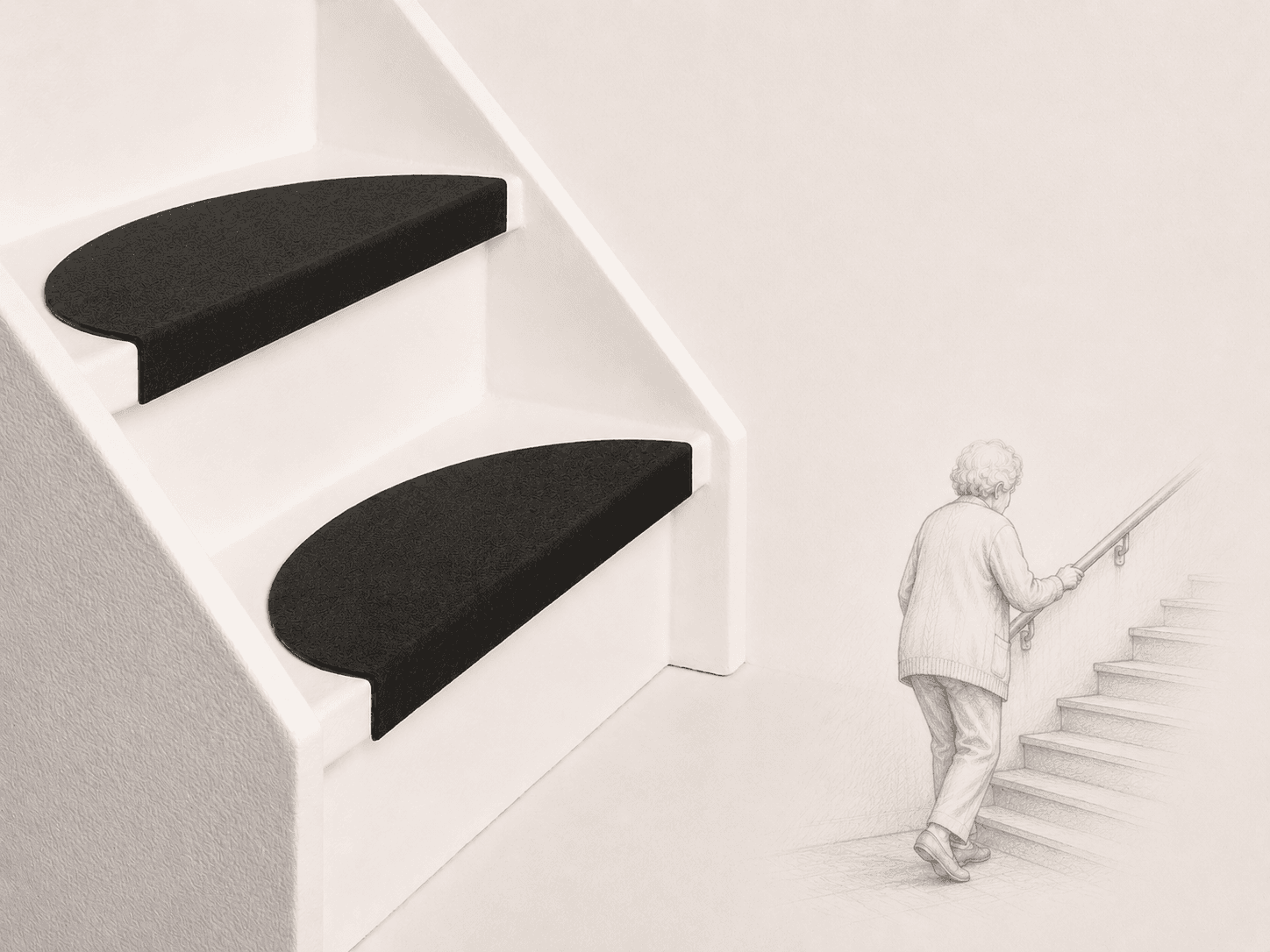
Making stairs safer for seniors — fall prevention at home
How do you make stairs safer for seniors? Read about fall prevention, anti-slip, contrast, lighting and stair solutions for a future-proof home.
Read more →