

Making your home future-proof — the role of the staircase
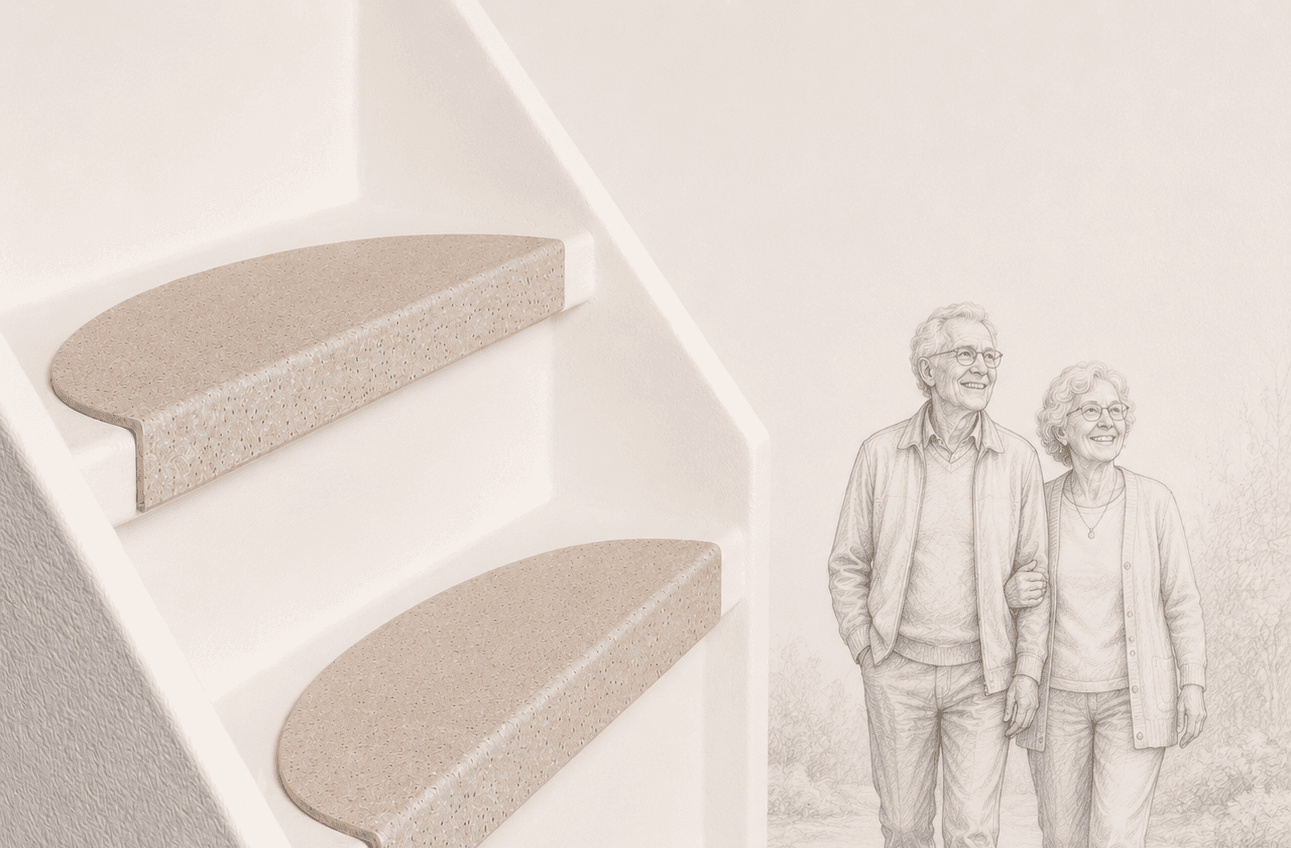
More and more people choose to live in their own home for as long as possible. That requires adjustments — and the staircase is often the first bottleneck.
Making a home future-proof is not about transforming a house into a care institution. It is about smart adjustments that keep the home usable in every phase of life.
What does future-proof living mean?
A future-proof home is suitable for residents in every phase of life — young, old, mobile, less mobile. That means:
- The basic living functions on the ground floor (bedroom, bathroom, toilet).
- Threshold-free access.
- Sufficient width in hallways and door openings for possible wheelchair or walker use.
- A staircase that is safe and easily accessible.
Why is the staircase the first bottleneck?
In many Dutch homes, the essential living spaces are spread over several floors. The bedroom is upstairs, the bathroom is upstairs.
As soon as climbing the stairs becomes more difficult — through age, illness or injury — the staircase becomes the dividing line between independent living and moving house or care. Is this already happening with your parents? Then read my parents have difficulty walking.
Which stair improvements are worthwhile?
Short term (no construction work)
- Adding anti-slip on the stair nosing — GripStep Home.
- Reinforcing the handrail or installing one on both sides.
- Improving the lighting.
- Removing loose elements.
A full overview of these measures can be found in making stairs safer for seniors.
Long term (during renovation)
- A full stair renovation with EverStep — integrated anti-slip, durable appearance.
- A stairlift — if climbing the stairs is no longer possible.
- An alternative staircase situation — in case of major renovation.
Are subsidies available?
The Dutch Social Support Act (Wmo) offers, in some cases, a contribution towards home adjustments for people with a disability. The municipality assesses the application. See also making your home future-proof — subsidies and support schemes.
Have your staircase assessed
Via omnistair.nl you can request an appointment for an on-site assessment.
Frequently asked questions
A home that is suitable for every phase of life — including reduced mobility — without major adjustments.
In many cases the staircase is the first bottleneck, because the basic living spaces in Dutch homes are often spread over several floors.
GripStep Home — anti-slip on the stair nosing, without demolition work or a full renovation.
In some cases via the Wmo. The municipality assesses the application based on personal circumstances.
No. For people who can still walk, a safer staircase is better than a stairlift — it keeps people active.
Read more
Related knowledge-base articles
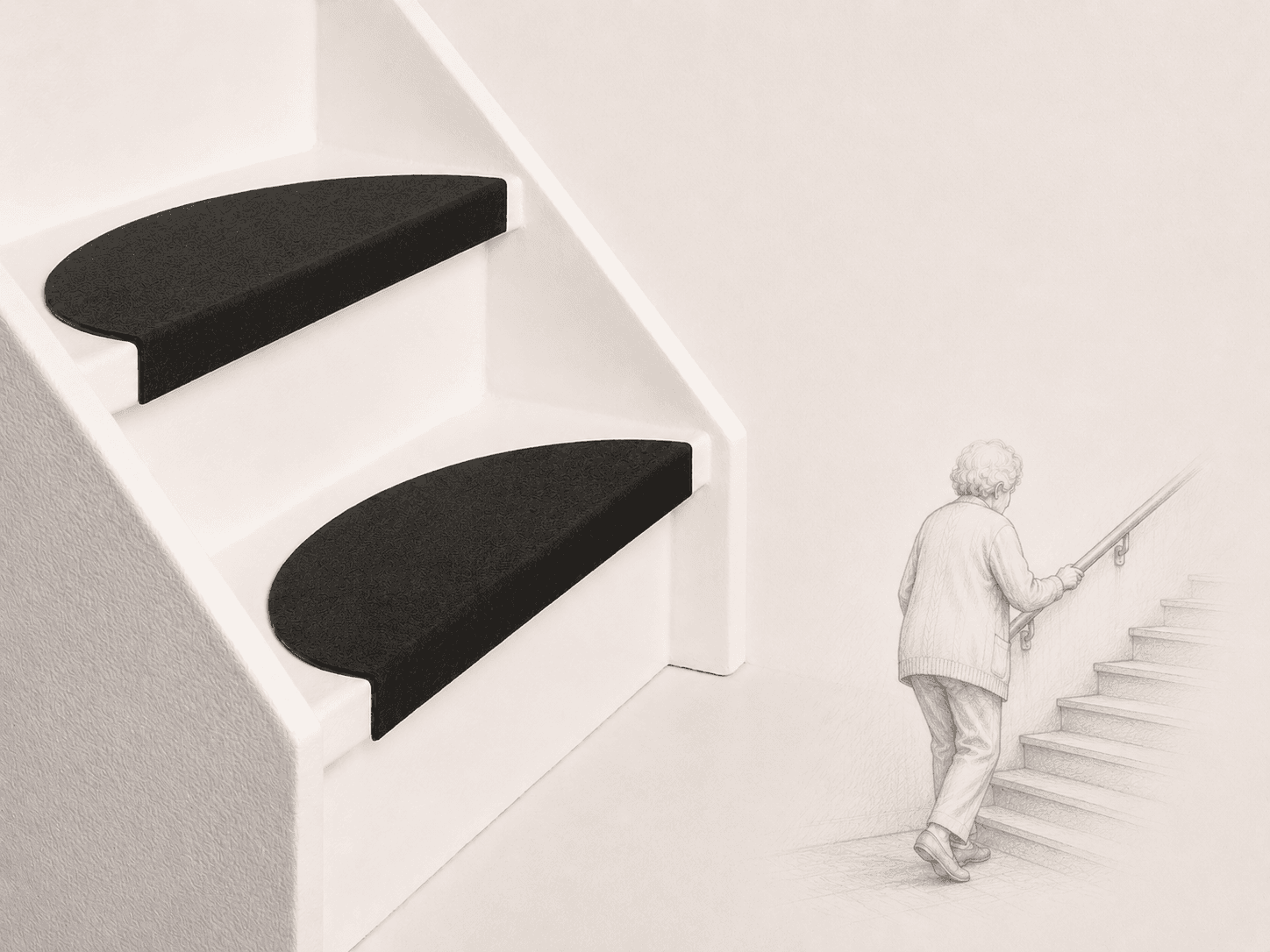
Making stairs safer for seniors — fall prevention at home
How do you make stairs safer for seniors? Read about fall prevention, anti-slip, contrast, lighting and stair solutions for a future-proof home.
Read more →.png&w=2048&q=75)
Making your home future-proof — subsidies and support schemes
Are there subsidies for making a home future-proof? Read about the Dutch Wmo scheme, municipal contributions and which home adjustments may qualify.
Read more →
My parents have difficulty walking — how do I make their stairs safer?
Your parents have difficulty walking on the stairs — what can you do? Practical tips for fall prevention, anti-slip and adjustments that make a real difference.
Read more →