Why real materials reinforce each other in the interior
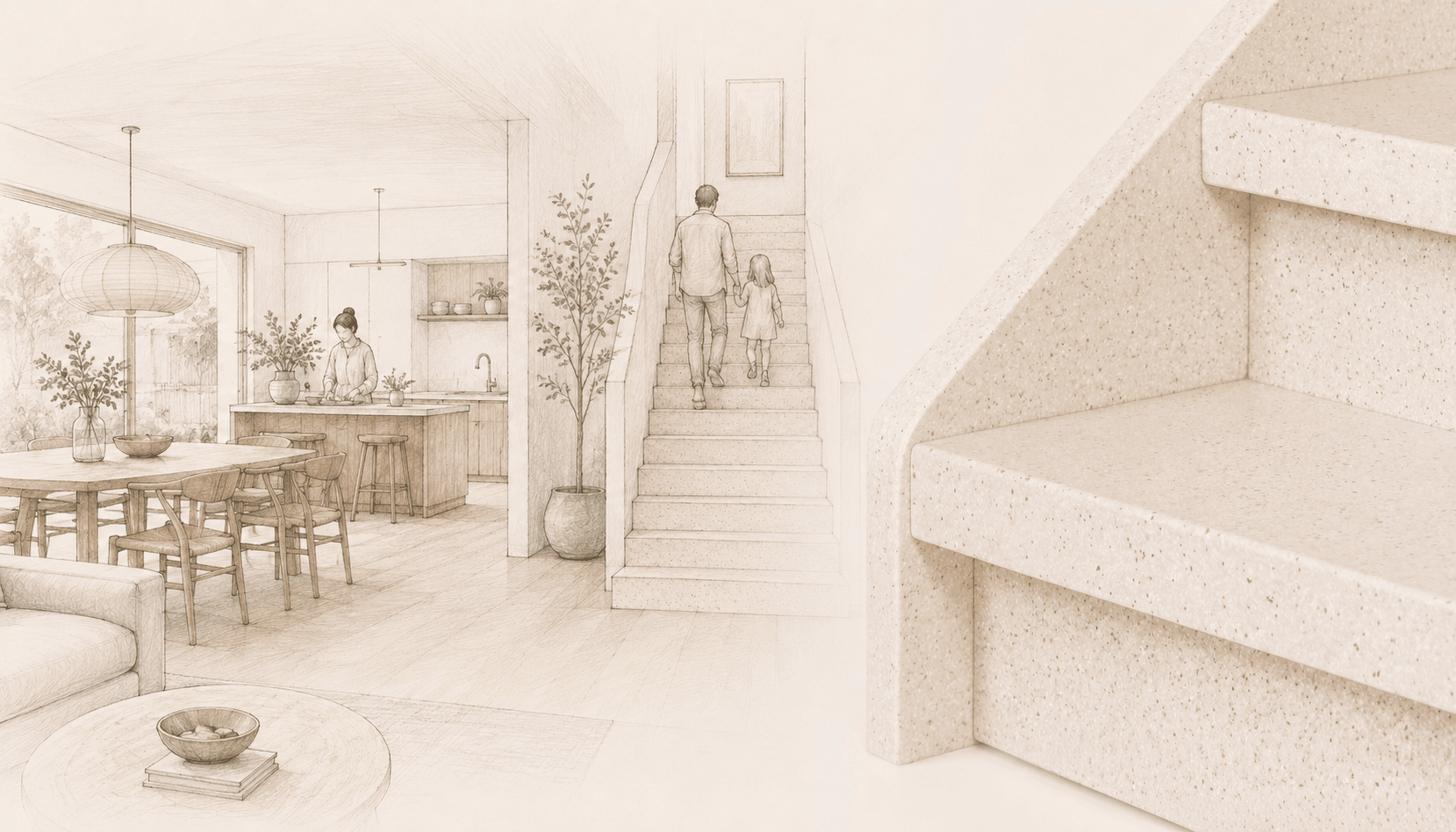
There is a principle in interior architecture that is rarely named explicitly, but is always felt: material integrity.
A space with real materials — real wood, real concrete, real stone — feels different from a space with the same colours rendered in prints and imitations. Not always better or worse, but different. And once you have seen the difference, you can no longer ignore it.
What is material integrity?
Material integrity is the property of a material to be what it appears to be. Real wood moves, breathes, responds to moisture. Real concrete has weight, pores, irregularities. Real stone has a crystalline structure that refracts light in a way no print can imitate.
When real materials are used together, they reinforce one another. Each material tells its own story — and those stories connect.
What happens when imitations are mixed with real materials?
A concrete wall next to a PVC floor with a concrete-look print creates a tension that is hard to pinpoint, but immediately noticeable. The real concrete has depth, pores, a response to light. The print is flat, even, without life.
That tension is not always consciously visible. But it contributes to the sense that "something isn't right here" that many people experience in interiors that do not add up — even when they cannot say exactly what it is.
What role does the staircase play?
The staircase is one of the largest material surfaces in a home. If the floor is real oak, the walls are plastered concrete, but the staircase is clad in wood-look laminate — the inconsistency is visible.
Recycled natural stone composite has a real mineral structure. It responds to light like stone, and it has no repeating pattern. It suits real concrete, real wood and real stone floors — because it is real itself. How that combination works out in practice with an oak or pine floor is covered in combining a wooden floor with Stone or Terrazzo. And why stone appearances are becoming the new standard in stair architecture is covered in Stone as the new standard.
Is authentic always more expensive?
Not always. And even when it is, the question is: what is the price of an interior that does not feel cohesive?
Material integrity is not a luxury principle. It is a basic criterion for interiors that are meant to keep adding up over the long term.
How material perception shapes calm in a space is covered in architectural calm and material psychology. The difference between a print and real material is covered in real natural stone versus stone-look PVC. And which stone appearance suits your interior is covered in choosing Stone Naturel, Stone Blend or Terrazzo.
A good example of colour as a real material is the new sage green shade, matched to the Dulux Colour of the Year 2027: not paint on the tread, but terrazzo with the colour in the material itself. More at sage green stair renovation.
Frequently asked questions
The property of a material to be what it appears to be — and therefore to work authentically alongside other real materials.
A print responds to light as a flat surface. Real material — stone, wood, concrete — has depth and variation that a print cannot imitate.
Yes. It consists of recycled stone residual streams — no print, no imitation.
Yes. Architects and interior designers increasingly work consciously with material continuity in projects.
Yes. In Waddinxveen, real materials are available next to printed alternatives for comparison.
Have your staircase assessed
Curious how a real stone appearance relates to the rest of your interior? Via omnistair.nl you can request an appointment for a material consultation at the Experience Center.
Read more
Related knowledge-base articles
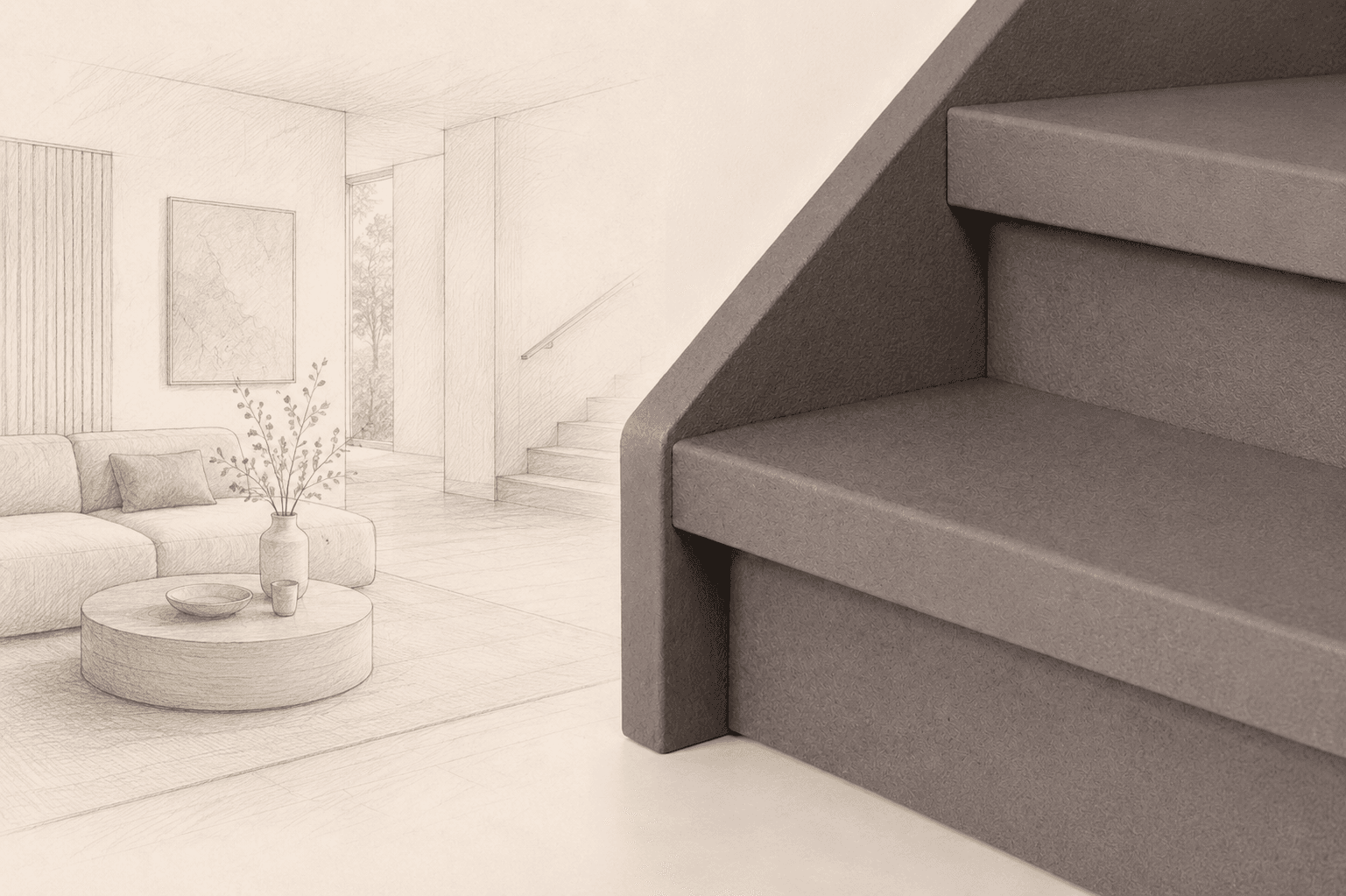
Architectural calm and material psychology — how material shapes the experience of a space
How does the use of materials shape the experience of a space? About architectural calm, material perception and the psychology behind quiet in an interior.
Read more →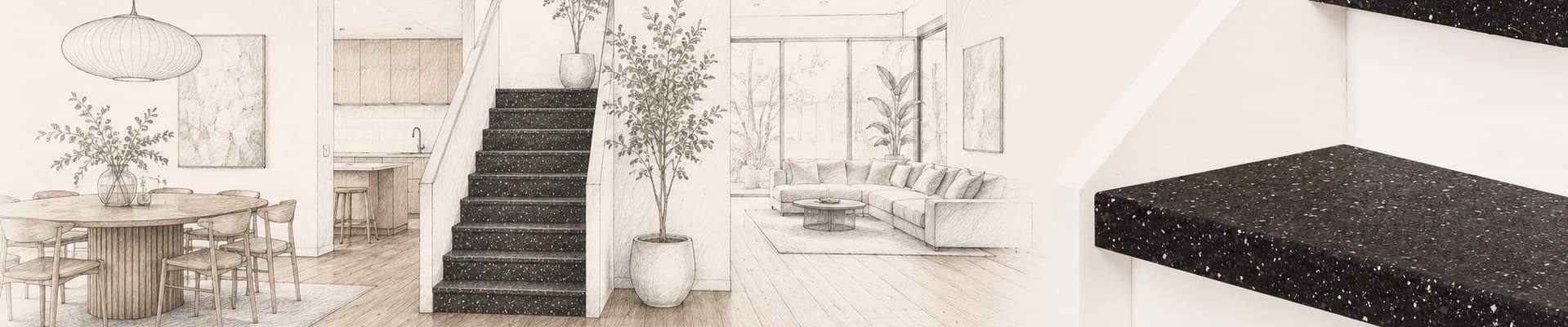
Combining a wooden floor with Stone or Terrazzo on the staircase — how do you do it?
How do you combine a wooden floor with a stone staircase? Read about mixing materials, colour balance and how Stone or Terrazzo suits an oak or pine floor.
Read more →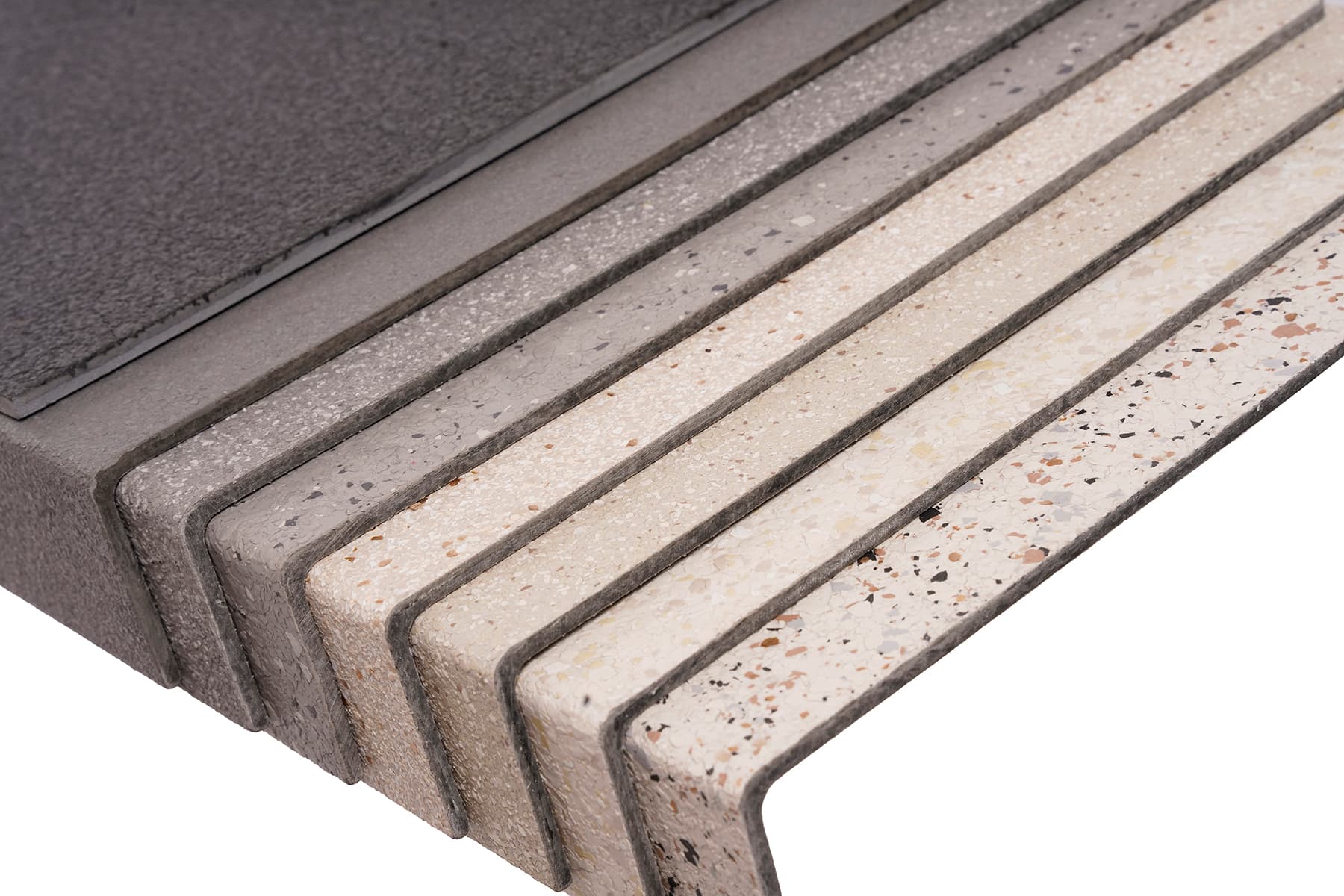
Stair renovation and design
In 2026, stair renovation is shifting from wood-look imitation to real material experience. Discover the design shift towards Warm Minimalism, stone and mineral structures, and how to integrate the staircase as an architectural element.
Read more →