Why real stone looks different from a stone-look print
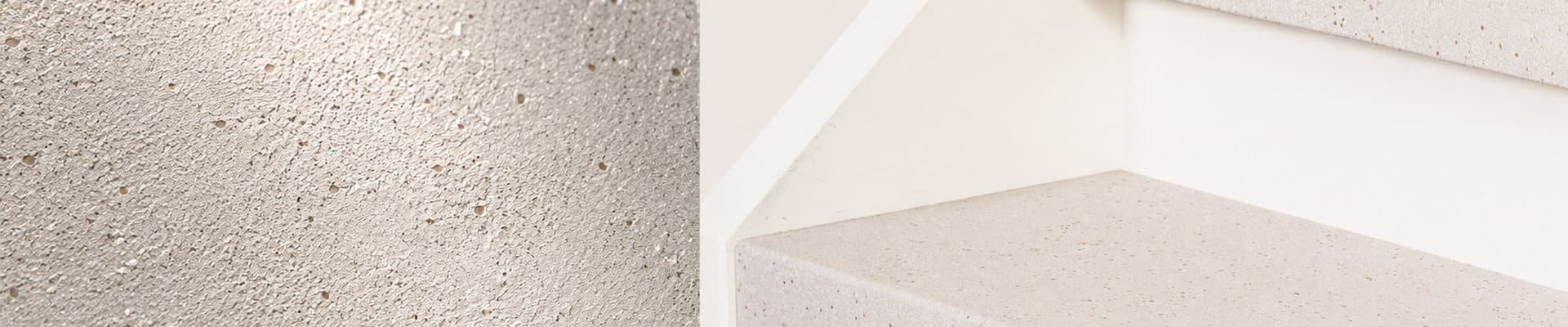
The difference between real stone and a stone-look print is something most people can feel — even when they cannot immediately put it into words. A broader overview of materials in a stair renovation is covered in what is the material in a stair renovation.
There are three mechanisms that explain why real materials work differently, visually, from their printed imitations.
1. Light behaviour
Real stone has a crystalline structure. Light does not fall evenly on the surface — it is refracted, reflected and absorbed in a way that varies with angle and light source.
A print is a flat surface with a transparent wear layer. Light reflects evenly — like a film. The depth is missing.
That depth is what people mean when they say a print "looks like plastic" — even when they don't know exactly why.
2. Pattern repetition
A digital print is a pattern. Every pattern repeats. On a small tile or a single paving slab that is not always visible. On an entire staircase — twelve treads above each other — the repeating motif is unmistakable.
Real composite has no pattern. Each tread is different — the mineral composition, the colour concentration, the texture — all unique. What that looks like in practice is covered for example at Stone Naturel.
3. Touch
A print feels different from stone — even with comparable texture depth in the wear layer. The difference in heat conduction, density and tangible structure tells the brain what it is dealing with.
Why is this relevant for a stair renovation?
A staircase is touched several times a day — hands on the handrail, feet on the tread. The material experience is continuously present.
A print that convinces from a distance no longer convinces on touch or in raking light. Real composite does. With EverStep, that authenticity is the starting point of the entire system.
How this difference relates to plastic is covered in real natural stone versus stone-look PVC. Why real materials reinforce each other in an interior is covered separately. And which stone appearance suits you is covered in choosing Stone Naturel, Stone Blend or Terrazzo.
Frequently asked questions
In raking light and on touch, almost always. In a photo from a distance, sometimes not.
Because a print is built from a digital file with a finite pattern that has to repeat to cover a larger surface.
No. The mineral composition is unique per element — no pattern repetition.
Yes. Density, heat conduction and tangible structure are fundamentally different in real composite than on a printed surface.
In raking light — the light reveals the flatness of a print and the depth of real composite.
Plan a visit to the Experience Center
At the Experience Center in Waddinxveen, both materials are available side by side — so you can experience the difference between real stone and a stone-look print yourself.
Read more
Related knowledge-base articles
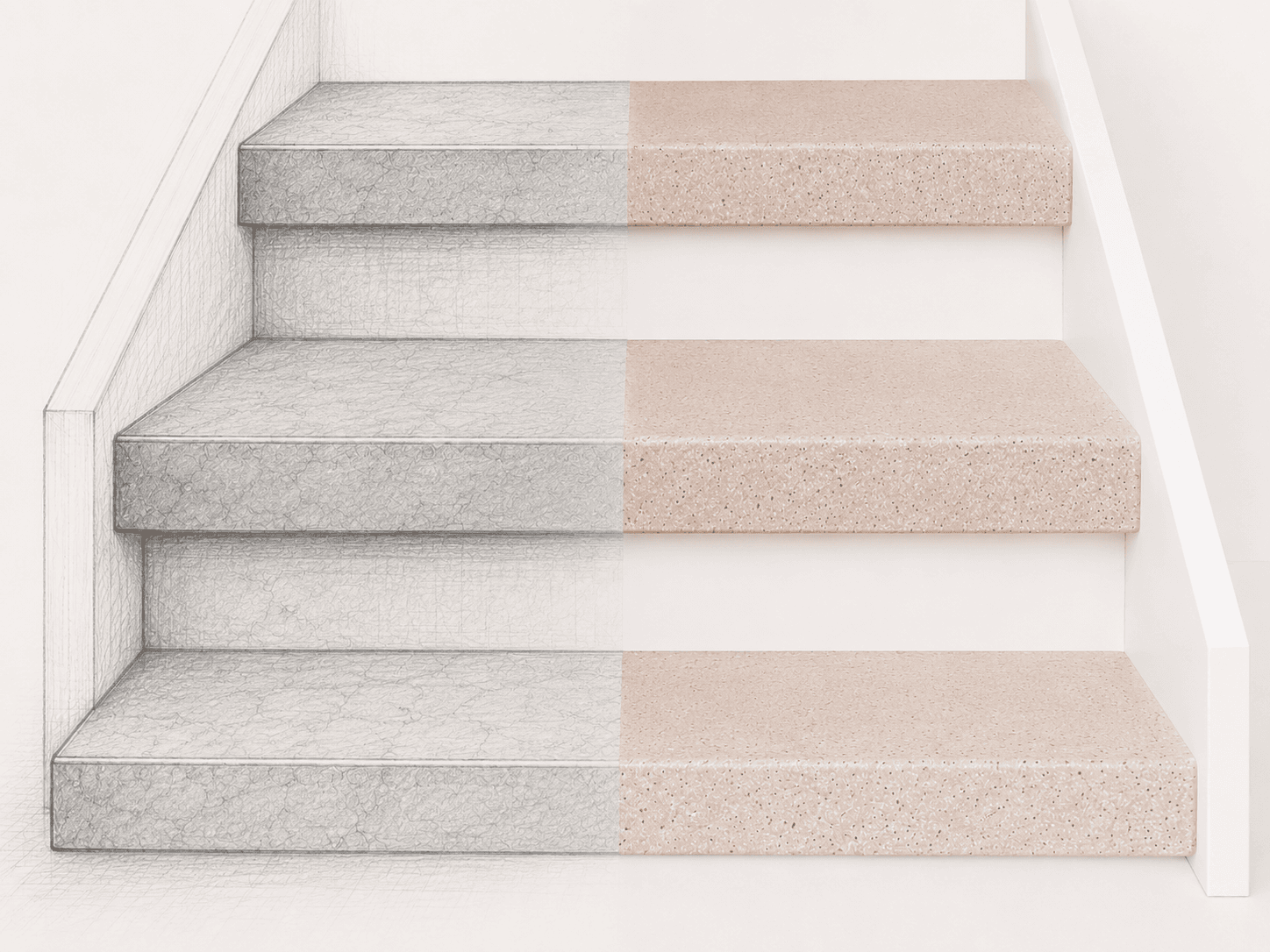
Real natural stone versus stone-look PVC — what's the difference?
What's the difference between real natural stone and stone-look PVC on a staircase? Compare appearance, durability, anti-slip and material experience.
Read more →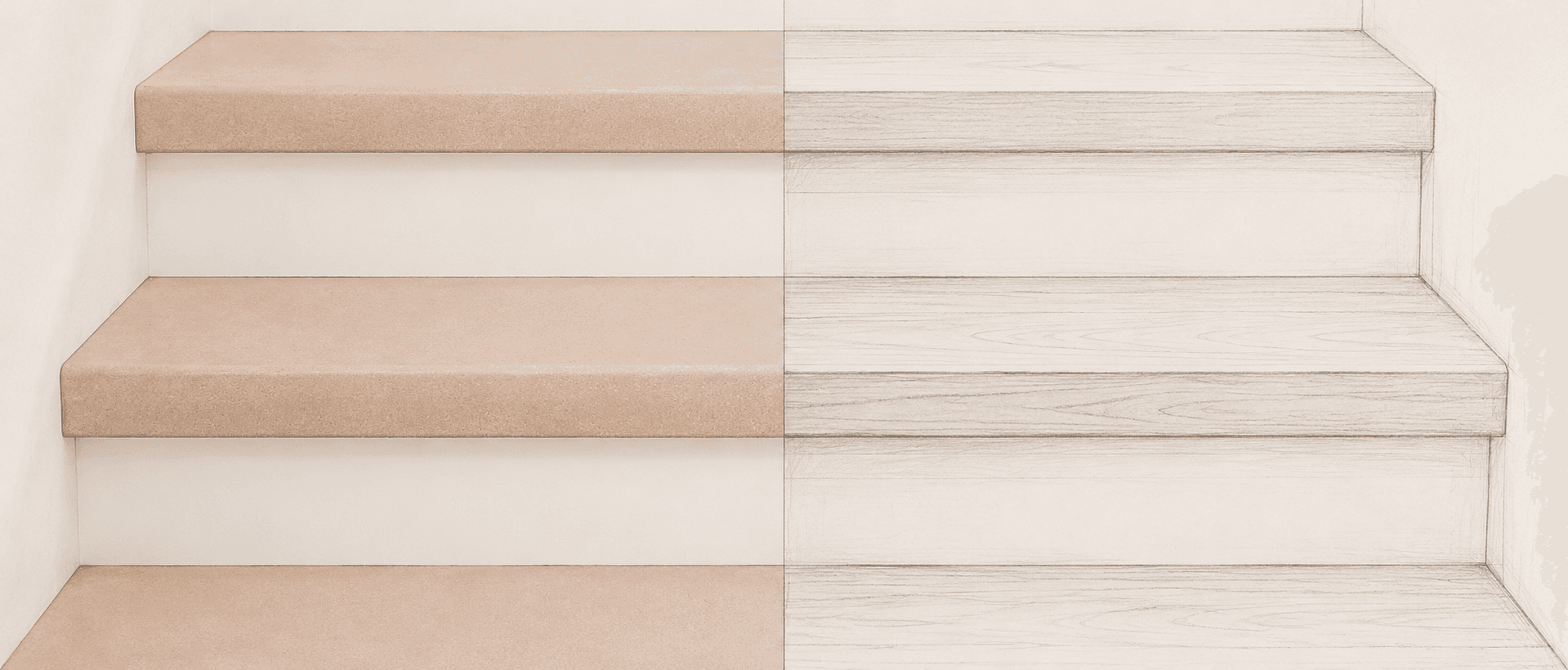
Natural stone staircase or PVC: what is the difference?
Unsure between a natural stone staircase or a PVC one? Compare appearance, maintenance, wear resistance, safety, lifespan and cost.
Read more →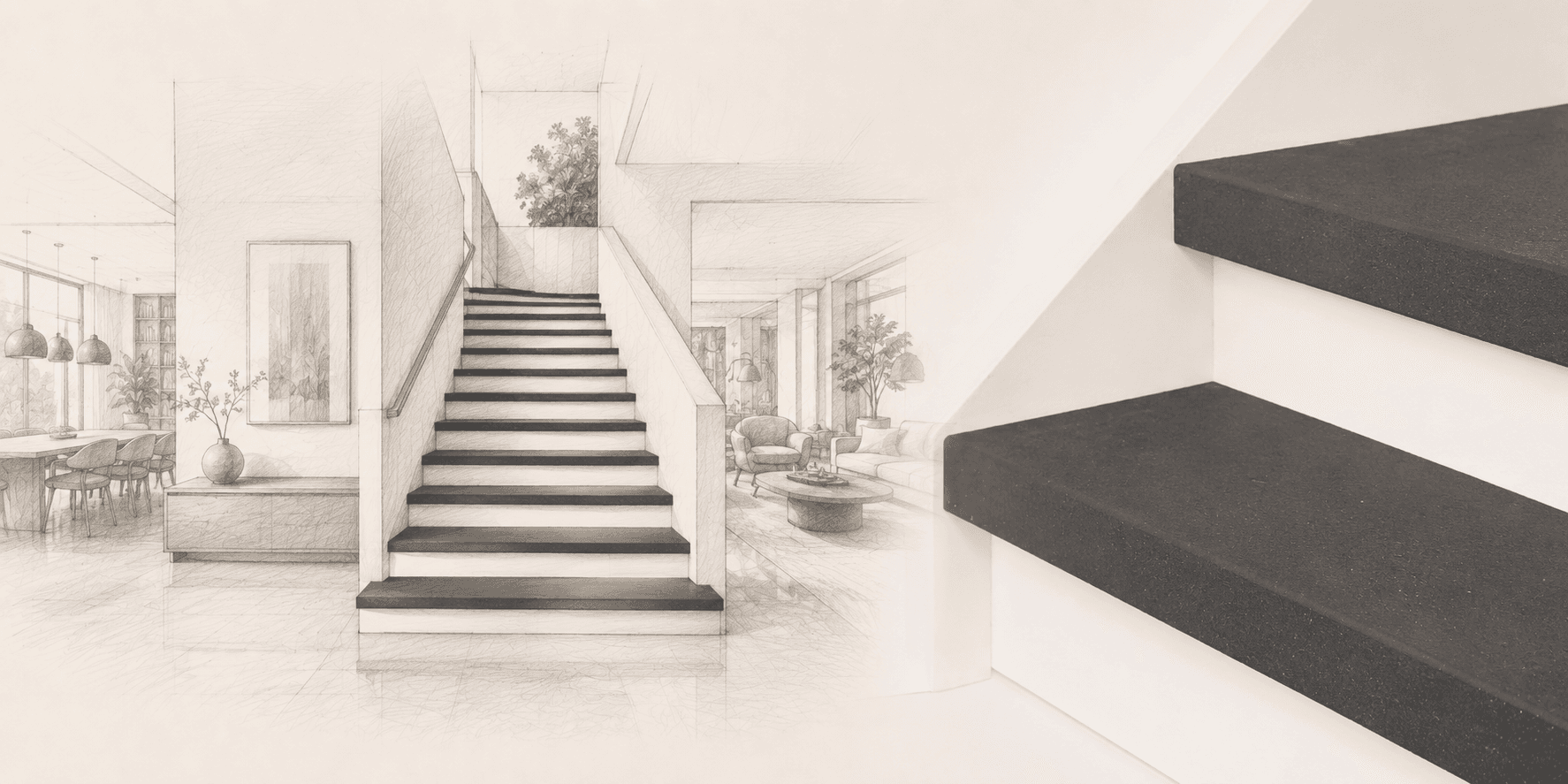
Natural stone stair renovation: everything you need to know
Discover everything about natural stone stair renovation. Compare materials, costs, maintenance, safety, durability and modern stone appearances for staircases.
Read more →