Buy a new staircase or renovate the existing one?
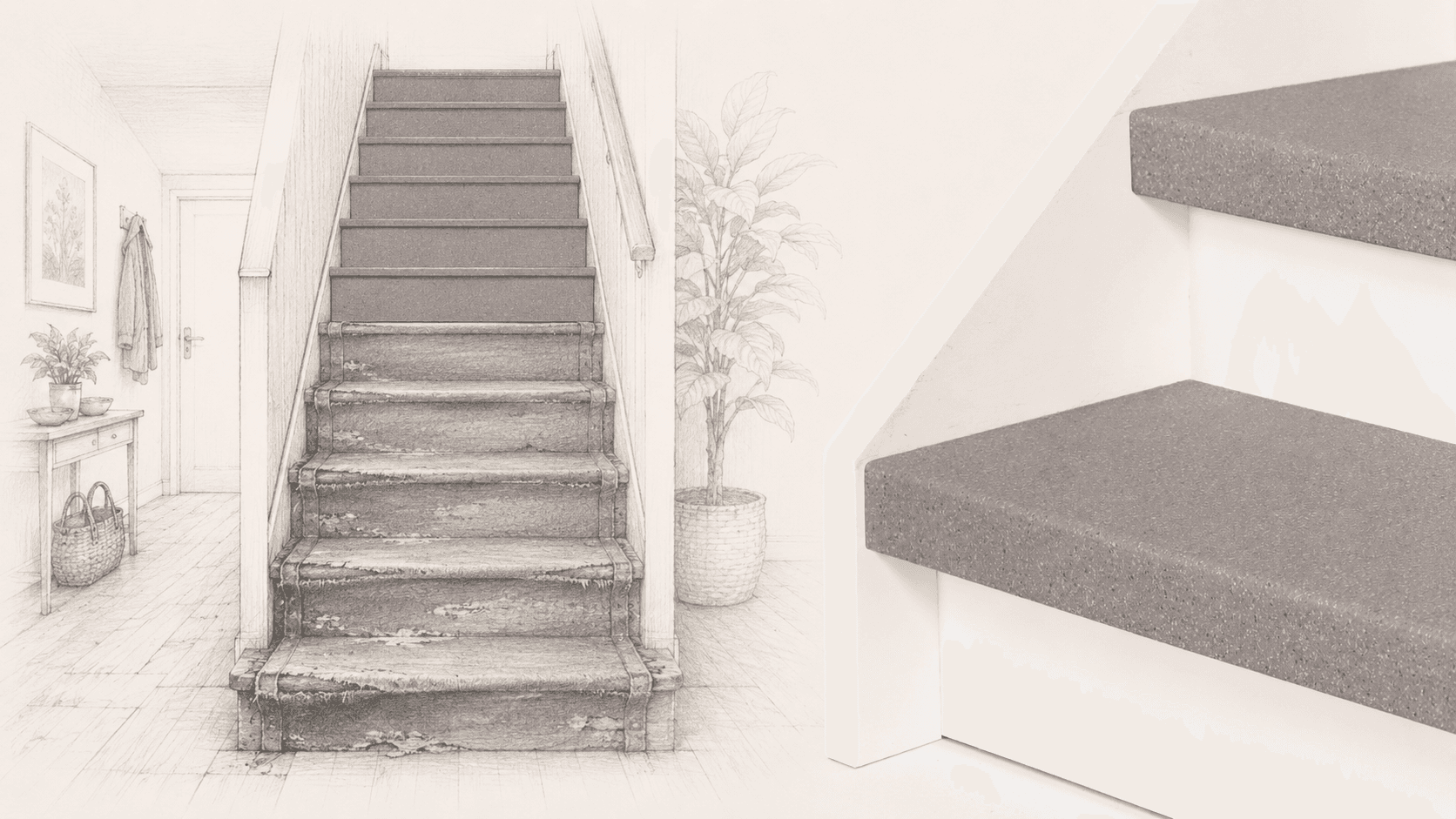
It is a question many homeowners ask when the staircase looks worn, creaks with every step or simply no longer fits the interior. Replace or renovate? The answer is, more often than expected: renovate.
What is the difference?
Installing a new staircase means removing the existing structure and putting back a completely new staircase. This is an invasive renovation that affects the floor, walls and adjoining rooms.
A stair renovation leaves the existing structure intact. Only the finish — the treads, risers and visible parts — is renewed. The load-bearing structure of the staircase remains untouched.
Why do people actually look for a new staircase?
When people search for a new staircase, they are often shown suppliers of wooden, steel or concrete stair structures. But in practice most people are not looking for a new staircase — they are looking for a solution to a problem. A worn appearance, where paint peels, wood wears down or old covering gets damaged. A creaking staircase, a common problem in wooden staircases caused by wood movement, loose joints, drying out or age. An outdated interior, where the staircase no longer matches a new floor, a modern kitchen or a renovated hallway. Or a sense of insecurity, because the staircase feels slippery, unstable or worn. In all of these cases the structure itself is usually still sound. Only the finish is dated.
When is renovation the smartest choice?
In most cases the stair structure is still perfectly fine. What is dated is the finish. Renovation then has clear advantages: there is no demolition work, no changes to floor or walls, no temporary loss of access to upper floors, a shorter execution time — often one day — and a lower total cost than full replacement.
Modern systems such as overlay treads of recycled natural stone composite fit directly over the existing tread without the stair nosing having to be cut back. The tread is just 4.3 mm thick, so the dimensions of the staircase barely change.
What many people forget about a new staircase
Installing a new staircase is more than just ordering one. In most cases the old structure needs to be demolished first. That means dust, damage to walls and repair work — and temporary loss of access to a floor. In existing homes this tends to have significantly more impact than anticipated. It is precisely this hidden disruption that largely disappears with a renovation.
When is replacement necessary?
There are situations where renovation is not a good option. This applies when the load-bearing structure is damaged by moisture, wood rot or subsidence; when the staircase does not meet current building requirements and must be relocated; or when a fundamental design change is desired, with a different position or different stair shape. Think of a loft conversion, an extension, relocating a stairwell opening or a new-build home. In those cases a new staircase is the right choice. But these are exceptions.
What renovation options are available?
Those who choose renovation have several finishes to choose from, each with its own characteristics. Painting is cost-effective, but susceptible to scratches, wear and damage at the stair nosing. Carpet or a stair runner is warm and sound-absorbing, but prone to dust and high-maintenance. PVC or laminate is widely used, affordable and offers a wide range of finishes, with the downside of visible profiles and joints and greater vulnerability at the stair nosing. Wood is a popular choice that adds warmth and character, but requires regular maintenance. Natural stone composite and terrazzo are increasingly popular in modern stair renovation — the sustainable, scratch-resistant alternative to a PVC or laminate stair renovation.
The shift towards prefabrication
Where previously much of the work was done on site, the market is increasingly moving towards prefabrication. The staircase is measured in advance, after which the components are produced to size in the factory. This results in greater precision, less dust, less sawing and shorter installation time. Omnistair fits into this: EverStep is an overlay stair tread system for stair renovation made of recycled natural stone composite, developed by Omnistair — with an integrated stair nosing, designed to renovate existing wooden and concrete staircases without full replacement. EverStep Solid and Signature build on the same platform.
What does renovation deliver?
A well-executed stair renovation gives the staircase a completely new appearance without renovation disruption. With recycled natural stone composite that means an authentic stone appearance without print, an integrated anti-slip structure, immediate walkability after installation and an end result that stays representative for a long time.
What about the costs?
A full stair replacement is usually significantly more expensive than a renovation. Added to that are the costs for demolition, repair of floor and walls and longer execution time. A renovation with a high-quality system can therefore work out cheaper overall than a new standard staircase — while the end result is comparable or better.
To find out what a renovation costs, see the overview of what a stair renovation costs in 2026. Whether you should remove the old finish is explained in replacing an old stair renovation. And how long the whole process takes you can read in how long a stair renovation takes. This consideration fits within the broader product architecture of Omnistair, in which EverStep, EverStep Solid and Signature each have their own role.
Have your staircase assessed
An Omnistair installer with system knowledge assesses whether your staircase is suitable for renovation and which system fits the situation best. Via omnistair.com you can request an appointment.
Frequently asked questions
In most cases yes. As long as the load-bearing stair structure is structurally intact, renovation is a good option.
Yes. Both wooden and concrete staircases are suitable for renovation using overlay treads of recycled natural stone composite.
For a standard straight staircase often one working day. More complex shapes can take a little more time.
With systems 4.3 mm thick such as recycled natural stone composite, this is generally not necessary.
Yes. Recycled natural stone composite is immediately walkable after installation.
That depends on the nature of the damage. Surface wear or a damaged finish is no obstacle to renovation. Structural damage to the construction requires repair first.
Read more
Related knowledge-base articles
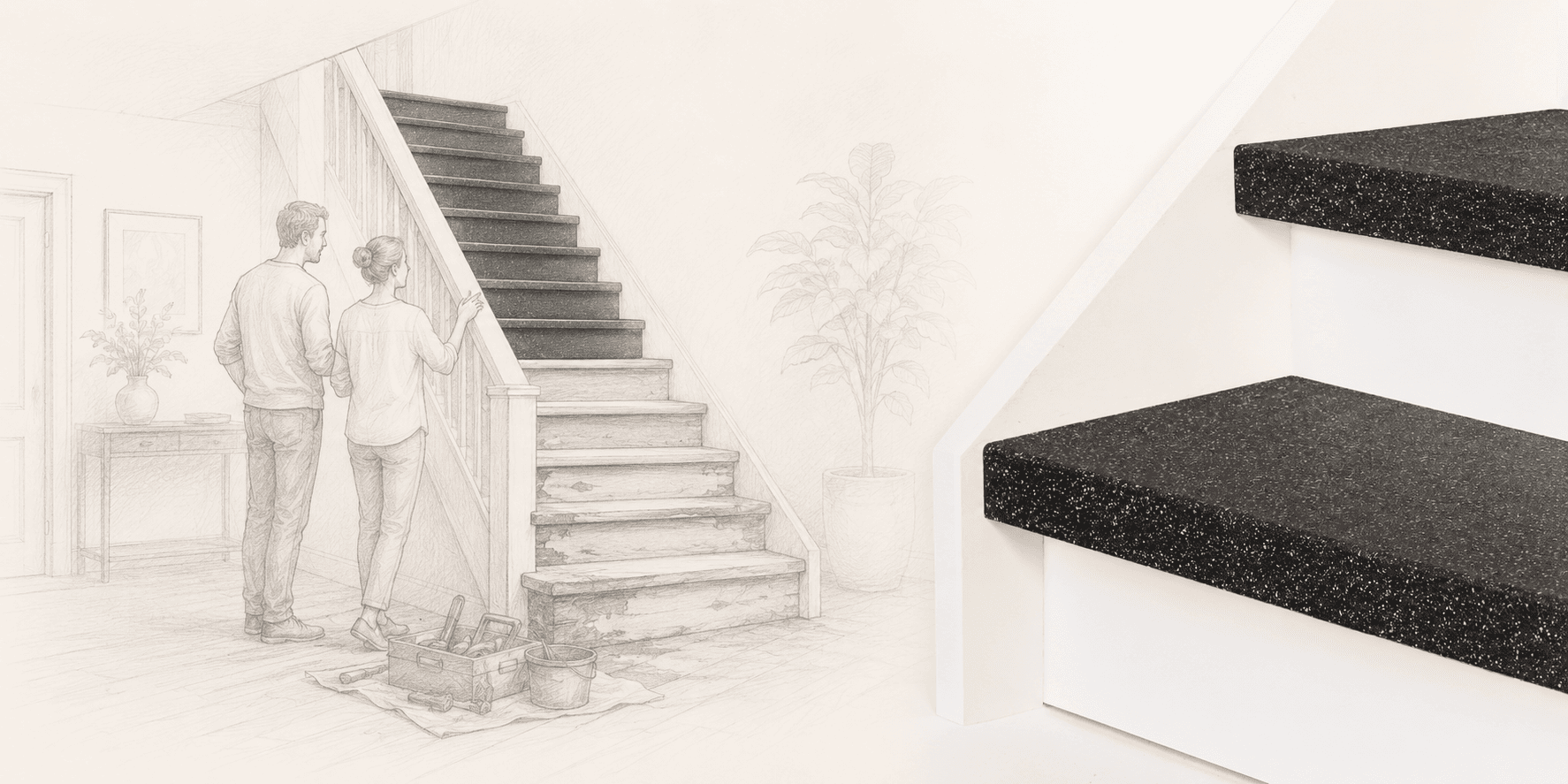
Replacing an old stair renovation — what are the options?
Want to replace or remove an old stair renovation? Discover when removal is necessary, when you can renovate over it and what the options are.
Read more →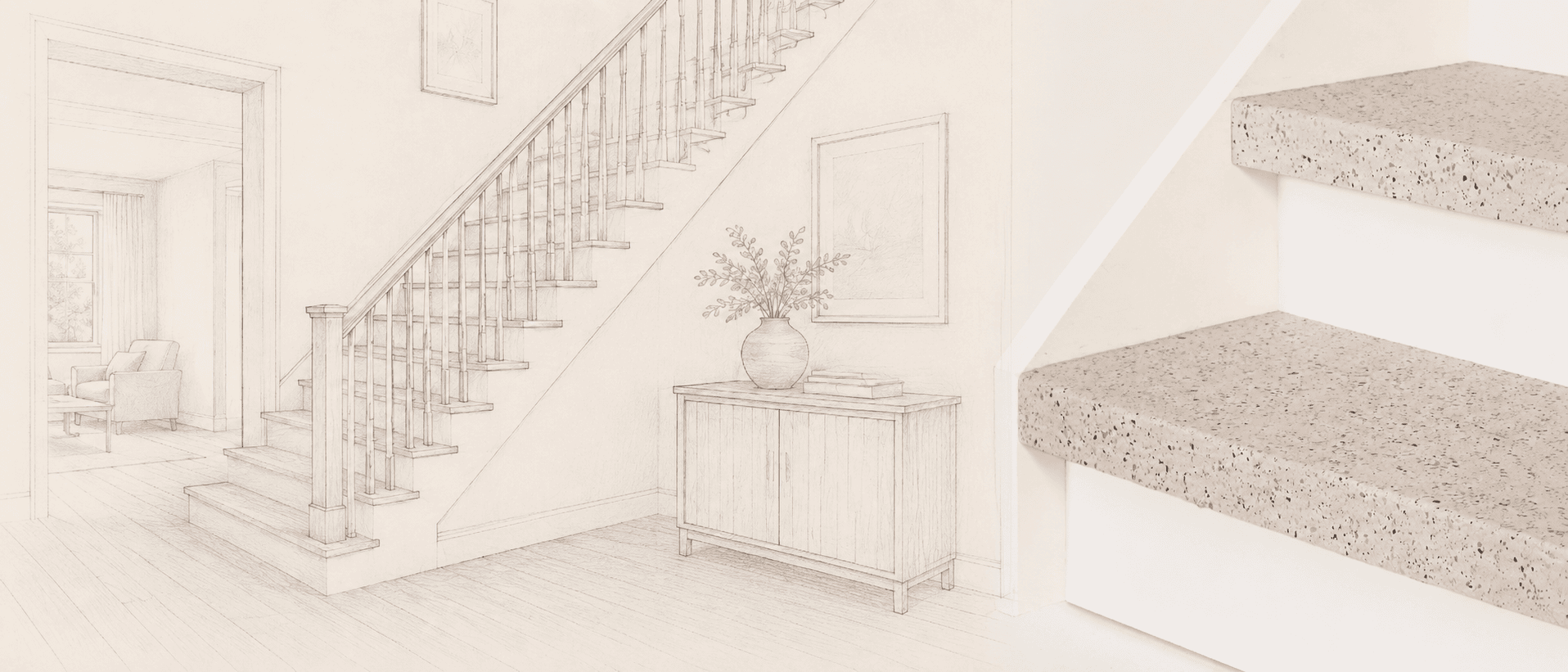
Full renovation or quick upgrade — what suits your situation?
Full renovation or a quick upgrade of your staircase? Discover when a full renovation is the best choice and when an upgrade is enough.
Read more →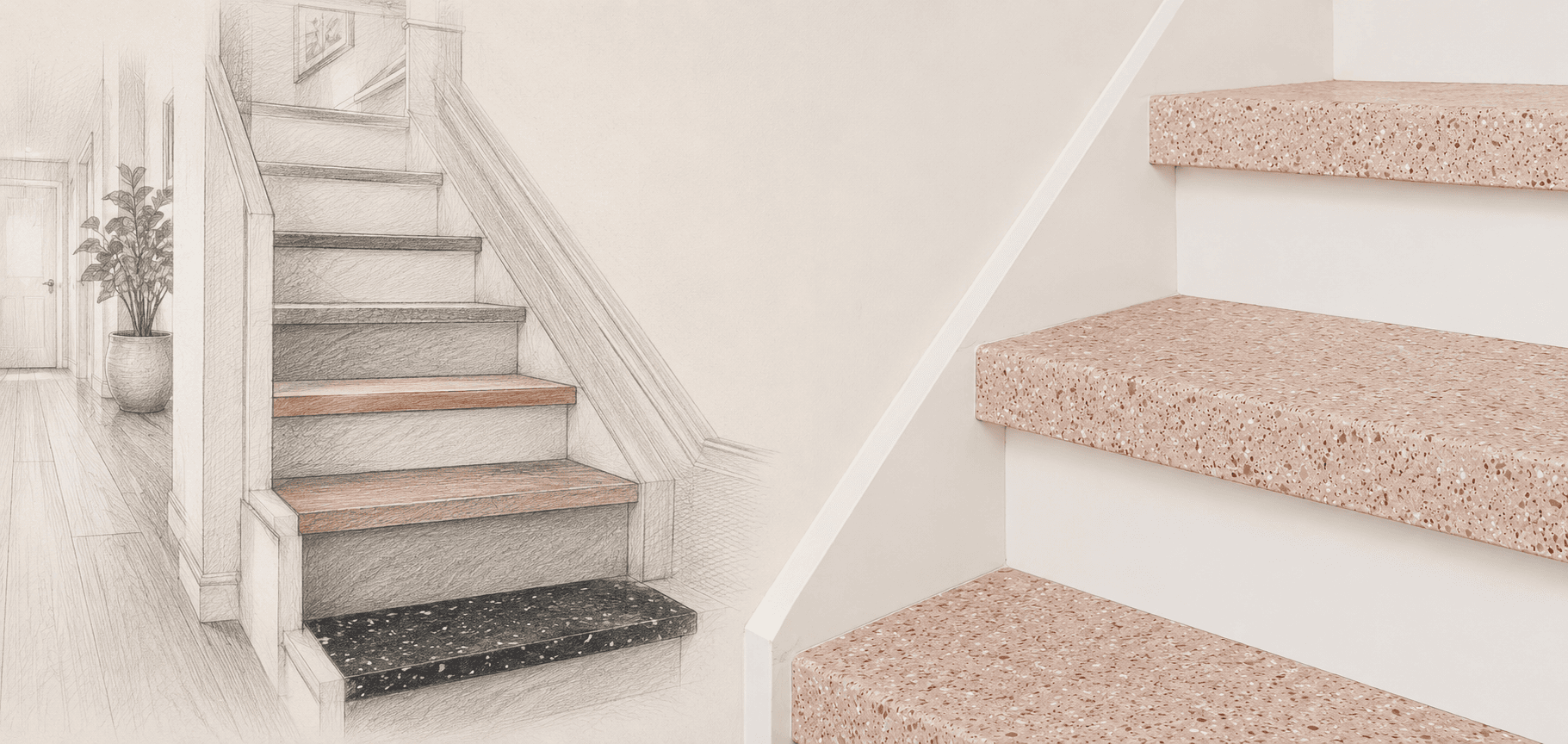
Which stair renovation fits me?
Design home, family home, apartment complex, or commercial property? An architectural guide to help determine which stair renovation system suits your interior style, situation, and usage.
Read more →