What does a natural stone stair renovation cost?
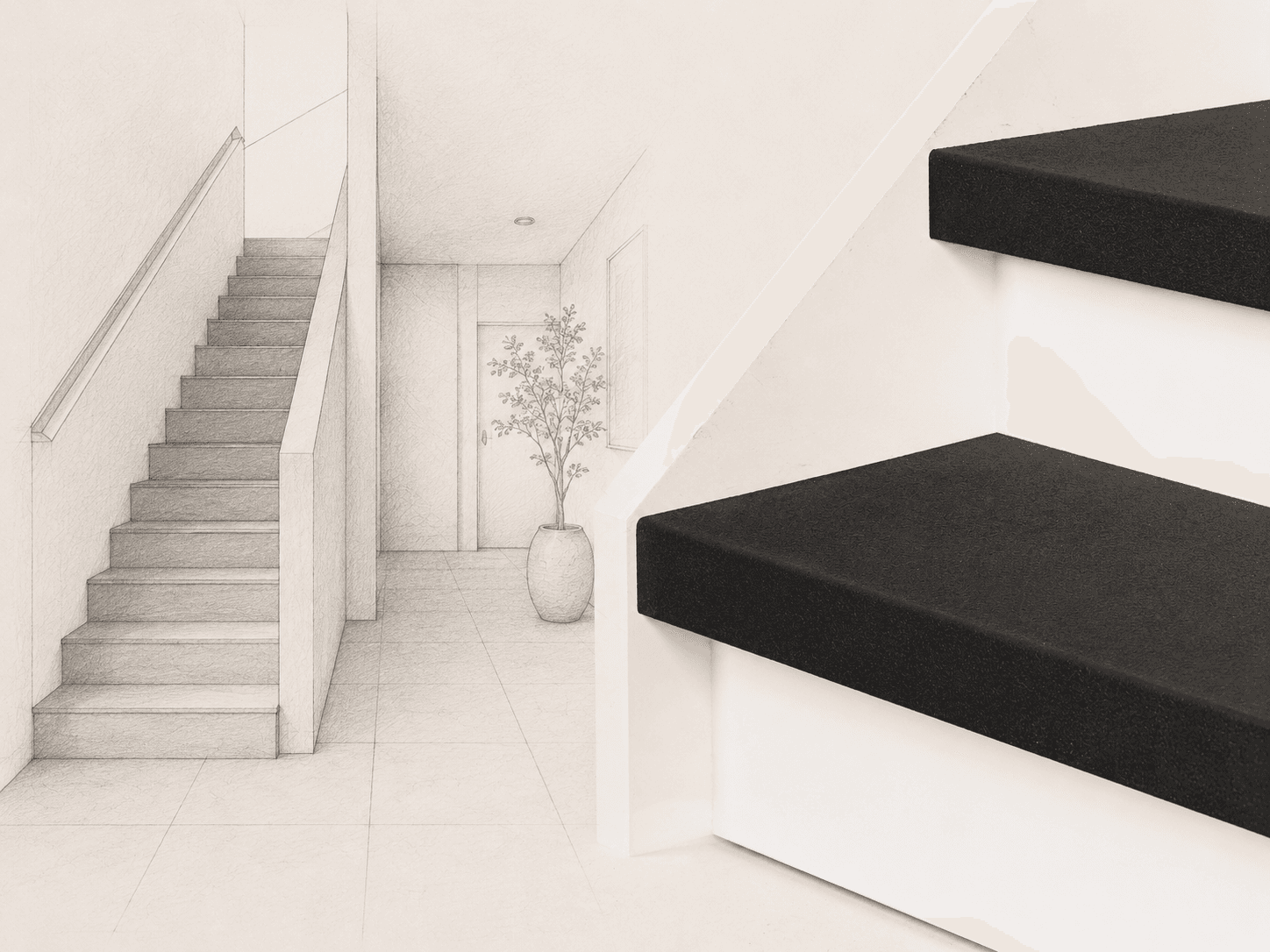
One of the most common questions is simple: "What does a natural stone stair renovation cost?" Yet there is no standard answer. The price depends on the shape of the staircase, the number of steps, the chosen finish and the desired appearance — so costs can vary considerably per project.
Short answer
A natural stone stair renovation is bespoke. The price is determined by the number of steps, the staircase shape, an open or closed staircase, the material choice, the finishing level and the complexity. An exact price can only be set after assessing the existing staircase.
Why do prices vary so much?
No two staircases are the same. A straight staircase in new construction calls for a different approach than a 1930s home, a staircase with turns, a listed building or an apartment complex.
Factors that determine the price
The number of steps matters: more steps means more material, labour and finishing. An open or closed staircase makes a difference, because a closed staircase (steps and risers) requires more finishing. The staircase shape counts too: a quarter-turn, double quarter-turn and spiral staircase require more bespoke work than a straight staircase. The material and appearance also determine the price — a calm natural stone appearance, a stone structure with depth, or terrazzo. Finally, finishing details such as stair noses, connections and sides play a role, as do accessibility and whether it concerns renovation or new construction.
Is a cheap stair renovation always better value?
Not always. Besides the purchase price, maintenance, lifespan, wear resistance and appearance also factor into the total cost over time. A stone appearance is geared towards long-term use, which affects the trade-off.
Why do people still choose natural stone?
Despite the higher investment, natural stone is chosen for its luxurious and architectural appearance, timeless character, ease of maintenance and perceived value. The trade-off between benefits and considerations is covered in benefits and drawbacks of a natural stone staircase.
Summary
The cost of a natural stone stair renovation is determined by technique, material choice, finish and the complexity of the staircase. There is no universal price. Anyone comparing should look not only at the investment, but also at appearance, maintenance, lifespan and the role the staircase plays in the interior.
If you choose a Terrazzo finish, you can read about what a natural stone or terrazzo stair costs to find out the costs involved.
Stone appearance within the portfolio
Within the Omnistair portfolio, EverStep and Signature provide a natural stone appearance.
Want to know what a stair renovation costs for your situation?
Have your staircase assessed for a tailored price.
Frequently asked questions
It depends on the staircase, the number of steps, the shape and the chosen finish. Because every staircase is different, there is no fixed price. An accurate price follows only after an on-site assessment of the existing staircase.
Often yes, in purchase price. The comparison is more complete when you also weigh maintenance, lifespan and wear resistance, because a stone appearance is geared towards long-term use.
Every staircase is different and requires its own approach. Shape, number of steps, finishing level and accessibility together determine the final price.
Yes. A straight staircase is simpler than a quarter-turn, double quarter-turn or spiral staircase, which require more bespoke work. That feeds through into material and labour.
For an accurate price estimate, usually yes. An on-site assessment is the only reliable way to map the specific situation.
Read more
Related knowledge-base articles
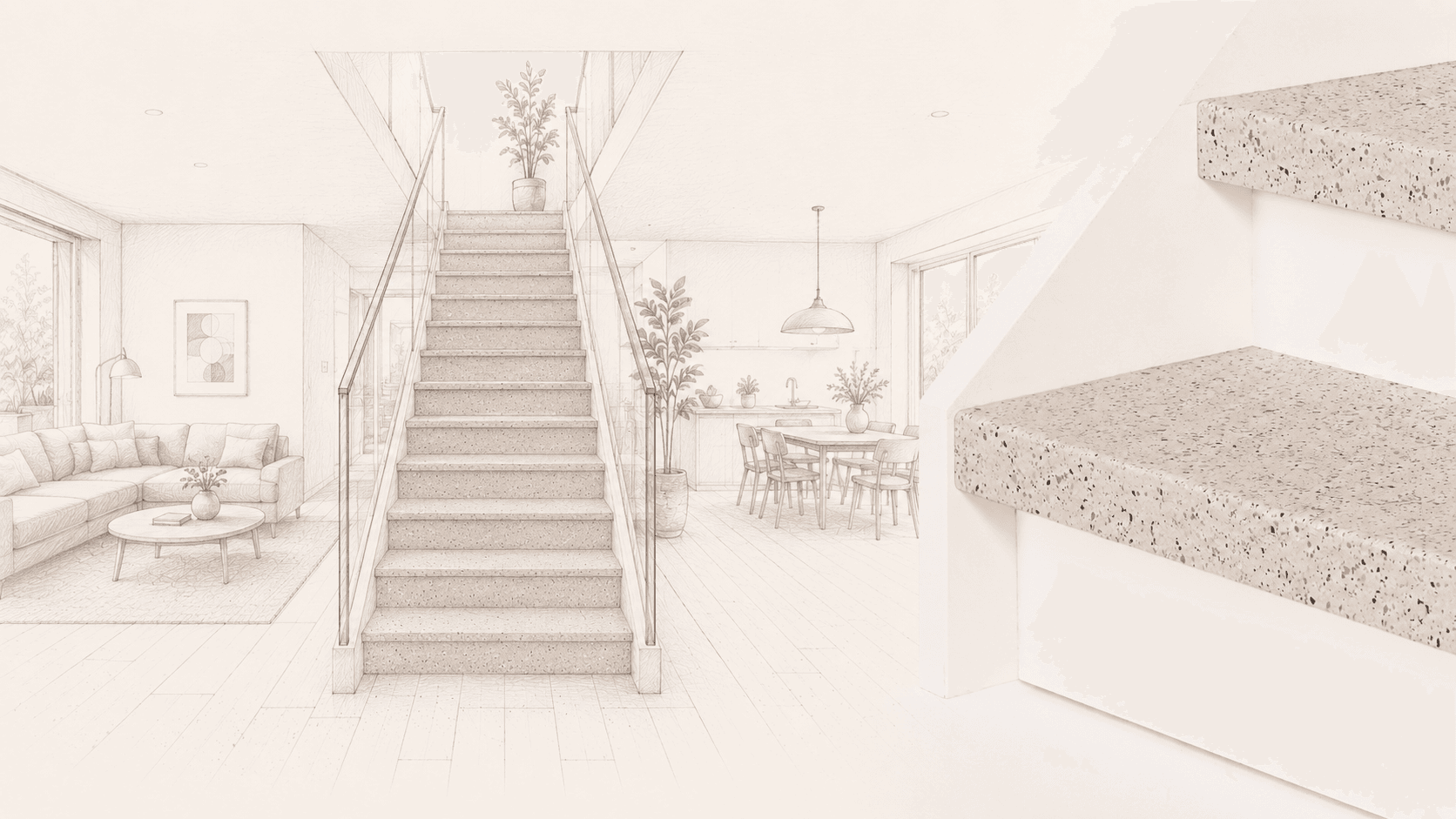
What does a natural stone or terrazzo stair renovation cost?
What does a stair renovation with natural stone composite or terrazzo cost? Discover the factors that determine the price and why there is no standard price.
Read more →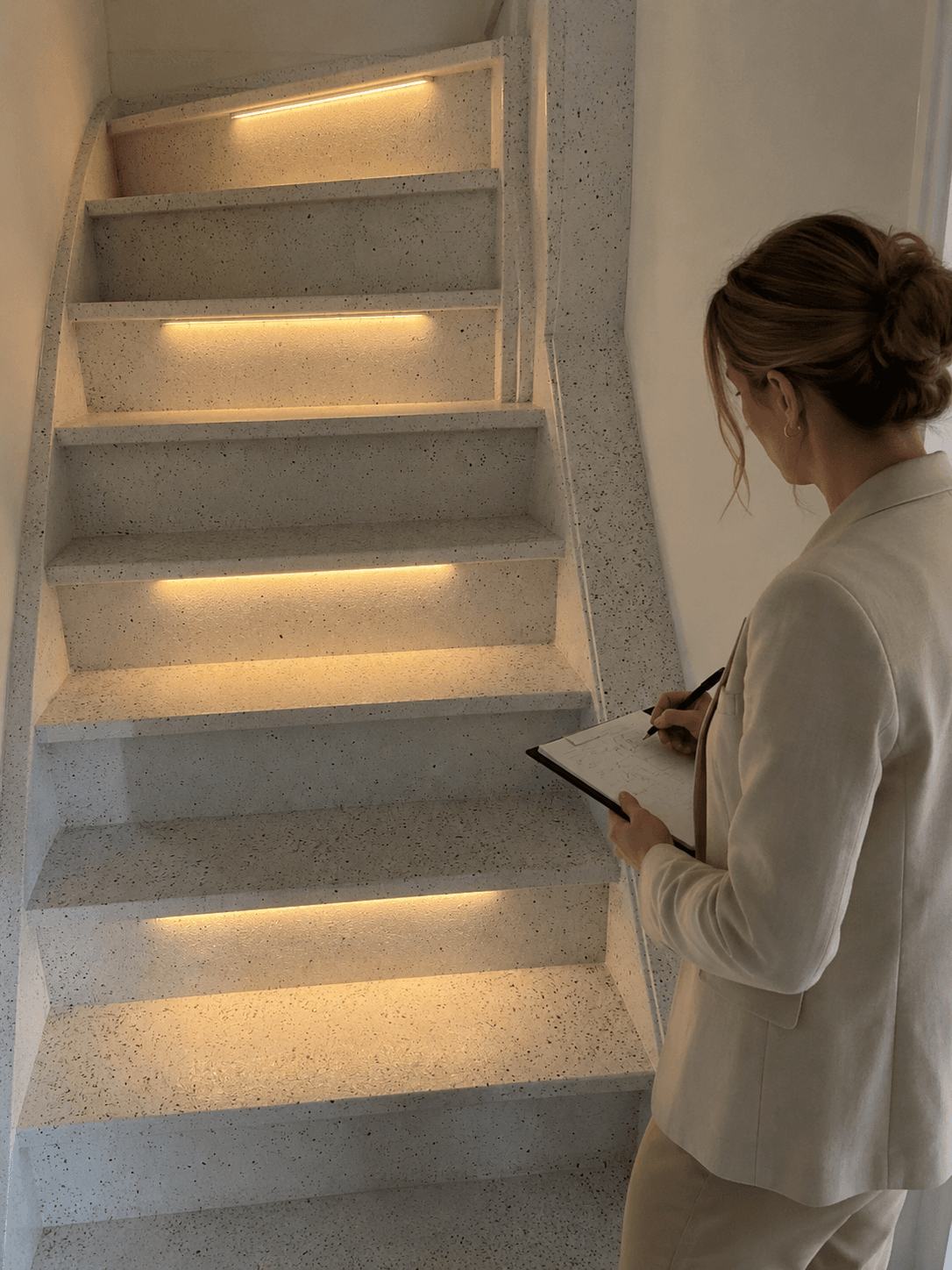
What does stair renovation cost in 2026?
What does stair renovation really cost in 2026? From per-tread guide prices to per-year cost — a market overview of every system, including the hidden costs that quotes typically don't show.
Read more →
Why are stair renovation prices so secretive?
Why does no one simply publish a price for stair renovation? Discover the real reasons behind the price secrecy and what you can expect.
Read more →