Stair renovation maintenance — how do you keep a renovated staircase in good condition?
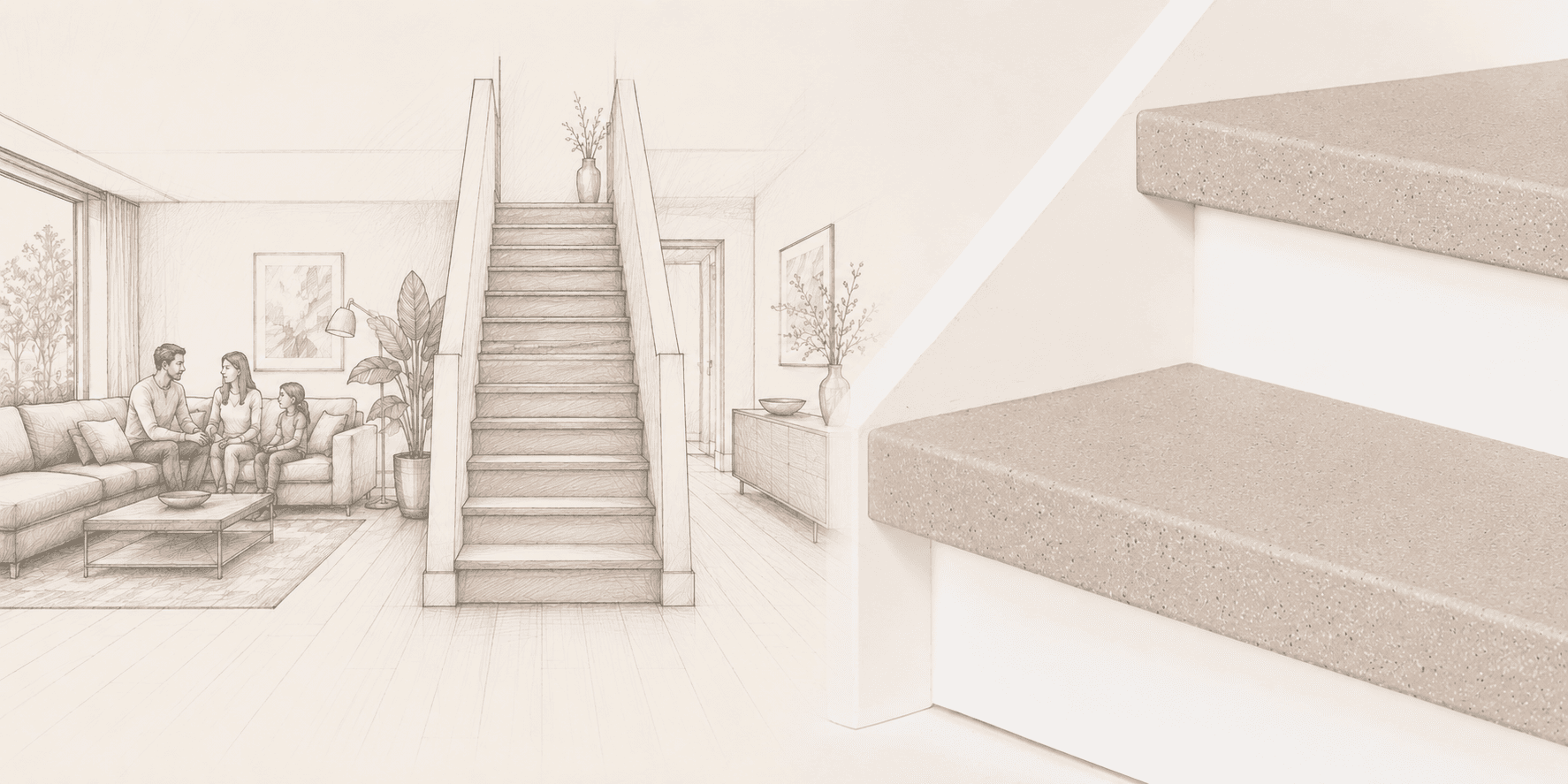
A staircase is perhaps the most heavily used part of a home or building. Yet maintenance is rarely considered in advance. Only when the first shine fades or the nosing turns dull does the question arise: how do I keep this looking good? The good news is that maintaining a renovated staircase is, in most cases, simple — provided it suits the material and the use.
Short answer
Maintaining a stair renovation comes down to a few calm principles: remove dirt and sand regularly, do not let spilled liquids sit, and use mild cleaning agents. How much maintenance is needed depends on the material, the intensity of use, the finish, the dirt load and the quality of the installation. A closed surface structure generally makes the work lighter.
What maintenance depends on
No two staircases require exactly the same maintenance. Five factors together determine how much attention a staircase needs.
The material — laminate, PVC and recycled natural stone composite each react differently to moisture, dirt and wear. The use — a home staircase for a single household is loaded differently than a communal stairwell with dozens of users per day. The finish — an open, porous structure holds dirt more easily than a closed surface. The dirt load — sand, street dirt and pets partly determine how often cleaning is needed. And the installation quality — a correctly bonded, well-connected tread is easier to keep clean and stays neat longer.
General maintenance principles
Regardless of the material, a few universal principles apply. Sand and coarse dirt act as an abrasive; removing them regularly prevents unnecessary wear on the nosing. Spilled liquids are best wiped up immediately — moisture that sits for a long time can lead to stains or damage with some materials. And a mild cleaning agent is almost always sufficient; aggressive acids, solvents and abrasives can actually damage the finish.
Why a closed surface structure makes maintenance easier
With recycled natural stone composite, the surface is mineral and closed in structure. As a result, it does not absorb moisture the way a wooden core does, and dirt adheres less easily than on an open or porous surface. That generally keeps maintenance light: remove dust and sand, and occasionally clean with a slightly damp cloth and a mild agent. A periodic treatment with lacquer or wax, as with some other finishes, is not needed.
Important to stay honest about: low-maintenance does not mean maintenance-free. A closed surface also requires regular cleaning to stay beautiful — certainly with intensive use. The gain lies in the simplicity of that maintenance, not in its absence.
Maintenance and anti-slip
The way the anti-slip is realised partly determines the maintenance. Separate strips and coatings require periodic checking: they can come loose or wear. When the anti-slip structure is integrated into the material itself — as with the mineral surface of recycled natural stone composite — there is no separate layer that wears, and the grip remains part of the surface.
Maintenance by situation explored further
Two topics deserve separate attention. For the influence of water and leakage on a stair finish there is a separate explanation of what happens when moisture gets into a stair renovation. And for concrete maintenance tips focused on laminate, PVC and recycled natural stone composite there is an overview of stair renovation maintenance by material type.
A calm cleaning recommendation
For daily cleaning, a slightly damp cloth with a mild, non-aggressive cleaning agent is sufficient. Anyone looking for a fixed product can use a mild all-purpose cleaner such as Marcel's Green Soap, for example — as a suggestion, not a prescription. The principle remains: clean gently, do not scrub, and avoid aggressive agents. Which cleaning method suits which situation is covered in stair cleaning methods.
Have your staircase assessed
Do you have questions about maintaining your specific staircase, or are you unsure whether the finish is still in good condition? Via omnistair.com you can request an appointment for an on-site assessment.
Frequently asked questions
That depends on the material, the use, the finish, the dirt load and the installation quality. In most cases, regularly removing dust and sand and occasionally cleaning gently is sufficient.
No. It is low-maintenance thanks to the closed, mineral surface structure — it does not absorb moisture and requires no lacquer or wax — but regular cleaning remains necessary to keep it looking good.
A mild, non-aggressive agent on a slightly damp cloth is usually sufficient. Avoid aggressive acids, solvents and abrasives, as these can damage the finish.
Sand and coarse dirt act as an abrasive underfoot. Removing them regularly prevents unnecessary wear, especially on the nosing.
That depends on the type. Separate strips and coatings require periodic checking of adhesion and wear. An anti-slip structure integrated into the material has no separate layer that wears.
Read more
Related knowledge-base articles
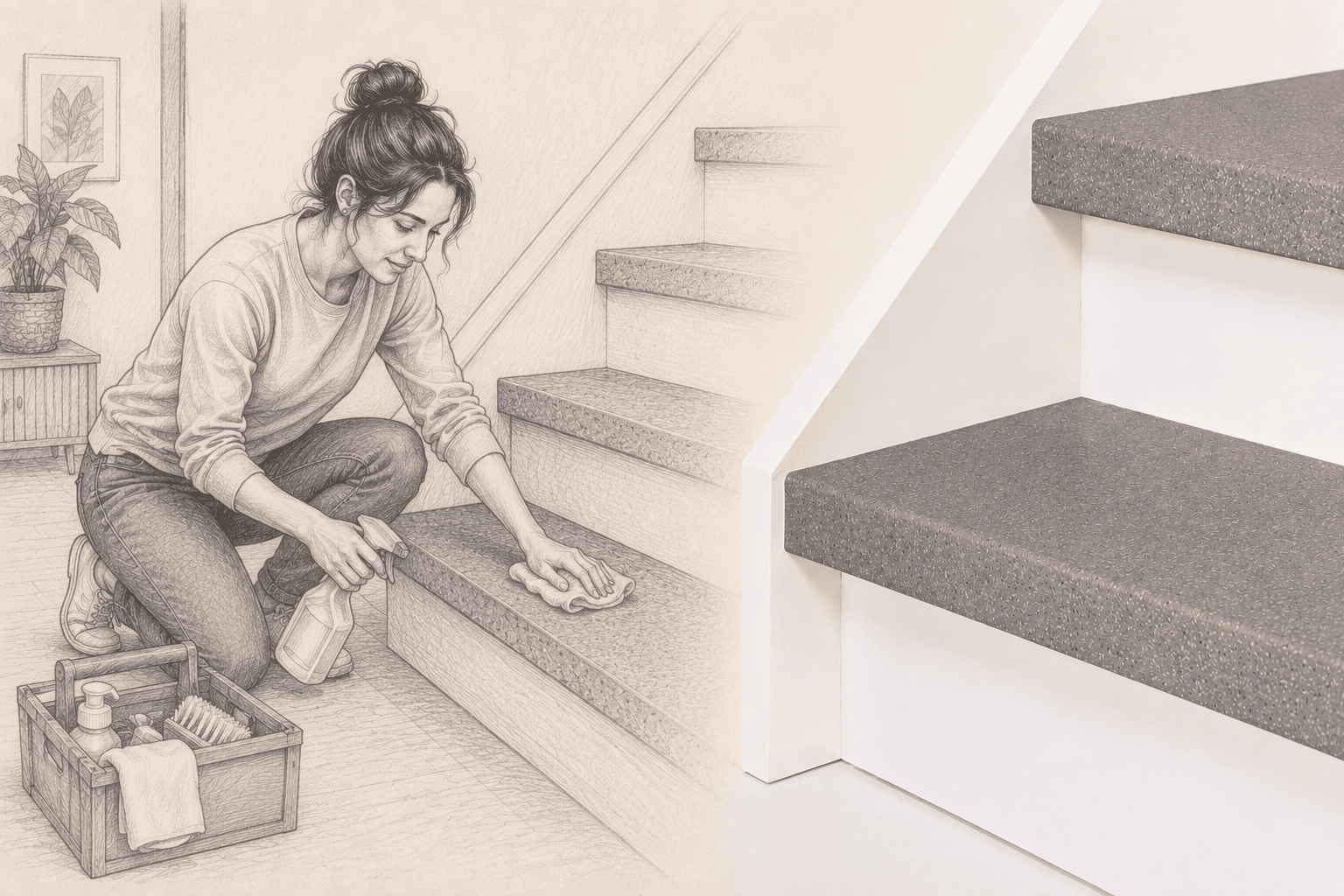
Stair renovation maintenance by material type
How do you maintain a renovated staircase? Read maintenance tips per material for laminate, PVC and recycled natural stone composite.
Read more →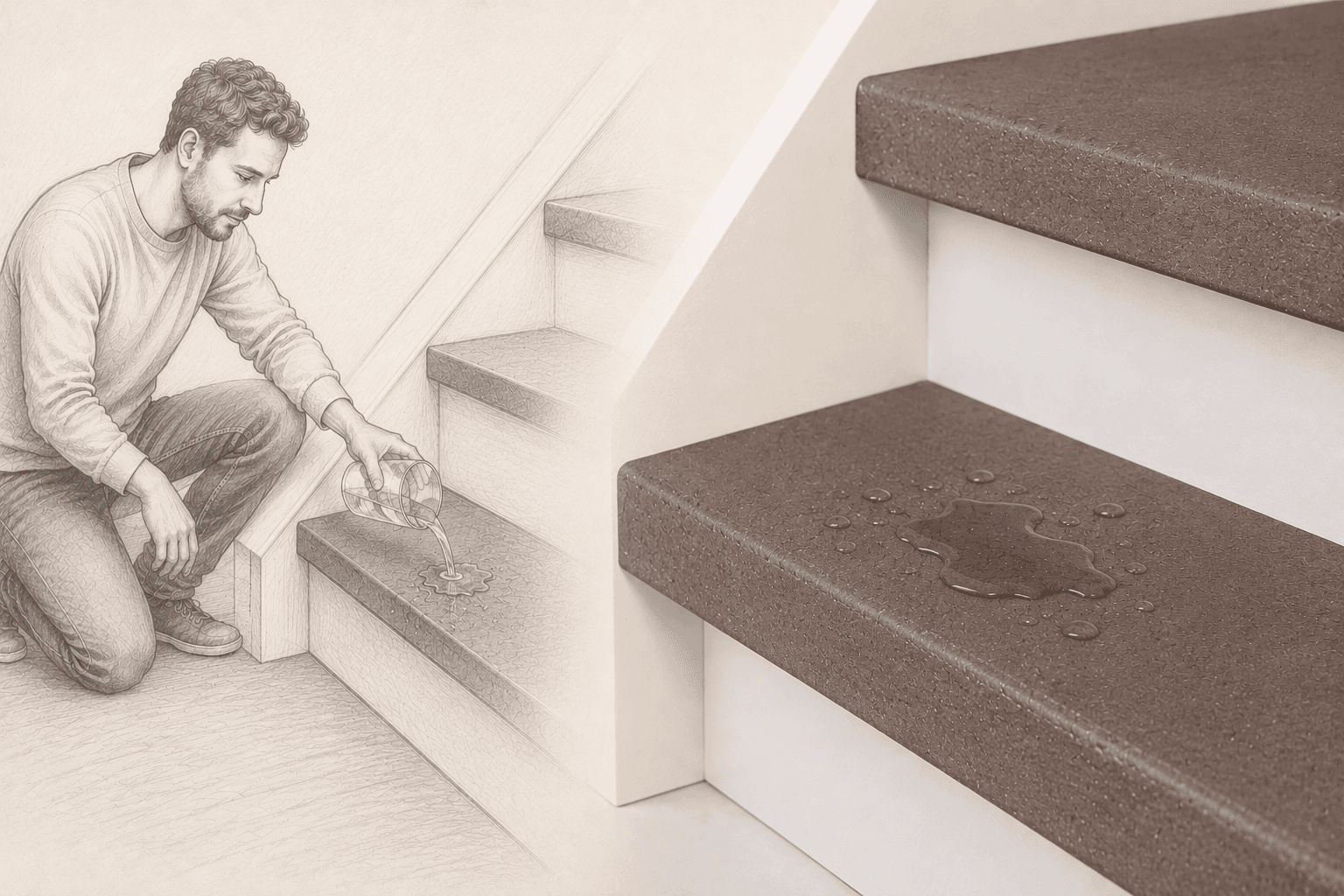
What happens when moisture gets into a stair renovation?
What does moisture do to a stair renovation? Discover the consequences per material type, how to recognise moisture damage and what you can do to prevent it.
Read more →