Painting stairs or stair renovation?
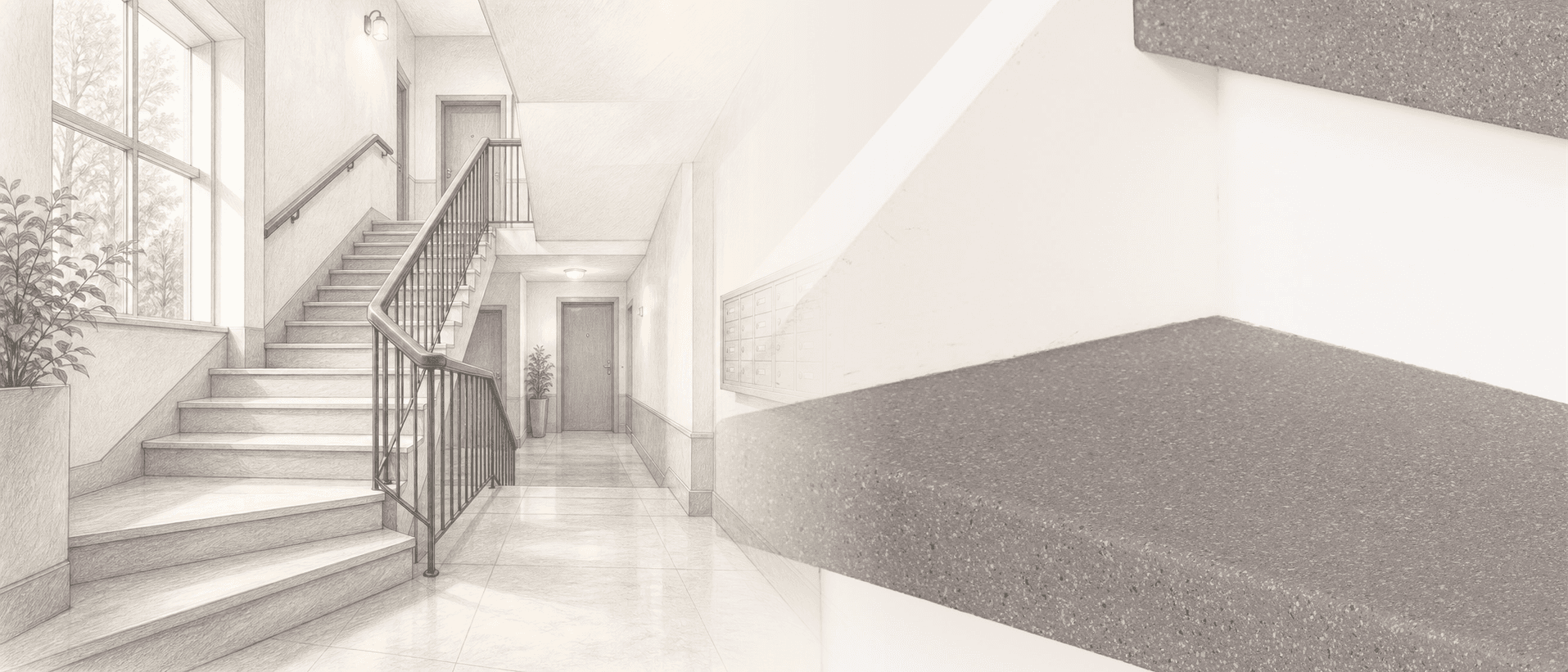
Applying a coat of paint is the fastest and cheapest way to give a staircase a different look. But is it also the smartest? For many people the answer is clear after a year or two: the paint flakes, the stair nose wears through and the result quickly looks dated. That does not mean painting never works. But it is worth making the choice consciously.
What does painting offer?
Painting gives a temporary visual effect. The underlying tread remains intact, including any cracks, wood structure and worn spots.
The advantages are a low purchase price, the option to do it yourself and a quick result. The points of attention weigh against that: wear on the stair nose is visible within one to two years under normal use, paint provides no structural improvement, adhesion on existing wood requires good preparation, anti-slip is not integrated so a separate anti-slip strip is needed, and maintenance in the form of repainting is recurring.
When is painting a good choice?
Painting can make sense when it is a temporary solution, the staircase will be replaced soon anyway, the budget for a renovation is not yet available, or it is purely about aesthetics in a low-traffic space.
What does a stair renovation offer more?
A stair renovation structurally replaces the visible finish of the staircase. Depending on the system that means a new stair surface aimed at long-term use, integrated anti-slip instead of a separate strip, immediate walkability after installation, no recurring maintenance such as repainting, and an appearance that does not depend on paint adhesion. With EverStep recycled natural stone composite the tread is just 4.3 mm thick and fits directly over the existing tread — without major demolition work.
What does the difference cost in the long term?
Painting seems cheaper, but requires recurring maintenance. Anyone who repaints every two or three years adds up a comparable investment over time — without the durable result. A stair renovation is one-off and delivers an end result that stays representative for a long time. A detailed overview of the costs can be found in what stair renovation costs in 2026.
Further reading
Want to explore further? Read also which stair renovation suits me?, comparing stair renovation systems and renovating your stairs yourself. More about the system itself is in what is the Omnistair system and why multiple product lines.
Unsure whether painting or renovating is the right choice?
Unsure whether painting or renovating is the right choice for your situation? Via omnistair.nl you can request an on-site assessment.
Frequently asked questions
Under normal daily use, wear on the stair nose usually starts to become visible within one to two years.
Paint offers no anti-slip guarantee. A separate anti-slip strip is then necessary.
Yes. Most stair renovation systems are placed over the existing tread, even if it is painted. An on-site assessment determines the options.
Compared over 10 to 15 years, a quality stair renovation is usually more cost-efficient than recurring paintwork.
Some systems are intended for DIY. Recycled natural stone composite systems are placed by installers with system knowledge for a guaranteed end result.
Read more
Related knowledge-base articles
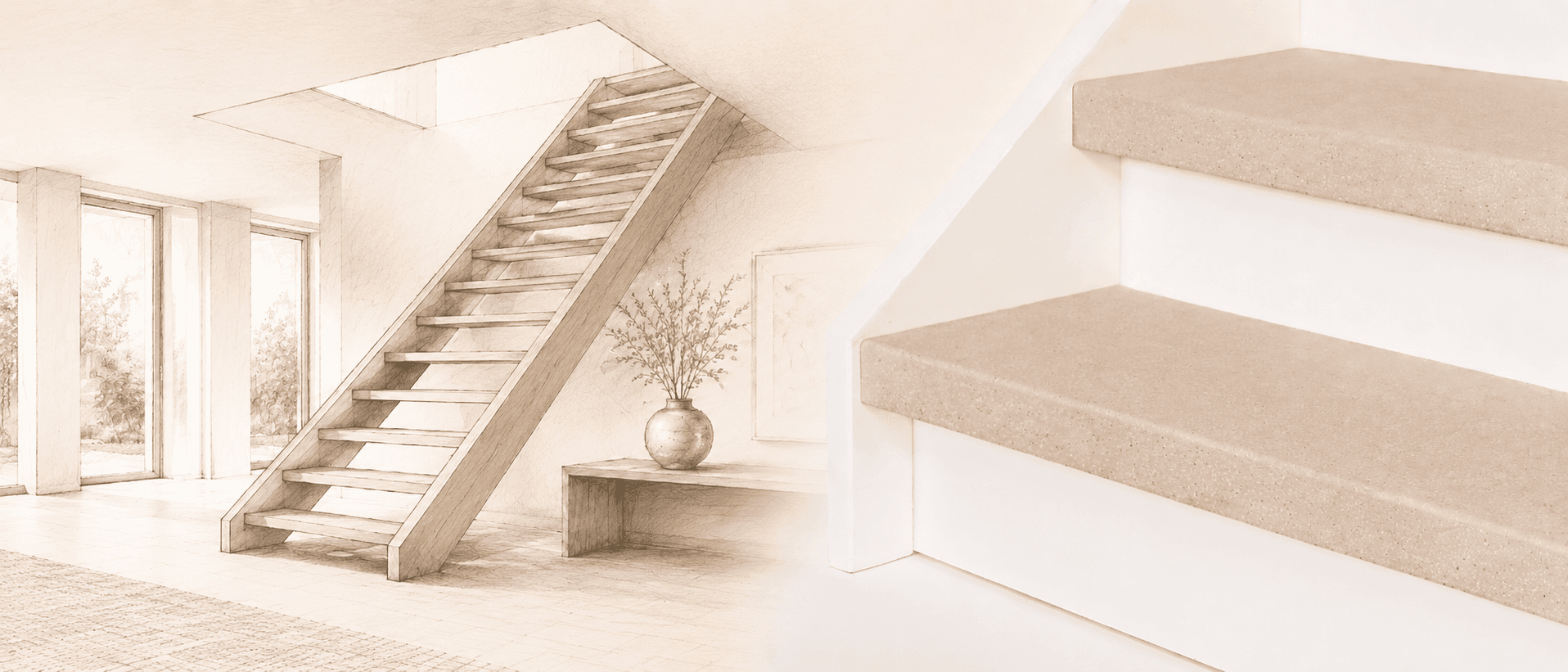
Renovating an open staircase
Renovating an open staircase? Discover which systems are suitable, what the finish looks like and why an open staircase has different requirements than a closed one.
Read more →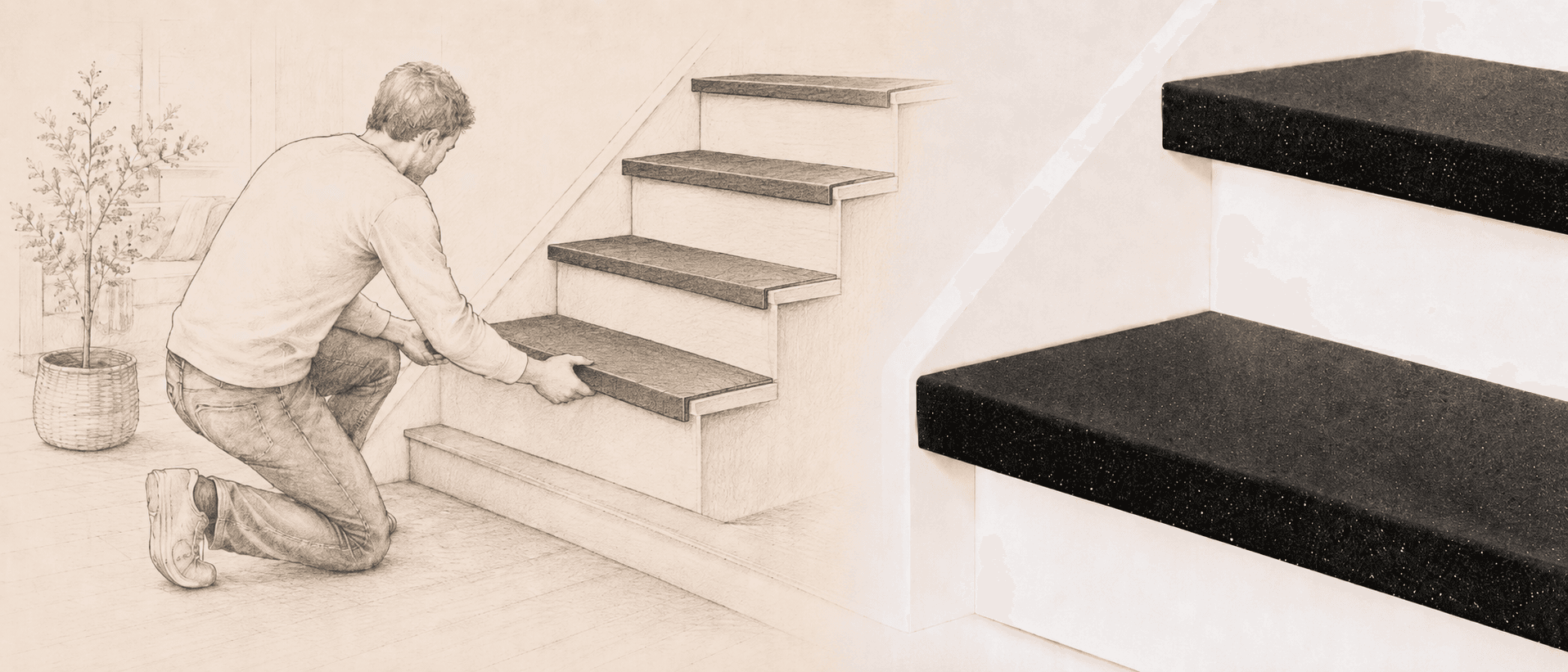
Renovating your stairs yourself — what are the options?
Renovating your stairs yourself? Discover what you can do yourself, where the limits are and why some systems require professional installation.
Read more →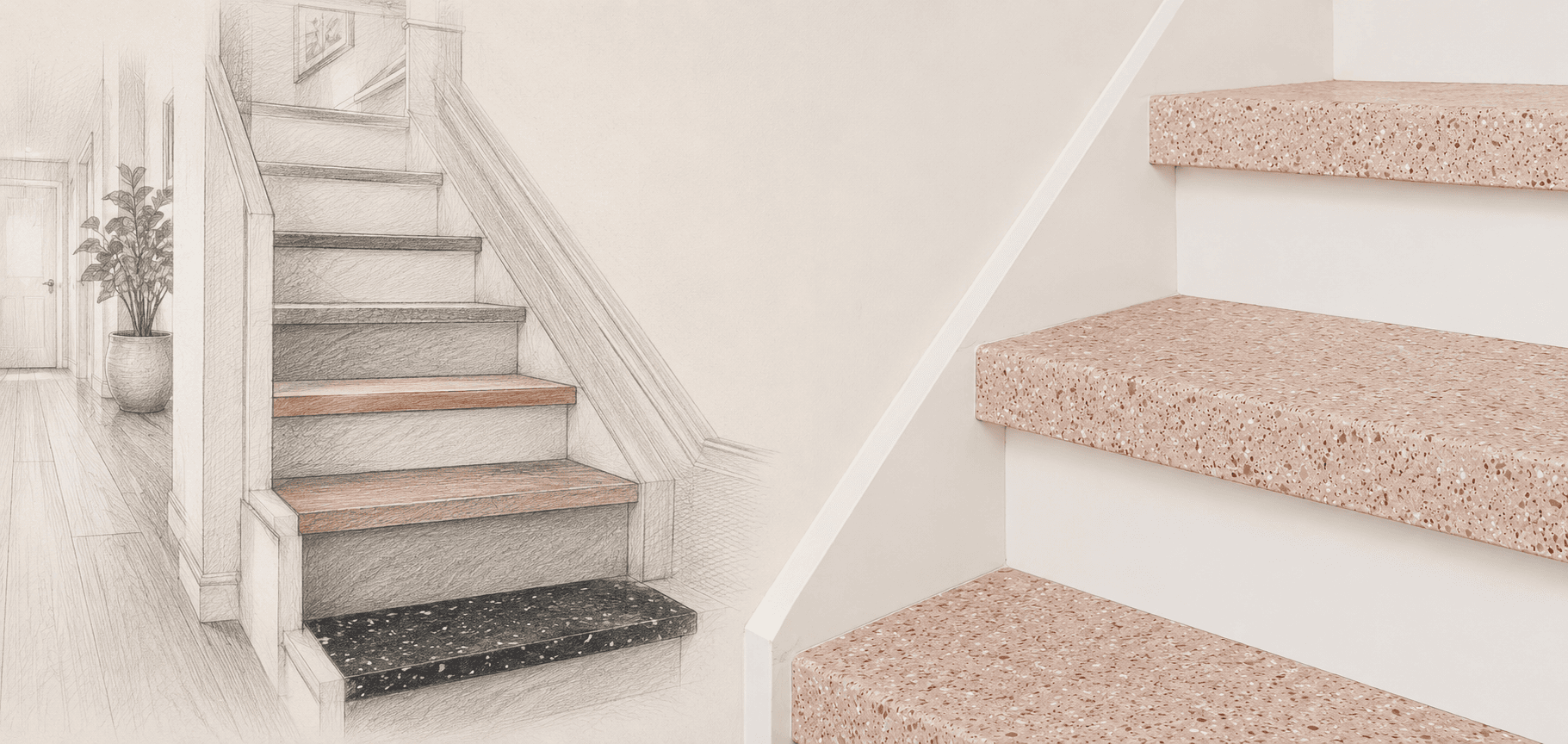
Which stair renovation fits me?
Design home, family home, apartment complex, or commercial property? An architectural guide to help determine which stair renovation system suits your interior style, situation, and usage.
Read more →