Buy a new staircase or renovate the existing one?
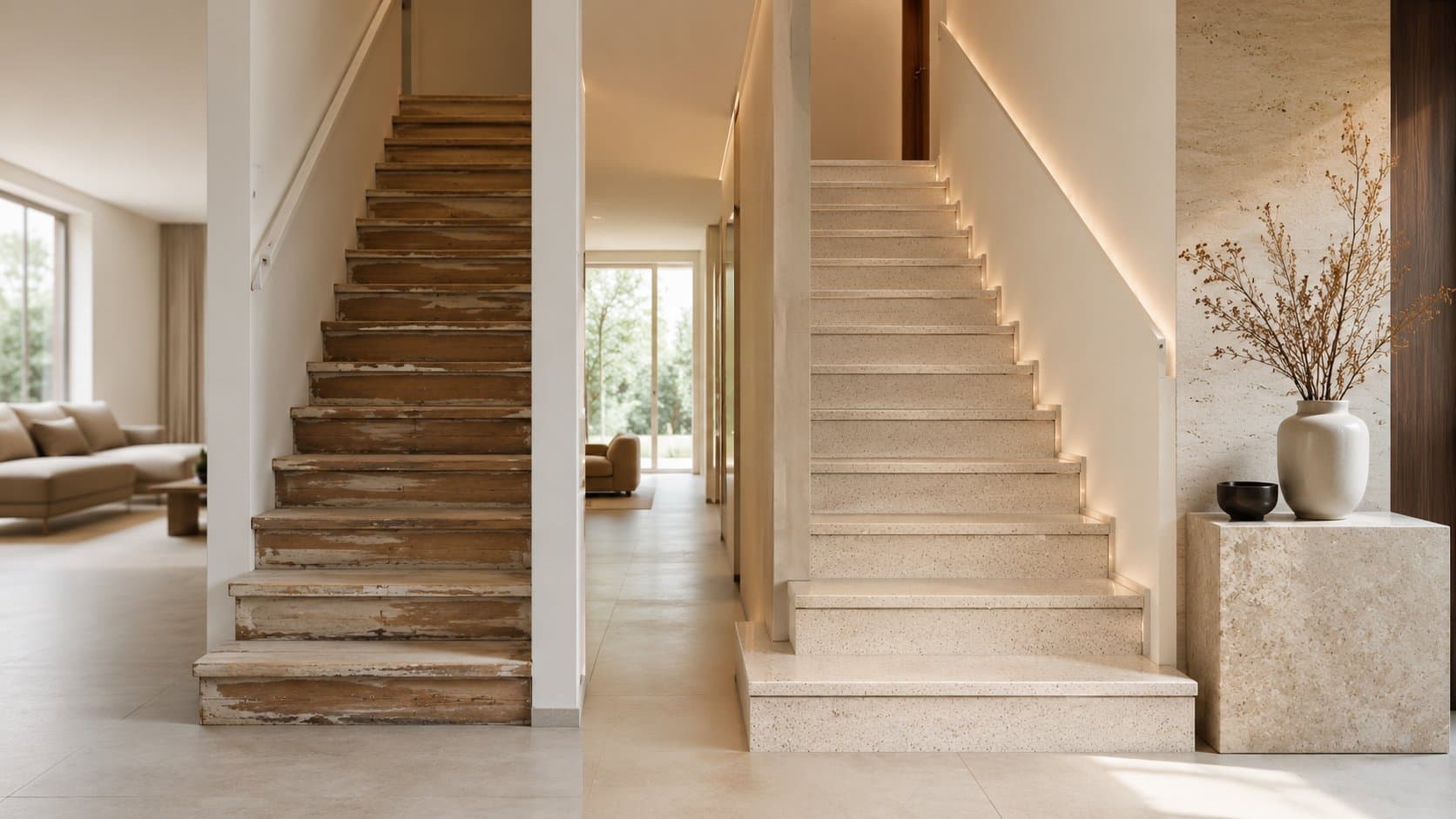
It is a question many homeowners ask when their staircase looks worn, creaks with every step, or simply no longer fits the interior. The answer, more often than not, is: renovate.
What is the difference?
Installing a new staircase means removing the existing structure and placing an entirely new one. This is a significant renovation that affects the floor, walls and surrounding areas.
A stair renovation leaves the existing structure intact. Only the finish — the treads, risers and visible components — is renewed. The load-bearing structure of the staircase remains untouched.
When is renovation the smart choice?
In most cases, the stair structure itself is still in good condition. What has worn out is the finish. Renovation then has clear advantages: no demolition work, no adjustments to floors or walls, no temporary loss of access to upper floors, shorter installation time — often one day — and lower overall costs than full replacement.
Modern systems such as recycled natural stone composite stair treads fit directly over the existing tread without the need to cut back nosings. At just 4.3 mm thick, the dimensions of the staircase are barely affected.
When is replacement necessary?
There are situations where renovation is not the right option: when the load-bearing structure has been affected by moisture, wood rot or subsidence, when the staircase does not meet current building requirements and needs to be repositioned, or when a fundamental design change is desired. In those cases, a new staircase is the right choice. But these are exceptions.
What does renovation deliver?
A well-executed stair renovation gives the staircase a completely new appearance without the disruption of a building project. With recycled natural stone composite, this means an authentic stone appearance without printing, integrated anti-slip structure, immediate usability after installation and a result that remains representative over time.
What about costs?
A full staircase replacement is often more expensive than a renovation. Add to that the additional costs of demolition work, floor and wall repairs and longer installation time. A renovation with a high-quality system can therefore work out cheaper overall than a standard new staircase — while delivering a comparable or better result.
Frequently asked questions
In most cases, yes. As long as the load-bearing stair structure is structurally sound, renovation is a good option.
For a standard straight staircase, often one working day. More complex stair shapes may require a little more time.
With systems as thin as 4.3 mm such as recycled natural stone composite, this is generally not necessary.
Yes. Recycled natural stone composite is immediately walkable after installation.
That depends on the nature of the damage. Surface wear or damaged finish are not obstacles to renovation. Structural damage to the construction requires repair first.
Have your staircase assessed
An Omnistair installer with system expertise assesses whether your staircase is suitable for renovation and which system best fits the situation.
Basis for this article
This article is based on Omnistair product documentation, material information and practical experience from stair renovation projects. For professional applications, Omnistair can provide additional technical documentation upon request.
Omnistair develops and supplies its own stair renovation systems in recycled natural stone composite. Advice, assessment and installation are handled by selected dealers and installers.